IN Brief:
- The base USS Harry S. Truman RCOH contract is worth $5.099 billion and could rise to $5.183 billion with options.
- Work includes reactor refuelling and major propulsion, combat-system, compartment, and tank modernisation.
- Truman is the eighth Nimitz-class carrier to undergo a refuelling and complex overhaul at Newport News Shipbuilding.
HII has received a $5.099 billion contract for the refuelling and complex overhaul of USS Harry S. Truman, starting the Nimitz-class carrier’s midlife recapitalisation at Newport News Shipbuilding and preparing it for the second half of its service life.
HII said contract options could raise the cumulative value to $5.183 billion. The work includes refuelling the ship’s nuclear reactors, extensive modernisation across thousands of compartments and tanks, and major upgrades to propulsion and combat systems.
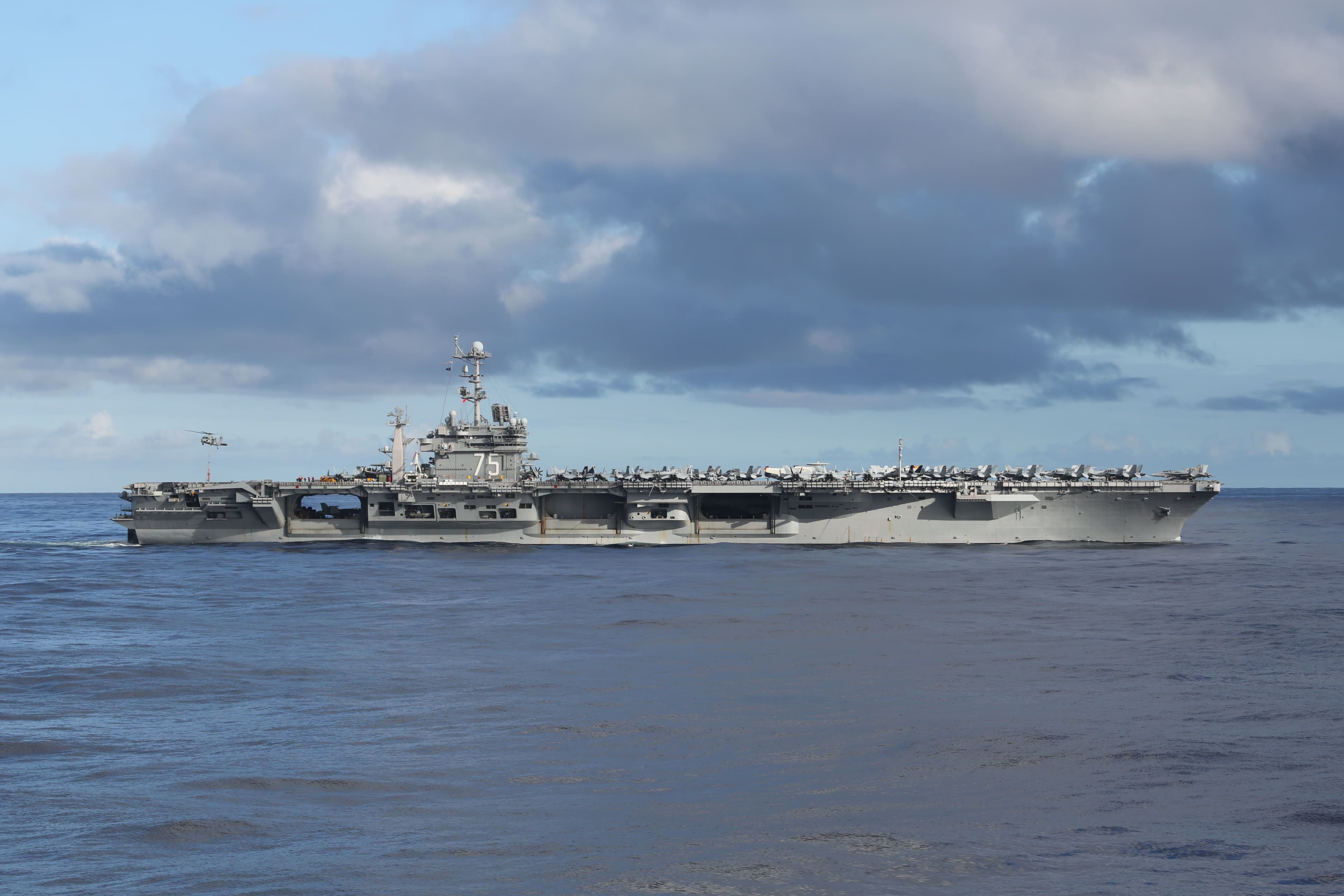
USS Harry S. Truman, CVN 75, was christened in 1996 and delivered to the US Navy in 1998. It will be the eighth Nimitz-class carrier to undergo a refuelling and complex overhaul at Newport News, the US shipyard responsible for building and refuelling the Navy’s nuclear-powered aircraft carriers.
The carrier arrived at Newport News on 30 September after years of advance planning, moving the programme from engineering preparation into shipyard execution. HII said teams had been working ahead of the formal overhaul to prepare engineering, construction planning, suppliers, and the yard for the workload that begins once the ship is opened up.
A refuelling and complex overhaul is substantially wider than a conventional maintenance availability. HII says the process represents nearly a third of all maintenance and modernisation performed during an aircraft carrier’s service life. Reactor refuelling is combined with structural, mechanical, electrical, habitability, propulsion, and combat-system work that would be difficult to complete during shorter maintenance periods.
The production challenge lies in sequencing thousands of individual jobs around a ship with limited access. Equipment has to be removed before surrounding compartments can be opened, inspected, repaired, or modified, while nuclear work follows tightly controlled engineering and quality requirements. Delays in one part of the sequence can restrict access or prevent later testing elsewhere in the carrier.
Advance planning therefore carries unusual weight. Long-lead components, design changes, temporary services, work-package maturity, and supplier readiness can determine whether trades are able to begin when access becomes available. The contract award provides the commercial basis for a workload that HII and the Navy have been preparing well before Truman’s arrival.
The overhaul begins while Newport News is carrying several major carrier programmes simultaneously. The yard is building Gerald R. Ford-class ships, has advanced John F. Kennedy through preliminary acceptance, and has begun long-lead procurement for CVN 82. It also contributes to Virginia- and Columbia-class submarine construction, creating sustained demand for nuclear-qualified labour, engineering, machining, planning, and specialist suppliers.
RCOH work is less transferable to outside facilities than many new-build fabrication tasks because much of it is physically tied to the carrier in Newport News. Suppliers can provide components, repairs, material, and specialist services, but reactor work, large-scale shipboard modernisation, system integration, and testing remain concentrated around the vessel. Workforce and facility sequencing at the yard therefore become direct schedule constraints.
The overhaul also allows the Navy to update systems installed when Truman entered service nearly three decades ago. HII has not published a detailed modernisation list, but the contract explicitly includes major propulsion and combat-system upgrades. Those changes have to be integrated with existing electrical distribution, cooling, communications, ship services, and support arrangements while preserving the configuration needed for the carrier’s remaining service life.
Supply capacity extends beyond the yard. Pumps, valves, electrical equipment, electronics, piping, structural material, nuclear-qualified components, and specialist services come from a national supplier base that also supports new carriers and submarines. Truman’s overhaul gives those companies substantial workload visibility, but it also adds another large customer for skills and production capacity already in demand elsewhere.
Newport News has been trying to increase throughput across that broader workload through infrastructure investment, workforce development, and a greater use of distributed manufacturing where tasks can be moved outside the main shipyard. The approach can release capacity for new construction, but an RCOH still requires a dense concentration of people and facilities around the carrier itself.
With Truman now at Newport News, the programme has moved beyond contract preparation into the long execution phase. The headline value reflects the scale of reactor, propulsion, combat-system, and compartment work, but schedule performance will depend on thousands of smaller jobs reaching the ship in the correct order. The eighth Nimitz-class RCOH will test how effectively Newport News can absorb that workload alongside new carrier and submarine programmes already competing for the same industrial base.