IN Brief:
- A $511.5 million US Navy modification covers additional AN/SPY-6(V) hardware production and associated spares.
- Work continues through November 2031 across several US radar, electronics, and manufacturing locations.
- Raytheon has invested more than $800 million in radar production and is targeting a doubling of SPY-6 output by 2028.
Raytheon has received a $511.5 million US Navy contract modification covering continued AN/SPY-6(V) radar hardware production and associated spares through November 2031.
The award exercises further options under the existing production framework rather than creating a new radar programme. It adds hardware and support demand while SPY-6 is being installed across an expanding group of US Navy ship classes.
Manufacturing work is distributed across several US locations, including Andover, San Diego, Scottsdale, Syracuse, Stafford Springs, and Sykesville. The geographical spread reflects the number of disciplines inside a modern active electronically scanned array radar programme.
Semiconductor fabrication, radio-frequency electronics, power equipment, cooling, structures, computing, software, and final integration can move through different specialist facilities before a complete radar set reaches acceptance.
Raytheon is already expanding that industrial system. The company has invested more than $800 million in radar manufacturing and says the resulting capacity should allow SPY-6 output to double by 2028.
Andover, Massachusetts, sits at the centre of that effort. The site includes radar development and manufacturing operations as well as gallium nitride semiconductor capability supporting SPY-6 and other programmes.
Gallium nitride is important to active electronically scanned array radar because it supports high radio-frequency power and efficient performance in compact electronic packages. Retaining semiconductor capability inside the wider radar manufacturing organisation gives Raytheon greater control over a critical part of the production chain.
The company still depends on a much broader network of suppliers for components, materials, assemblies, and equipment. Vertical integration can reduce exposure in selected areas, but it does not eliminate the need for reliable external manufacturing capacity.
SPY-6 was designed as a scalable radar family rather than one fixed system. Different variants use common radar modular assemblies and software while changing the number and arrangement of modules to suit destroyers, carriers, frigates, amphibious ships, and other platforms.
That common architecture has a direct manufacturing advantage. Standardised modules can be produced in larger quantities even when complete radar configurations differ between ship classes.
Common hardware can also reduce the range of unique spare parts the Navy must support. The latest contract modification includes spares as well as new hardware, reflecting the fact that sustainment demand rises as more radars enter service.
Production consequently has to support two workloads at once. New construction and ship modernisation require complete radar sets, while the installed fleet creates recurring demand for replacement modules and repair material.
Those requirements can compete for the same hardware if manufacturing capacity is tight. A production system focused entirely on new radar deliveries risks weakening support for systems already deployed, while excessive spares demand can delay equipment needed by ships under construction.
The scalable design is intended to simplify that balance by increasing commonality between variants. The more components that remain identical across platforms, the easier it becomes to allocate production between complete systems and sustainment stock.
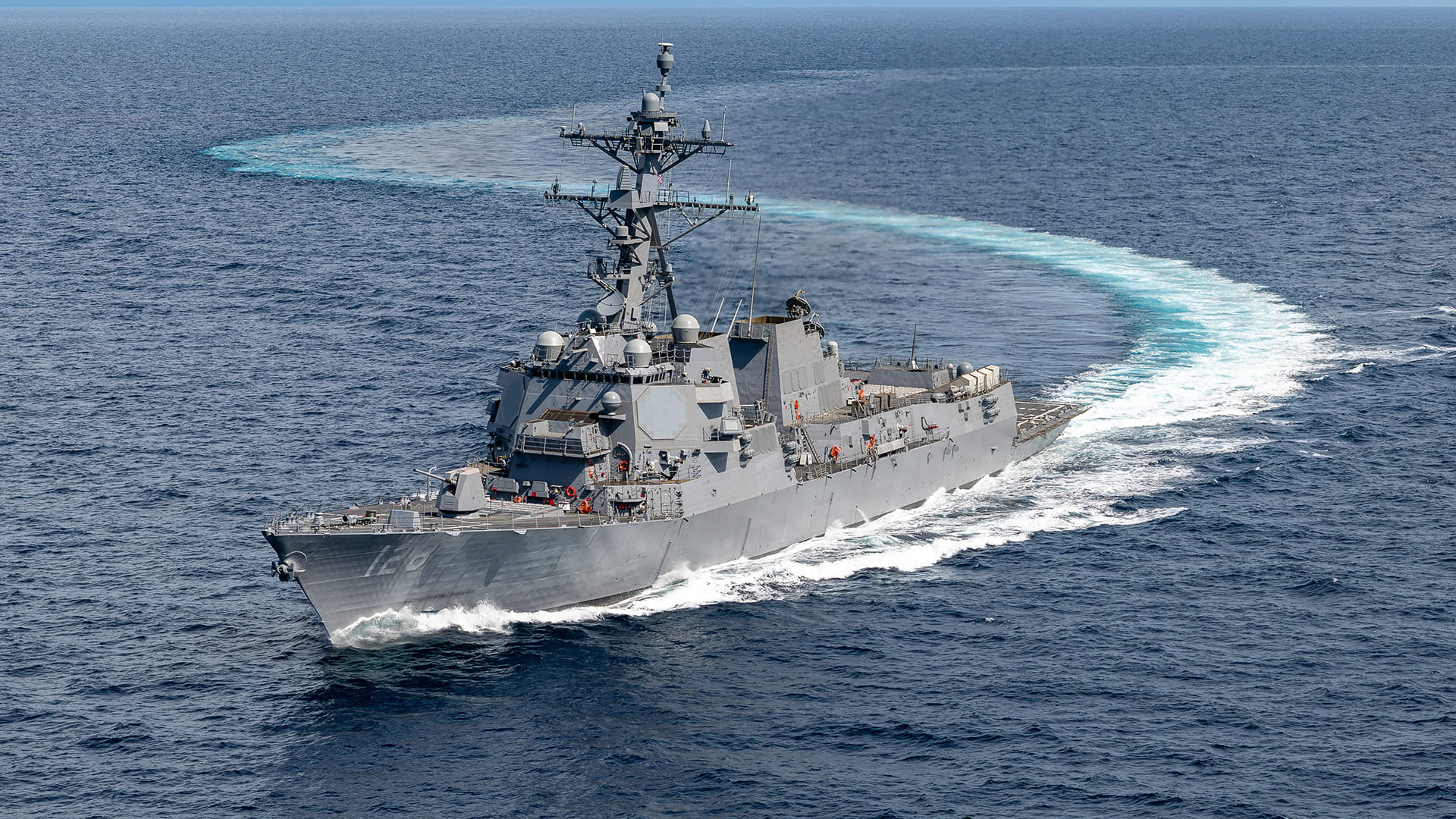
Raytheon has said that more than 50 US Navy ships are expected to carry SPY-6 over the next decade. That creates a sustained manufacturing requirement extending well beyond the initial Flight III Arleigh Burke-class destroyers.
The radar family is also being applied to aircraft carriers, frigates, amphibious ships, and upgraded destroyers. Each platform programme has its own construction or refit schedule, making delivery timing as important as total production quantity.
Producing a radar too late can delay ship integration. Producing it too early creates storage, preservation, and configuration issues, particularly where software or associated ship systems continue to evolve before installation.
Doubling manufacturing capacity therefore requires planning across assembly, test, and customer schedules rather than simply increasing the number of completed electronic modules.
Factory acceptance and calibration can themselves become bottlenecks. Every radar has to be tested and documented before delivery, meaning test equipment, software loading, engineering staff, and inspection capacity need to scale alongside physical production.
The latest modification builds on earlier production and sustainment awards and demonstrates that SPY-6 has moved firmly into recurring procurement. Repeated options give Raytheon and suppliers a longer demand horizon against which to maintain specialist labour and justify further capital spending.
The contract now carries hardware and spares work through November 2031, overlapping with the period in which Raytheon expects its manufacturing expansion to mature.
The industrial test will be whether investment produces a balanced increase across semiconductors, electronic assemblies, integration, testing, and spares. Doubling one stage of the line will not double delivered radar output if another part of the chain remains constrained.
SPY-6 is moving from a limited new-build radar programme into a fleetwide manufacturing and sustainment enterprise. The $511.5 million modification adds another block of work to that transition and extends the production horizon against which Raytheon can plan its continuing radar capacity expansion.