IN Brief:
- USS Ted Stevens has been commissioned as the US Navy's second operational Flight III Arleigh Burke-class destroyer.
- SPY-6(V)1 uses four fixed arrays containing 37 radar modular assemblies each alongside Aegis Baseline 10.
- Flight III adds electrical generation and cooling capacity to support the more demanding radar and combat system configuration.
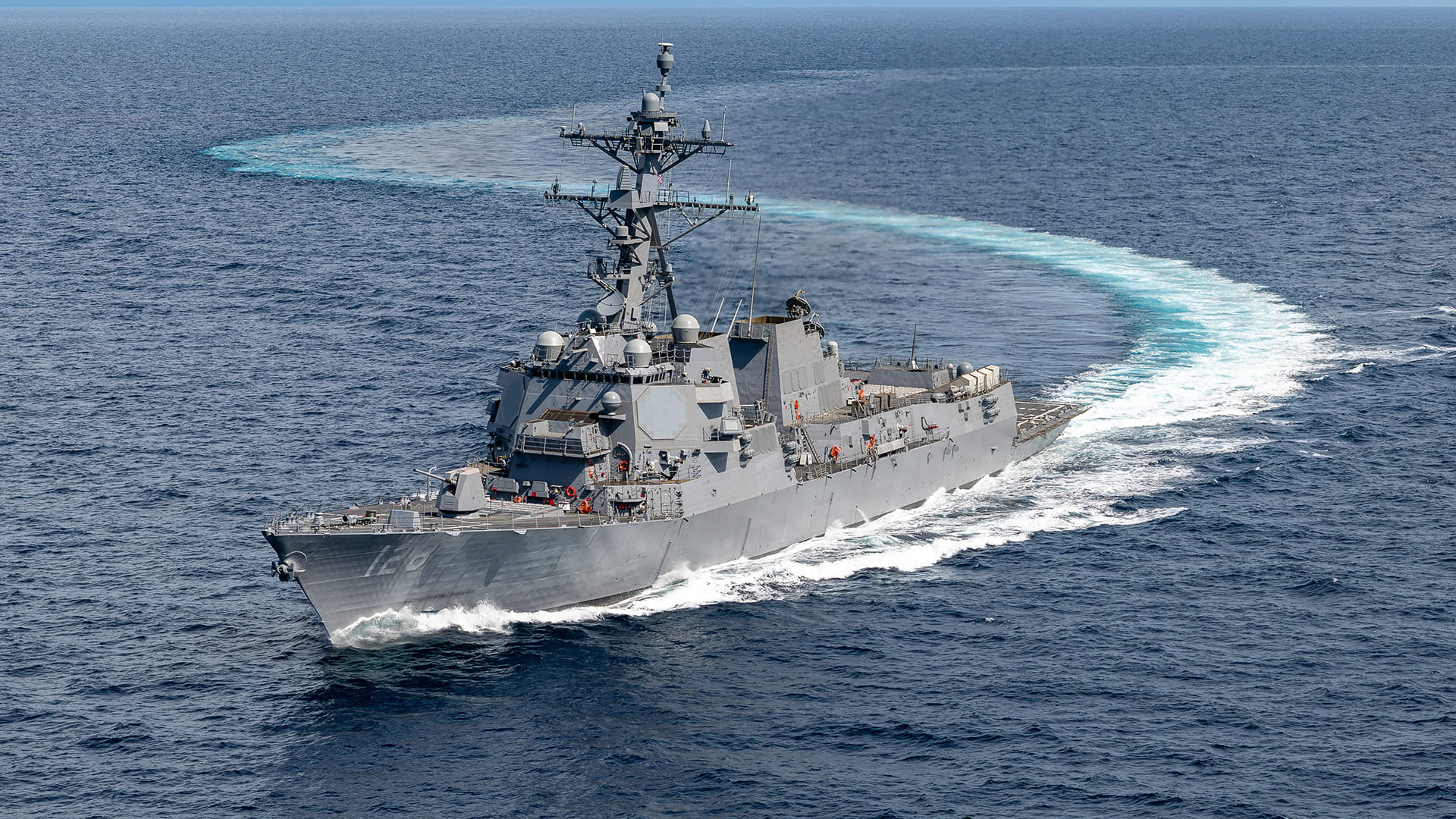
USS Ted Stevens has entered US Navy service as the second operational Flight III Arleigh Burke-class guided missile destroyer, adding another AN/SPY-6(V)1 Air and Missile Defense Radar and Aegis Baseline 10 combat system to the surface fleet following commissioning in Whittier, Alaska.
HII delivered DDG 128 to the Navy in December 2025 after builder’s and acceptance trials, and the ship departed Ingalls Shipbuilding in May before moving through the final preparation required for commissioning. Entry into service therefore follows an extended test and delivery programme rather than marking the first time its combat systems have operated at sea.
Flight III retains the established DDG 51 hull lineage but incorporates substantial internal changes to support SPY-6 and the associated processing architecture. The radar replaces the SPY-1 family fitted to earlier Aegis destroyers and is designed to improve sensitivity, range and discrimination against threats including ballistic missiles, cruise missiles, aircraft and surface targets.
SPY-6(V)1 uses four fixed array faces to provide continuous 360-degree coverage. Each face contains 37 radar modular assemblies, giving the destroyer 148 RMAs across its principal arrays. Raytheon manufactures each RMA as a standardised two-foot radar building block containing the hardware required for transmission, reception and processing, allowing the same basic technology to be scaled into several SPY-6 configurations for different ship classes.
Modularity gives the production system a common component around which different arrays can be assembled instead of requiring every ship radar to use an entirely separate design. The Navy is applying related SPY-6 variants to destroyers, frigates, aircraft carriers and amphibious vessels, while production and test processes can be repeated at RMA level before the modules are combined into the final array.
The Flight III engineering changes extend below the sensor itself because greater radar performance increases demand for electrical power, cooling and processing. The Navy identifies enhanced power distribution and additional cooling capacity among the changes required to support SPY-6 and Aegis Baseline 10. Those systems must operate alongside propulsion, communications, weapons and normal ship services without forcing radar performance to be constrained by the supporting platform.
Heat removal is especially important because radar transmitters and high performance processors convert part of their electrical input into thermal load. Installing a more powerful array without increasing the ship’s ability to reject that heat would limit sustained operation or reduce equipment life. Electrical generation, distribution and cooling consequently become elements of combat system performance rather than background ship services.
Aegis Baseline 10 integrates the radar into the wider weapon system and is intended to support simultaneous anti-air warfare and ballistic missile defence. SPY-6 provides detection and track information, while the combat system correlates targets, supports engagement planning and connects those tracks with the ship’s weapon inventory.
Improved radar sensitivity is useful only if the track can be maintained with enough accuracy and continuity for the combat system to act. Ballistic missile defence places particular demands on discrimination because the sensor has to distinguish objects within a complex track environment, while cruise missiles and low-flying aircraft present different geometry and clutter problems closer to the surface.
DDG 128 had already exercised the new configuration before delivery. HII reported testing of SPY-6 during builder’s trials and subsequently conducted another builder’s trial period covering both the radar and Aegis Baseline 10 alongside hull, mechanical and electrical systems. Acceptance testing then provided the Navy with its own assessment before taking ownership of the ship.
With Ted Stevens commissioned, the Flight III programme moves further from lead-ship development towards repeated production. HII had five additional Flight III destroyers under construction when DDG 128 left Pascagoula and another seven in planning and material procurement, while distributed manufacturing arrangements are being expanded to shift more structural work to outside facilities.
Raytheon’s radar production has to grow alongside the shipbuilding programme. The company continues manufacturing thousands of radar modular assemblies through a process that includes automated assembly, component tracking and near-field testing before complete arrays reach the shipyard. A further $1.8 billion Navy award in 2026 extended SPY-6 production and sustainment work.
The industrial challenge is therefore split between shipyards and the radar supply chain. A delay in hull construction can leave completed combat system equipment waiting for installation, while radar or electronics constraints can hold up a ship otherwise ready for outfitting. Common radar modules reduce some manufacturing complexity, but they do not remove the coordination required between suppliers, shipbuilders and Navy test organisations.
USS Ted Stevens now joins USS Jack H. Lucas as an operational Flight III destroyer, providing the Navy with another ship from which to gather data on SPY-6 and Baseline 10 outside developmental testing. Subsequent hulls will show whether the revised configuration can move through production and acceptance with increasing repeatability as the class becomes the standard build for new Arleigh Burke destroyers.