IN Brief:
- Boeing has received an undefinitized contract action worth approximately $14.7 billion from Lockheed Martin.
- The seven year framework is intended to triple production of PAC-3 MSE seekers.
- Boeing’s previous multiyear awards covered more than 3,000 seekers at rates of up to 750 annually through 2030.
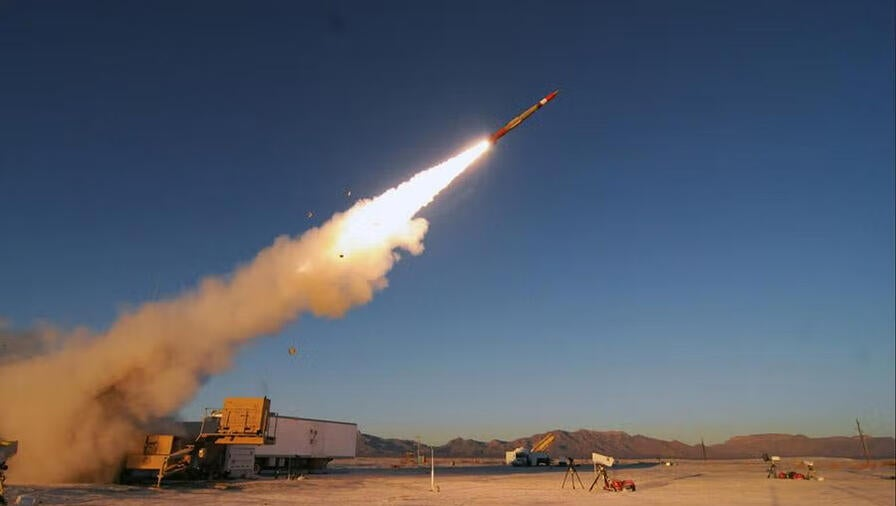
Boeing has received an undefinitized contract action worth approximately $14.7 billion from Lockheed Martin to expand production and delivery of PAC-3 Missile Segment Enhancement seekers under a seven year framework intended to triple output.
The seeker is one subsystem within the PAC-3 MSE interceptor rather than the complete missile. Boeing supplies the guidance hardware to Lockheed Martin, making Huntsville seeker production one part of a larger interceptor manufacturing chain that also includes propulsion, structures, control equipment and final assembly.
The seeker provides the target information used by PAC-3 MSE during the engagement. Radar electronics have to acquire and track the target accurately enough for the interceptor to refine its flight path as the distance closes, placing tight requirements on radio frequency performance, processing and calibration.
Precision electronics make test capacity part of the production rate. A seeker that has completed mechanical assembly still has to demonstrate that its radar and processing functions operate within specification before it can be accepted for delivery to the missile prime contractor.
Boeing was already expanding before the latest contract action. Multiyear awards announced in October 2025 covered more than 3,000 additional seekers at production rates of up to 750 units annually through 2030.
The new framework triples production beyond that earlier programme, but Boeing has not published a simple future annual rate that can be calculated by multiplying 750 by three. The previous figure describes rates under the earlier awards, while the latest action establishes a broader output objective over seven years.
Factory expansion has accompanied the contractual increase. Boeing has invested more than $200 million since 2024 in PAC-3 seeker capacity in Huntsville, including an additional 35,000 square feet of production space, while hiring and supplier preparation began before the latest award.
Additional floor space only raises finished output if component supply and test equipment expand at the same pace. Seekers use specialised electronics and radio frequency components that may require qualified suppliers, dedicated manufacturing processes and controlled materials that cannot be substituted without engineering approval.
First pass quality also affects usable capacity because every unit sent through fault investigation or rework occupies technicians and test equipment that would otherwise process another seeker. Boeing has specifically linked its production work to improved processes and controls intended to maintain quality as rates increase.
The undefinitized structure allows authorised work to proceed while remaining contractual details are settled. That protects production activity that would otherwise wait for final terms, particularly where supplier orders, hiring or equipment purchases have to begin well before finished seekers are delivered.
Lockheed Martin still has to combine the seeker with the rest of the PAC-3 MSE interceptor. A large increase in seeker output cannot by itself triple finished missile deliveries if propulsion, structures or another subsystem remains at a lower rate.
The reverse is also true: investment elsewhere in PAC-3 MSE production cannot raise interceptor output if guidance hardware arrives more slowly than the rest of the missile. Production planning therefore has to keep several independently manufactured subsystems moving at compatible rates.
A seven year framework gives Boeing and its suppliers a longer demand horizon for equipment and workforce investment than a sequence of short annual awards. Capital spending on factories and specialised tooling is easier to justify when the production requirement extends far enough for that capacity to be used repeatedly.
The direct measure of the programme will be accepted seeker deliveries rather than the headline contract value. Annual output, test yield and supplier performance will show whether Huntsville can move from the previous rate of up to 750 units a year towards the larger capacity contemplated by the new framework.