IN Brief:
- SRC has received a $10.24 million initial order for three Gryphon radars.
- The order includes one four panel R1440 and two R1540 surveillance and precision fire control radars.
- The equipment order sits beneath a three year IDIQ with a maximum cumulative ceiling of $500 million.
SRC has received a $10.24 million initial order for three Gryphon radars under a three year Domestic Shield contract, giving the wider $500 million procurement vehicle its first disclosed SRC equipment package.
The delivery order covers one R1440 and two R1540 radars together with integration and programme support, installation support and training. The $500 million figure is the maximum cumulative ceiling of the indefinite delivery, indefinite quantity contract rather than money already committed to SRC.
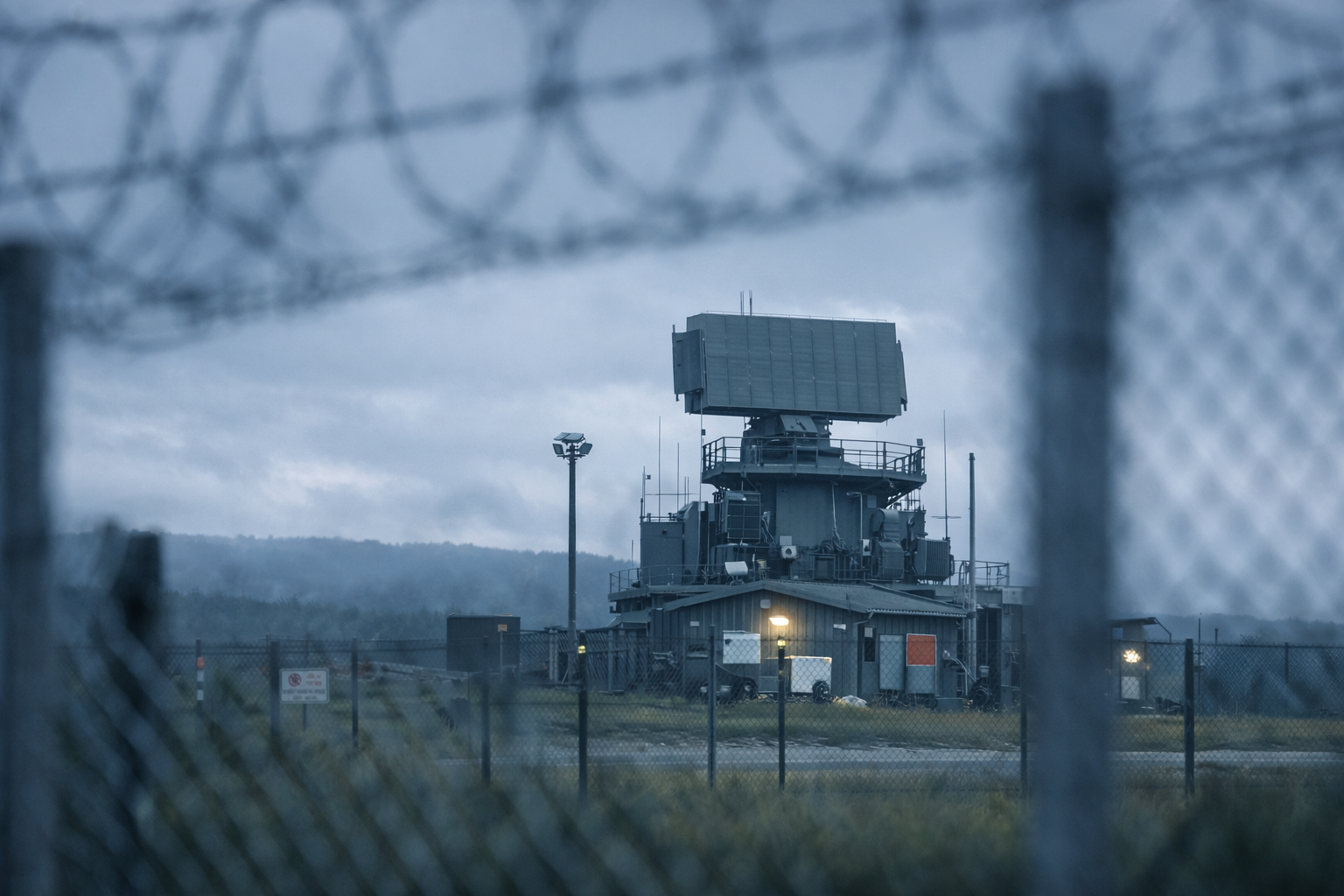
The R1440 uses four active electronically scanned array panels to provide persistent surveillance around the installation. Electronic beam steering allows each panel to direct radar energy without mechanically rotating the complete antenna, supporting rapid updates across the covered sectors.
SRC designed the four panel arrangement to provide continuous 360 degree coverage. Fixed panels avoid the revisit interval created by a single mechanically rotating antenna, although actual track performance still depends on target characteristics, radar settings, terrain and the surrounding electromagnetic environment.
The two R1540 radars add extended range surveillance and precision fire control functions. Fire control requires more accurate and more frequent target information than basic detection because an effector needs a sufficiently precise track to support an engagement.
Both radar types use active electronically scanned array technology and air cooling. Eliminating a liquid cooling circuit reduces some installation hardware, while the compact designs allow the systems to be used across different fixed or mobile arrangements subject to power, communications and siting requirements.
The initial order combines persistent surveillance and fire control rather than buying three identical sensors. One R1440 can maintain broad coverage while the R1540 systems provide longer range and more precise tracking for targets that require closer attention or engagement support.
Radar output still has to reach a command system before it becomes part of a complete counter drone response. Track data, identification information and sensor status need defined interfaces so operators can combine the radar picture with other sensors and, where authorised, an effector.
Integration support in the order covers that connection work rather than treating the sensors as standalone hardware. Network settings, message formats and command interfaces have to match the system receiving the radar data, while software configuration has to remain consistent across the installed equipment.
Installation support addresses the physical side of the same problem. Radar position affects line of sight and clutter, so a site has to provide appropriate coverage as well as electrical power, communications and access for maintenance. Buildings, terrain and other structures can restrict the areas visible to the sensor if siting is poor.
Training forms part of the initial order because operators and maintainers need to understand both the radar picture and the equipment configuration. An operator has to distinguish useful tracks from clutter and manage the sensor within the wider system, while maintainers need enough information to isolate faults and restore service.
SRC’s Gryphon R1410, R1430, R1440 and R1540 are already listed in the JIATF-401 counter UAS marketplace. The new IDIQ gives the government a contracting route for ordering SRC equipment and services, while the $10.24 million delivery order identifies the first actual hardware being purchased through that vehicle.
Further orders can be placed during the three year term, but the ceiling does not establish how many will follow or which Gryphon configurations would be selected. Treating the full $500 million as committed revenue would therefore overstate the procurement.
The present commitment is specific: one R1440, two R1540 radars and the engineering, installation and training work required around them. Delivery and installation of those three systems will provide the first evidence of how the Domestic Shield contract moves from available procurement capacity into fielded SRC hardware.