IN Brief:
- Thales Australia and Deakin University have announced a partnership to develop and validate autonomy for BladeHAUL.
- The hybrid-electric uncrewed ground vehicle combines Bushmaster-derived engineering with power and vehicle control systems from 3ME Technology.
- The collaboration will examine operational effectiveness and reliability, with no confirmed production order or completed autonomous qualification programme.
Thales Australia has formed a partnership with Deakin University to develop, test and validate autonomous functions for BladeHAUL, the hybrid-electric uncrewed ground vehicle developed with Australian engineering company 3ME Technology. The collaboration will bring Deakin’s expertise in robotics and intelligent systems into a programme centred on heavy vehicle autonomy, with testing intended to establish the platform’s effectiveness, reliability and operational suitability under demanding conditions. The companies have not announced a contract for production vehicles or completed autonomy qualification.
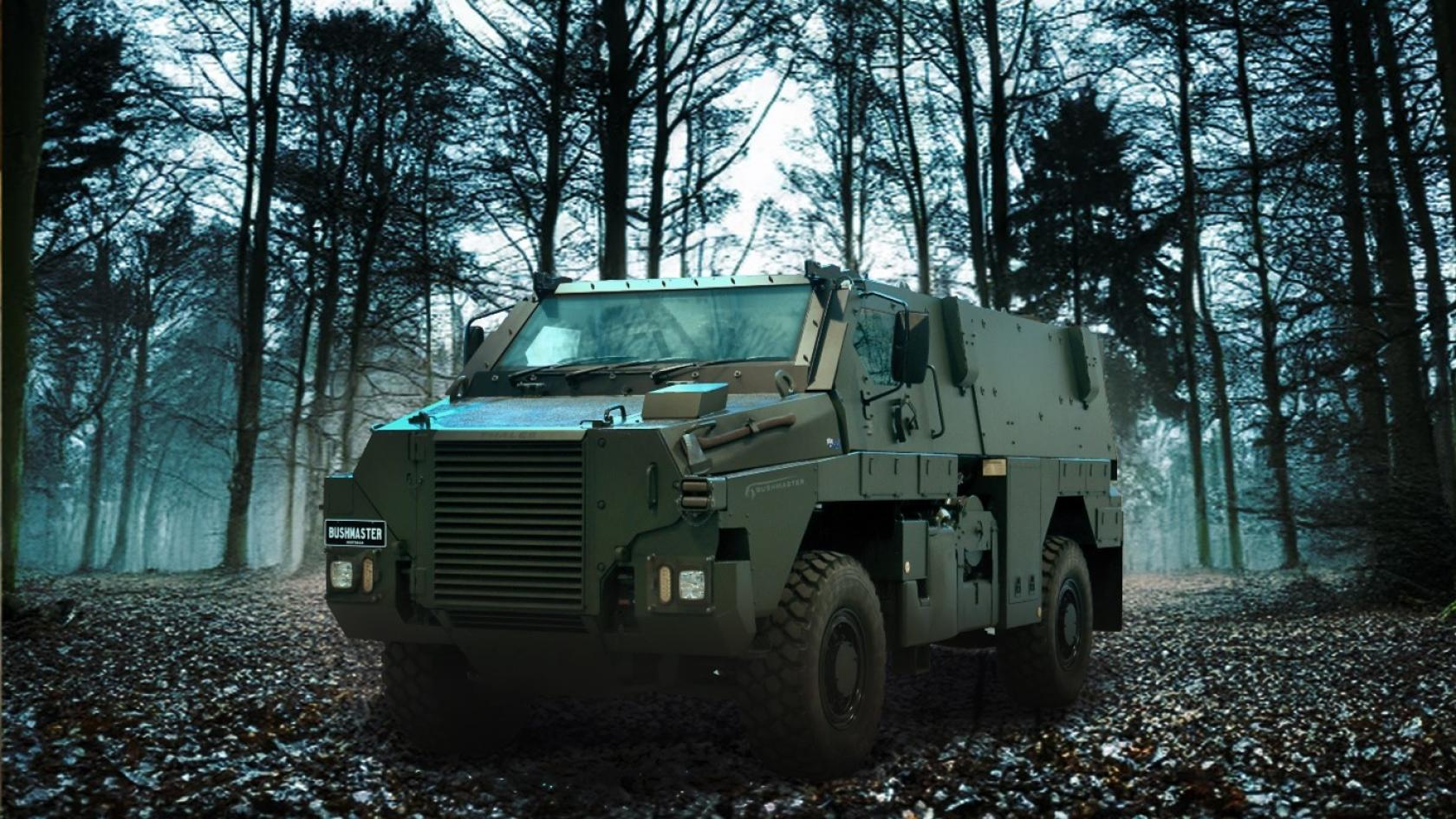
The agreement follows BladeHAUL’s unveiling at the Land Forces exhibition in Perth on 6 October, when Thales and 3ME introduced the vehicle as a Bushmaster-derived platform combining heavy payload transport with onboard electrical power generation. The separate 8 October partnership extends development into autonomous control and validation. Whereas the original vehicle announcement established the platform’s configuration and intended mission roles, the new work with Deakin concerns the testing needed to establish how its autonomous systems perform when integrated with the vehicle.
BladeHAUL draws on the Bushmaster Protected Mobility Vehicle’s established manufacturing and engineering base, with Thales’s Bendigo operation contributing the vehicle platform and 3ME Technology supplying hybrid propulsion, power management and control expertise from Newcastle. The uncrewed design is intended to carry payloads of up to 10 tonnes and accommodate a standard 20-foot shipping container. Its proposed roles extend from military logistics and transport to mobile power supply, surveillance and the integration of additional mission equipment.
Carrying a logistics payload of the proposed size without an onboard driver places sensing, steering, braking and vehicle stability within the same control task. An autonomous controller needs information about the vehicle’s position, heading and surroundings, together with the ability to command steering, propulsion and braking within the system’s operating limits. The mass and dimensions of a heavy logistics platform also influence stopping distance, manoeuvrability and stability, particularly when payload weight and its distribution change. Deakin’s announced role in autonomy research and validation provides a route for examining how the control functions interact with these physical characteristics.
Those control decisions must then be translated into mechanical and electrical responses that remain appropriate as terrain, traction or payload conditions change. Steering and propulsion commands must respect the limits of the drive equipment and the measured response of a heavily loaded vehicle. Changes in terrain, traction or load can alter how the vehicle responds, requiring the autonomous system to account for the actual operating conditions. Specific test scenarios, sensor configurations and performance thresholds have not been disclosed.
Because BladeHAUL can supply electrical power away from established infrastructure as well as drive its own traction system, both uses draw on the vehicle’s hybrid architecture. Its 3ME Technology systems bring together the company’s BladeVOLT energy storage, BladeDRIVE propulsion and BladeNET control technologies. Integrating these functions requires management of power demand across traction and other electrical loads, particularly where the platform is expected to support equipment while also remaining capable of movement.
A logistics load, an external power requirement and additional mission sensors place different demands on that architecture, even when carried by the same vehicle. A transport mission prioritises mobility and delivery of the load, while operation as a remote power source introduces sustained electrical demand. Additional mission equipment may affect weight distribution, power consumption and system integration. The practical flexibility of the vehicle will depend on how these operating requirements are accommodated and validated for each intended configuration.
Demonstrating reliability will require repeated tests of the autonomous functions under changing conditions, rather than relying on isolated development demonstrations. Testing may need to address interactions between software decisions, vehicle movement and operator intervention, although the companies have not published a formal safety case or qualification matrix. Demonstrating an autonomous function during development does not establish that the complete system is qualified for unrestricted military use.
The collaboration joins Deakin’s robotics research with the manufacturing and hybrid propulsion capabilities already provided by Thales and 3ME. Thales has manufacturing experience through its Bushmaster programme, while 3ME contributes specialist electrical and hybrid propulsion engineering. The resulting development arrangement allows autonomy research to be assessed against the constraints of a physical vehicle rather than remaining confined to simulation or laboratory demonstrations. Jeff Connolly, Chief Executive of Thales Australia and New Zealand, has identified demanding operational environments as the focus of the work, while James Mullins, Deakin’s Director of Defence and Security, has emphasised the contribution of robotics and intelligent systems expertise.
BladeHAUL is being presented as a modular vehicle capable of carrying logistics loads and accommodating mission equipment, but the companies have not confirmed a production order from the Australian Government. Nor has the October partnership established that autonomous qualification has been completed. Further development and testing will determine the operational configurations that can be supported and the evidence required for prospective customers to assess them. The immediate programme now joins Thales and 3ME’s vehicle and power systems engineering with Deakin’s research capability, creating a defined path for evaluating autonomous operation on the existing BladeHAUL platform.