IN Brief:
- The US Navy has executed a $150 million modification to its existing X-BAT Other Transaction agreement under the Defense Exportability Features programme.
- Shield AI will contribute another $150 million, taking announced public and private commitments to $400 million when combined with the August funding.
- Propulsion integration and wind tunnel testing have progressed, while X-BAT’s first flight remains scheduled for later in 2026.
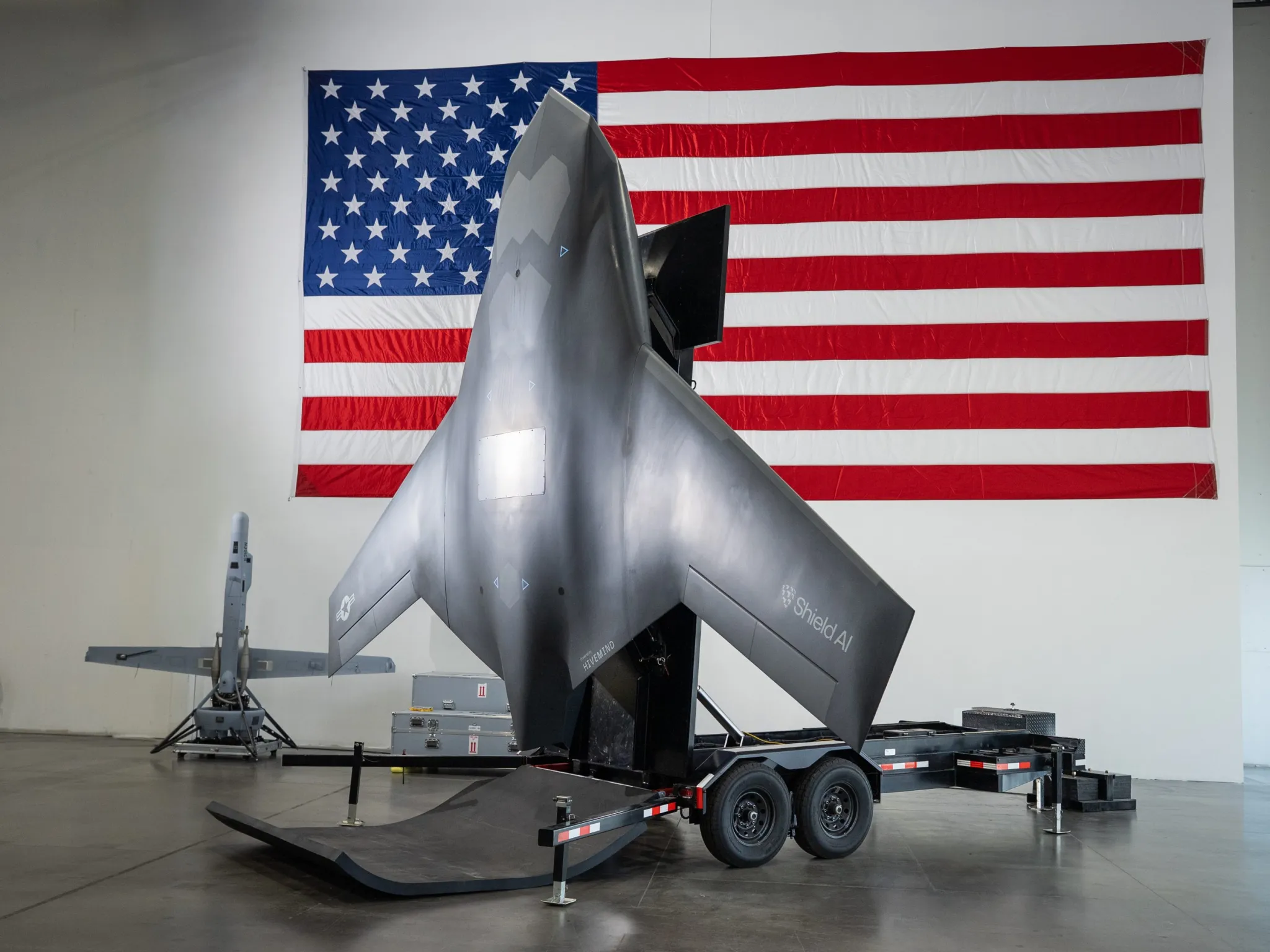
Shield AI has secured a $150 million modification to its existing US Navy development agreement for X-BAT, the company’s autonomous vertical takeoff and landing fighter aircraft. The additional government funding will support work under the Defense Exportability Features programme, while Shield AI has committed a matching $150 million of its own capital. Together with earlier funding decisions, the two contributions bring announced government and company investment in X-BAT to $400 million as the programme approaches its first flight tests.
The $150 million Navy award modifies an existing Other Transaction agreement and supports development rather than purchasing operational aircraft. Funding is being provided through the Office of the Under Secretary of War for Acquisition and Sustainment, building on development activity already supported by the service and the Defense Innovation Unit. In August, the Navy announced a separate $50 million modification through its Runway Independent Maritime Expeditionary Strike (RIMES) effort, with Shield AI independently committing another $50 million at that stage.
The new $300 million combined contribution and the previous $100 million account for the $400 million programme total reported by the company. That total represents announced public and private development commitments, rather than the value of aircraft ordered for operational service. Neither the number of aircraft that might eventually be acquired nor an approved production contract has been disclosed. The funding provides additional resources for engineering, testing and the work needed to prepare the aircraft for prospective US and international customers.
The aircraft under development combines vertical launch and recovery with a fighter-class engine, internal payload capacity and autonomous flight software. Shield AI intends the aircraft to operate from ships, remote locations and sites with limited infrastructure, giving it a different basing arrangement from conventional combat aircraft. The programme remains in development, and the aircraft’s planned operational performance has yet to be established through a completed flight test campaign.
Achieving vertical and conventional flight with the same airframe requires propulsion thrust to be directed and controlled across very different operating conditions. X-BAT uses a GE Aerospace F110-GE-129E engine integrated with an advanced axisymmetric vectoring exhaust nozzle, known as AVEN. The nozzle is intended to redirect engine thrust, providing control forces needed for vertical launch, recovery and changes in aircraft attitude. Engineers must coordinate nozzle movement with engine controls and the aircraft’s flight control system, because propulsion behaviour is closely connected to the stability of the vehicle during these operating conditions.
In July, Shield AI and GE Aerospace completed an engine light-off and nozzle integration campaign at GE’s test facility in Peebles, Ohio. The work brought together the engine, refurbished AVEN hardware and associated controls for functional testing, following earlier development of the nozzle technology for an experimental fighter programme. Completion of that campaign demonstrated operation of the integrated propulsion equipment on the ground. It did not establish that X-BAT had completed vertical flight, which remains a subsequent programme milestone requiring testing of the full aircraft.
The companies have also undertaken low and high speed wind tunnel testing, including work to assess the aerodynamic characteristics associated with the aircraft’s weapons bays. Internal bays must be incorporated into the surrounding aircraft structure while accounting for aerodynamic forces and the effects of openings in the external surface. Those interactions become particularly important when the aircraft is expected to operate across different speeds and flight conditions. Shield AI has reported validation of weapons bay aerodynamics during testing, although detailed results and the complete aircraft performance envelope have not been released.
Autonomous operation will be provided through Shield AI’s Hivemind software, which the company is developing to support flight and mission functions when satellite navigation or communications are degraded or unavailable. Integrating that software into X-BAT requires coordination between the aircraft’s sensors, flight control equipment and mission systems, with the resulting commands executed within the operating limits of the platform. The company is developing the aircraft alongside its autonomy software, but the successful performance of Hivemind on other platforms does not establish the qualification status of the complete X-BAT system.
Shield AI says approximately 500 engineers at the company and its principal suppliers are working across flight test aircraft, propulsion, systems integration and future production arrangements. Ship suitability is among the parallel engineering workstreams, although the company has not published a completed qualification result. The company has identified Newton, Kansas, as a centre for flight testing and acceptance activity and Des Moines, Washington, as a future production location. These facilities form part of its intended industrial structure, while the rate and timing of aircraft manufacture will remain dependent on programme development and customer commitments.
The Defense Exportability Features programme adds engineering and configuration work intended to make the aircraft suitable for potential customers outside the initial US development effort. Exportable defence equipment may require configuration management, technical controls and consideration of which subsystems can be supplied or supported under applicable government approvals. The exact exportability changes funded under this agreement have not been identified publicly. Consequently, the additional award cannot be taken as confirmation of a particular export sale or that an international production configuration has completed qualification.
Shield AI has already pursued international industrial relationships, including discussions with Polish defence companies concerning X-BAT design, production and sustainment. Those proposals remain separate from the new Navy funding modification and from any future aircraft purchase agreement. Although several potential national industrial bases may contribute to the programme, the company has not published an allocation of the latest funding by country, supplier or engineering activity. Its immediate work remains the development and testing of the aircraft and the supporting systems needed to demonstrate the intended capability.
Following the completed engine and nozzle ground tests, the company plans its first X-BAT flight later in 2026, when the integrated aircraft can begin to be assessed in flight. A flight programme will provide opportunities to assess the integrated aircraft under operating conditions that cannot be reproduced completely through individual component testing. Further qualification, manufacturing development and customer decisions would then be needed before service introduction. The additional Navy agreement modification and matching company investment provide a larger development commitment, but the next substantive evidence of programme progress will come from the aircraft’s flight tests and the resulting engineering results.