IN Brief:
- Neways and Scaled Autonomy expanded their collaboration on 20 November to develop and produce an onboard drone AI module.
- The companies have already developed prototype hardware through the DELTA-C consortium, with Neways responsible for electronics and production engineering.
- The next phase is industrialisation; neither a production volume nor a confirmed delivery date was disclosed.
Neways and Dutch autonomy developer Scaled Autonomy are expanding their partnership to bring an onboard artificial intelligence module for interceptor drones towards industrial production. The companies announced the arrangement on 20 November, building on a working prototype developed through the DELTA-C consortium. Their proposed division of work combines Neways’ electronics design and manufacturing capabilities with Scaled Autonomy’s software and experience in autonomous aircraft functions. The new step is an expanded development and production relationship, not a disclosure of a completed manufacturing ramp-up.
DELTA-C has produced working prototype hardware, giving the companies a defined design to move towards manufacture. Neways’ contribution has included electronics development, the sourcing of components, and production engineering, while Scaled Autonomy develops the software intended to operate on the module. The companies describe the product as suitable for autonomous interceptor aircraft. They have not published its processor, memory, sensor interfaces, power consumption, or independently validated interception performance, so the announcement establishes a hardware-development milestone rather than a complete technical specification.
For an onboard module to support autonomous flight functions, it must process information made available by the aircraft and exchange commands with compatible flight-control equipment. The available processing power, memory, electrical supply, and software interfaces determine which functions can run on the hardware. A laboratory prototype can demonstrate a particular combination, but repeatable production requires controlled components, tested firmware builds, assembly documentation, and unit-level acceptance criteria. The partners have not disclosed how the prototype connects to a specific aircraft’s sensor and control architecture, leaving those integration details unverified.
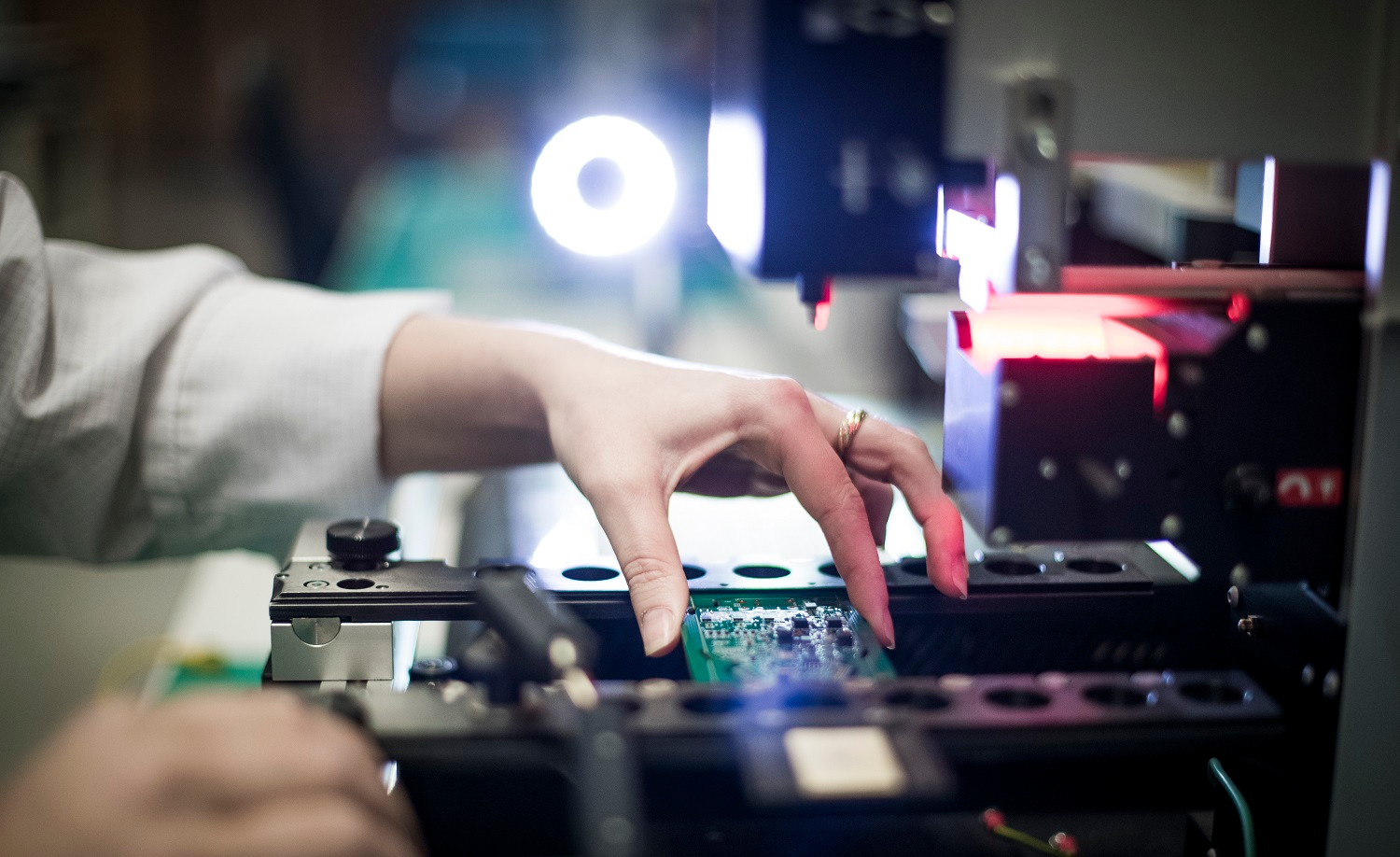
Neways’ expanded role includes continued hardware development, sourcing, assembly, and manufacturing. Design for manufacturing examines whether a product conceived for prototype performance can be built repeatedly with the available equipment and components. Standardised board designs, test access, assembly documentation, and traceability are common considerations. The companies have not published their factory routing, component selection, or qualification plan, so there is no basis to claim that a named module is already shipping at industrial scale.
Electronic component choice also affects supply resilience. Small airborne systems may have limited space, power, and cooling capacity, but still need reliable operation through vibration, environmental exposure, and repeated use. A design that depends on difficult-to-source parts can be vulnerable to production interruptions, while a replacement component may require renewed electrical and software validation. The partnership pairs autonomy-development expertise with an organisation that has experience translating complex electronics into production and managing associated supply chains.
Scaled Autonomy describes its core business as AI autopilot software for autonomous interceptor drones. The appeal of such software is the prospect of reducing operator workload during some flight functions, subject to the sensors, controls, and safety arrangements actually installed on the aircraft. Autonomy does not eliminate the need for integration with wider air-defence systems, including reliable target information and procedures for operating in controlled airspace. No complete deployed counter-drone system or end customer is identified in the company’s published information.
Keeping hardware design and manufacturing knowledge in the Netherlands is an explicit aim of the partnership. Scaled Autonomy’s software development and Neways’ production engineering span different stages of the same subsystem, from algorithms and electronic layout through assembly, test, and support. The arrangement does not establish that the semiconductors, circuit-board materials, or every other component will be made domestically. Neways’ role in sourcing and production is nevertheless relevant to how readily the module can be built again when individual components become unavailable or need replacing.
The next engineering phase will have to convert DELTA-C’s working prototype into a documented configuration that can be assembled and tested consistently. Component substitutions may affect processing performance, thermal behaviour, or communication with other aircraft equipment, even where a board’s external dimensions remain unchanged. Neways has not disclosed production yield, reliability qualification, unit cost, delivery schedule, or an initial customer order. The prototype therefore supports the case for industrialisation without establishing that volume production has begun.
Neways announced a separate direction-finding sensor collaboration with S&T on 19 November. That development concerns the detection and localisation of radio-frequency signals and is distinct from the Scaled Autonomy AI module. Although both involve electronic subsystems for uncrewed aircraft, no integration between the two projects has been announced. Nor does the latest agreement identify a complete interceptor platform, the manufacturer of an associated airframe, or a defence customer that has contracted for a specified number of modules.
Manufacturing support will also continue after the first qualified design. A revision to the circuit board or software needs a record of which hardware and firmware combinations were tested, particularly where equipment may be maintained or upgraded over several years. The companies have committed to developing and producing the module, but have published no factory ramp-up date or output target. The next verifiable steps are completion of production engineering, qualification of the finished module, and disclosure of any resulting orders; the current announcement remains a transition from prototype development towards manufacture.