IN Brief:
- The US Army awarded Firehawk Aerospace $14.55m in funded research and development work on thermoplastic-based base-bleed propulsion technology.
- Base bleed is designed to reduce drag behind a projectile, while thermoplastic processing presents manufacturing and qualification considerations.
- Work is scheduled at Firehawk's Texas operation until November 2028; no production quantity or verified performance gain was disclosed.
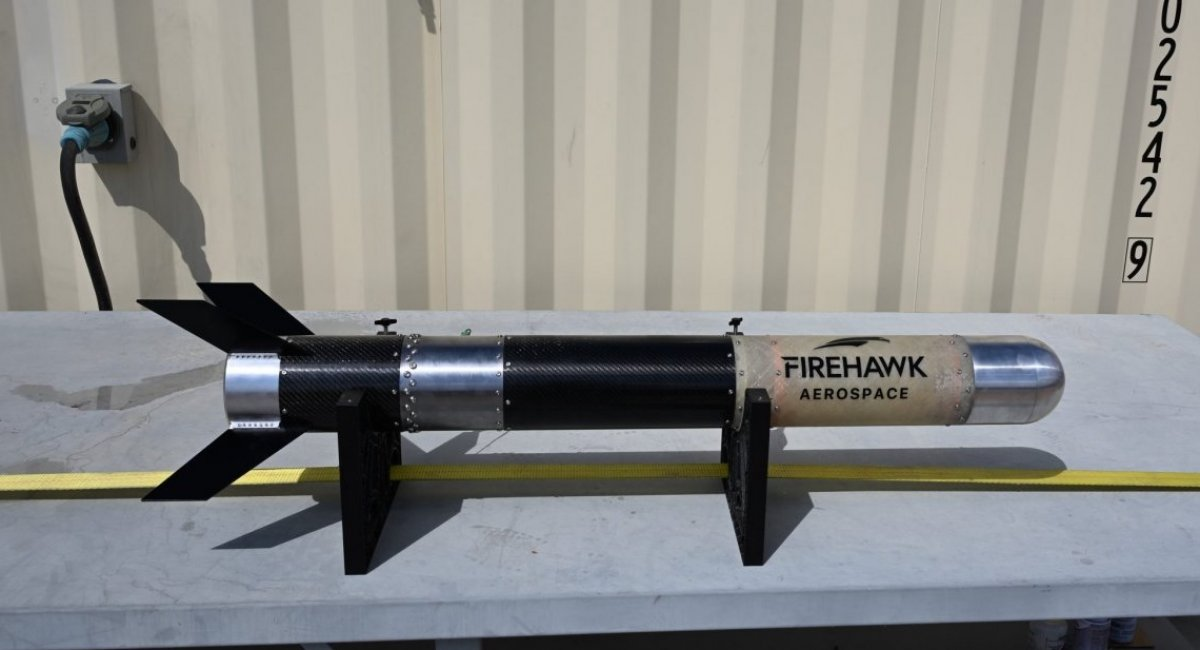
Firehawk Aerospace has received a $14.55 million US Army research and development contract to mature thermoplastic-based base-bleed technology. The firm-fixed-price award, announced on 20 November, places work at the company’s Addison, Texas, location with completion expected in November 2028. It establishes a funded technology development requirement rather than a procurement of completed artillery rounds, and the public notice gives no performance target for an operational munition.
The Army obligated $14,549,604 in fiscal 2026 research, development, test and evaluation funds at award. Internet solicitation produced one bid, and Army Contracting Command at Aberdeen Proving Ground, Maryland, is responsible for contract W911NF-27-C-A001. The financial record identifies the whole development contract as funded, unlike an indefinite-delivery framework that may only set a future ordering ceiling. Individual test phases, production quantities and acceptance requirements are not detailed in the short award notice.
Base bleed is used to address aerodynamic resistance arising in the low-pressure wake behind a travelling projectile. By releasing gas into that region, a base-bleed unit can reduce the drag contribution from the rear of the projectile; it does not work in the same way as a rocket motor providing substantial forward thrust. Its effect depends on aerodynamic configuration and operating conditions, so the Army’s contract value cannot establish a range increase for any particular round. The announced work concerns the maturation of the underlying technology rather than a disclosed field-test result.
Firehawk’s proposed approach uses thermoplastic-based materials, bringing manufacturing and material control questions into the development programme. General Dynamics Ordnance and Tactical Systems has previously described Firehawk’s thermoplastic formulations and injection and compression moulding methods in the companies’ partnership on 155mm base-bleed motors. Those techniques suggest a different processing route from traditional cast or cured components, although neither partner has supplied a validated production throughput comparison for this Army contract. Repeatability, material behaviour and application-specific qualification remain necessary before an industrial method can be treated as established.
Control of the manufacturing process is closely connected with reliable component quality. Changes in feedstock characteristics, the handling of materials, dimensional variation or storage conditions may affect whether an output meets its acceptance criteria. Production engineering therefore requires defined inspections, test evidence, and documented traceability for an intended application. The public Army contract contains no detailed process specification or qualified material recipe, leaving the precise technical milestones to the programme’s internal requirements.
General Dynamics Ordnance and Tactical Systems announced a strategic partnership with Firehawk in May 2026 to advance manufacturing of 155mm base-bleed motors. That agreement provides a relevant industrial connection to a large ammunition producer and confirms that the companies have identified this technology as a prospective production route. The November award, however, names Firehawk as the government contractor and does not identify General Dynamics as a participant in W911NF-27-C-A001. A production order or subcontract under the new work would require a separate confirmation.
A firm-fixed-price arrangement establishes the basis on which the Army has contracted for the research, but the public figure does not disclose Firehawk’s budget allocation between engineering, materials, trials, and facilities. Addison is the stated performance location, with no new production line, workforce expansion or capital purchase named in the award notice. Those omissions limit any assessment of industrial scale. For now, the confirmed commitment is development funding covering work scheduled to continue until 30 November 2028.
Technical maturation requires evidence that the chosen material and process can deliver consistent results under the acceptance conditions set for the intended application. Representative samples, inspection data and assessment of compatibility with a wider assembly are relevant considerations, but the Army has not released an experiment plan or its pass criteria. The distinction between research and serial manufacture remains significant: even successful development would normally be followed by separate qualification, capacity and procurement decisions. None of those later steps is documented in this award.
The industrial interest in base-bleed systems extends to the ability to make components consistently rather than merely demonstrate a single design. Repeatable manufacturing can influence production planning and quality assurance, particularly where specialist materials and testing place constraints on output. The partnership between Firehawk and General Dynamics indicates an avenue for further development, but there is no publicly supported numerical claim for lower unit costs, higher throughput or an improvement in an accepted artillery projectile’s range arising from the November contract.
Research work is scheduled in Addison through 30 November 2028. Evidence of completed technical reviews, manufacturing qualification, or a later production procurement would clarify the outcome of the Army’s investment. As recorded on 20 November, the $14.55 million award funds the maturation of thermoplastic-based base-bleed technology, with no stated order for an operational munition and no reported performance validation attached to the contract.