IN Brief:
- VideoRay is supporting an AEVEX-led team selected for a US Navy mine-countermeasure prototype agreement following competitive demonstrations.
- Testing combined an uncrewed surface vessel, automated launch and recovery equipment, and VideoRay’s Mission Specialist Defender underwater robot.
- The prototype selection is separate from VideoRay’s existing $92.6 million MK20 Defender production and sustainment contract.
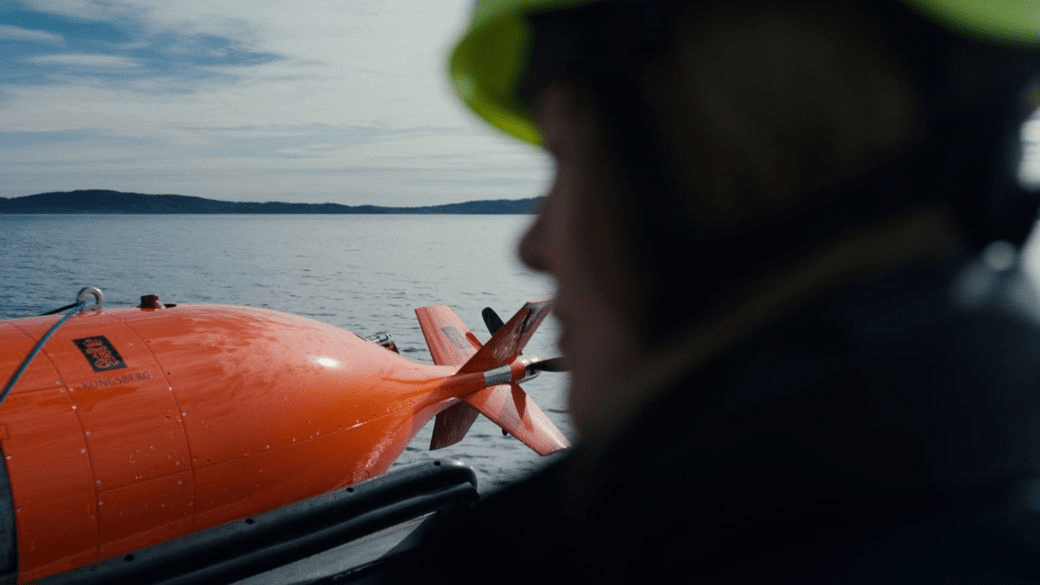
VideoRay, the underwater robotics subsidiary of AeroVironment, is supporting an AEVEX-led team selected for a US Navy mine-countermeasure prototype agreement after a competitive demonstration of autonomous maritime operations. The integrated system combined an uncrewed surface vessel with VideoRay’s Mission Specialist Defender underwater robot, allowing personnel to conduct mine investigation and simulated neutralisation from a remote control station. The selection follows the Navy and Defence Innovation Unit’s Mine Countermeasure Modernization Prize Challenge, which assessed commercial technologies capable of conducting operations while keeping personnel outside hazardous areas.
The team includes BlackSea Technologies, which now forms part of AEVEX Maritime Systems, and incorporated equipment and expertise from ECS Special Projects during the challenge. BlackSea was one of three companies awarded prizes after the Navy’s demonstrations, while the AEVEX-led team was subsequently selected for a prototype Other Transaction Agreement. The arrangement creates a route for further development and evaluation of the combined system, although the agreement’s financial value, delivery quantity and detailed acceptance schedule have not been disclosed.
During the trials, an AEVEX uncrewed surface vessel travelled to the assigned operating area and maintained its position while supporting the underwater vehicle. A launch and recovery system transferred the robot between the surface vessel and the water, after which the equipment performed target investigation, simulated neutralisation and assessment following the engagement. Operators managed the mission from a ground control station beyond the immediate operating area. The demonstration therefore tested a sequence of connected maritime functions rather than the underwater robot working as a standalone system.
Launching the underwater robot from an uncrewed surface vessel can keep the operating team clear of the immediate mine-countermeasure area, but shifts more responsibility to remote controls and vehicle integration. Conventional remotely operated underwater vehicles often depend on a crewed vessel providing launch, recovery, power or communications support. An uncrewed host can carry the underwater system into an assigned area without placing the operating team aboard the vessel. However, the arrangement creates additional requirements for communication between the remote operators, surface platform and underwater equipment, as well as for coordinating the activities of the two vehicles.
The launch and recovery interface is particularly important because the underwater robot must be handled reliably while the surface vessel responds to waves, currents and its own control inputs. Position keeping can reduce unwanted vessel movement during the transfer, although it cannot eliminate the forces created by the surrounding sea. The mechanical handling equipment must also accommodate the robot’s dimensions, lifting arrangements and onboard equipment without disrupting the surface vessel’s stability or operating systems. VideoRay has confirmed successful demonstration of autonomous launch and recovery, but has not disclosed the environmental limits established during testing.
Mission Specialist Defender is a modular remotely operated underwater vehicle designed to accept different sensors, manipulators and mission payloads. The configuration allows specialist equipment to be selected according to the task, while retaining a common robotic platform and its associated control arrangements. VideoRay’s earlier Navy work has included underwater systems equipped with sonar, positioning equipment and manipulators, providing experience in integrating the instruments needed for subsea investigation and intervention. The specific payload configuration used during the latest competition has not been fully described.
Mine-countermeasure operations place demanding requirements on the information gathered underwater because identifying a possible object does not automatically establish that it is a mine. Sonar and other sensors may provide information about its position and characteristics, while closer inspection can be required before a further action is authorised. The robot must be capable of operating close enough to collect useful information while remaining within its control and navigation limits. In the reported demonstration, the engagement was simulated, so the result should not be interpreted as confirmation that an explosive device was destroyed during the trial.
Because radio communications do not travel through seawater as they do through air, the surface vessel and submerged robot require suitable links and control arrangements. The complete system therefore needs suitable communications arrangements between its elements, together with procedures for maintaining control when the underwater vehicle is operating away from the surface platform. The companies have described the demonstrated arrangement as resilient and suitable for over-the-horizon operations, without publishing its communications architecture, maximum separation distance or performance during signal loss.
The Navy’s challenge sought technologies capable of addressing both bottom mines and threats nearer the surface, with particular emphasis on equipment that could be deployed rapidly from commercially developed systems. Successful integration depends on the surface vessel, launch equipment, underwater robot and mission software being tested together, because the failure of any connecting function can prevent the overall mission from being completed. Additional qualification will also need to establish repeatability across operating conditions and equipment configurations before a particular system can be accepted for wider use.
The Navy selection follows VideoRay’s existing manufacturing and sustainment work on the MK20 Defender, awarded under a separate contract in 2024. In May 2024, the company received a contract covering five years with a maximum value of $92.6 million covering production, sustainment and development of its MK20 Defender remotely operated vehicle platform. That programme supports explosive ordnance disposal and expeditionary mine-countermeasure requirements through the Maritime Expeditionary Standoff Response capability. The latest AEVEX-led selection is a separate prototype effort involving the integration of underwater equipment with an uncrewed surface platform, rather than an announced increase to the earlier contract.
The earlier production arrangement provides a manufacturing and support foundation for VideoRay’s participation in the new programme, with Mission Specialist Defender designed and built at the company’s Pottstown operation in Pennsylvania. Its modular configuration permits engineering changes and payload development within an established product family, although new host vessels and mission equipment still require specific integration work. The Navy intends to use successful challenge technologies within autonomous mine-countermeasure kits, but the selection does not establish a committed fleet-wide deployment or production quantity. Further testing and contractual decisions will determine how the demonstrated system progresses into operational use.