IN Brief:
- Denmark’s defence procurement agency has contracted Systematic to deliver counter-drone command-and-control software.
- SitaWare Headquarters and SitaWare Insight will provide operational awareness and AI-supported analysis across multiple locations.
- The contract includes integration with Terma’s existing counter-drone capability, as well as testing, deployment, training and support.
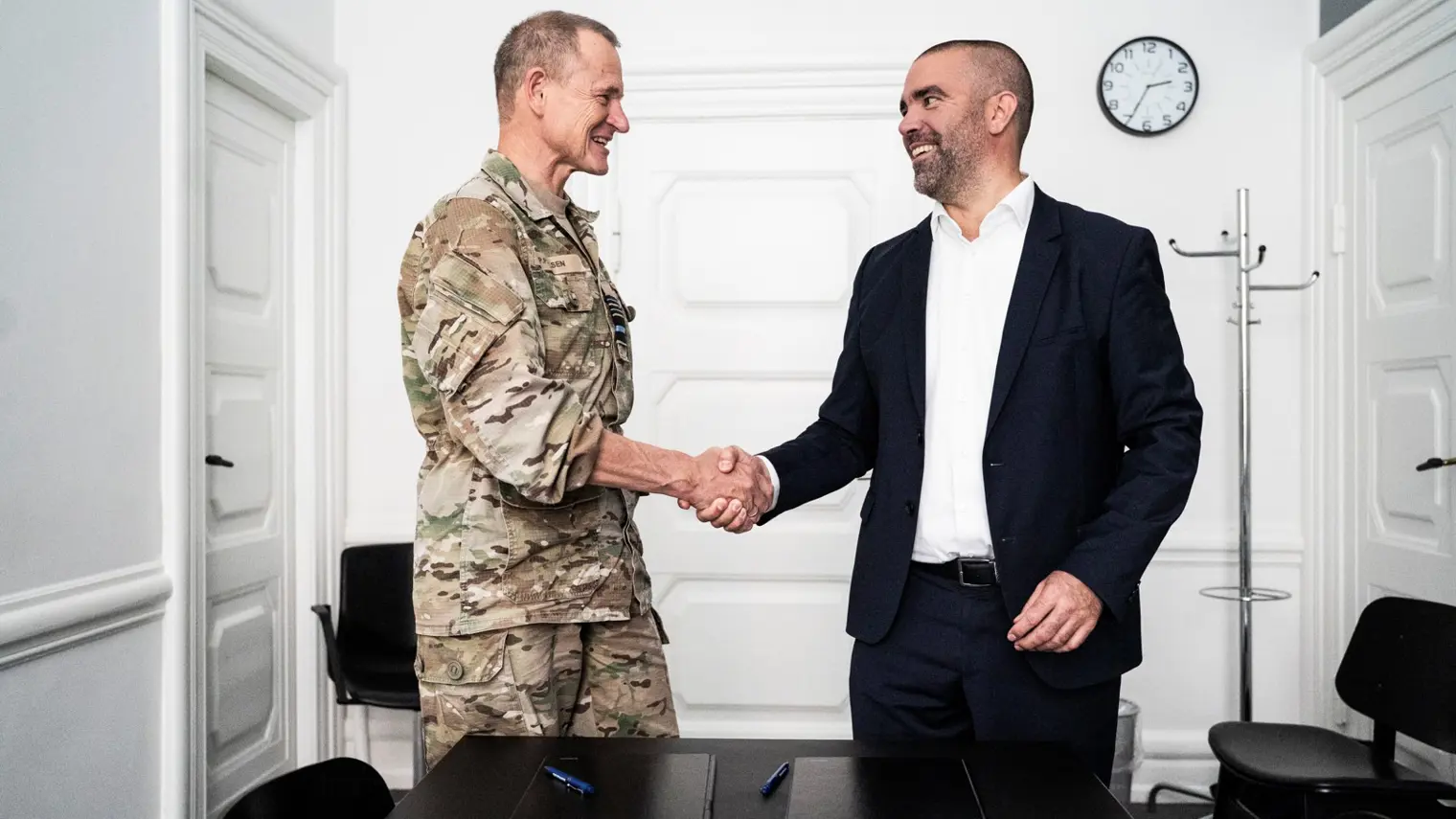
Systematic has secured a contract from Denmark’s Ministry of Defence Acquisition and Logistics Organisation (DALO) to provide command-and-control software for the country’s counter-drone defence network. The agreement will extend the company’s SitaWare platform across Danish military sites and integrate it with existing detection and response systems, including technology being delivered by Terma. The resulting capability is intended to give military and civilian authorities access to a shared operational picture supported by artificial intelligence analysis.
The contract covers integration, testing, deployment, training and support, adding a new software component to Denmark’s developing national counter-drone arrangements. Rather than requiring personnel at different locations to work exclusively with separate surveillance displays and communications channels, the programme will connect relevant information within a common command environment. Systematic describes the capability as AI-ready, meaning its operational software can incorporate analysis functions alongside established command procedures. The financial value, number of deployment sites and implementation timetable have not been disclosed.
SitaWare Headquarters will provide an operational overview of counter-drone activity across locations and military domains, while SitaWare Insight is intended to analyse historical and near real-time information for patterns, anomalies and potential threats. These functions address different parts of the response process. An operational display brings available information together so personnel can understand the situation, whereas analytical software examines data to identify developments that might otherwise require separate manual investigation. The resulting assessments can support decisions, but Systematic has not identified a fully autonomous engagement authority within the Danish deployment.
The additional SitaWare layer will have to exchange information with Terma’s counter-drone system, contracted earlier in 2026, rather than operate as an isolated command application. That programme incorporates OSL Technology’s FACE platform for command and control and sensor data fusion. Systematic’s agreement adds SitaWare to the existing architecture, creating a further integration task between software systems with different operational roles. The two awards should not be treated as replacement contracts or competing descriptions of a single procurement. Their successful combination will depend on the exchange and interpretation of information between the components already selected for Denmark’s defence arrangements.
That integration depends on reconciling observations from sensors which may measure different properties of the same airborne object. Radar can contribute position and movement data, while other sensors may provide classification information or visual confirmation under suitable conditions. Bringing those observations together requires software to handle differences in timing, measurement precision and the way each source represents an object. Once the information has been correlated, commanders can work with a consolidated assessment rather than independently interpreting every sensor feed. The Danish programme is intended to make such information accessible across multiple sites through SitaWare.
Where several drones are detected or observations arrive intermittently, the software must associate each track with the correct source data and retain its timing and uncertainty. Communications delay, incomplete coverage and inconsistent data quality can affect the reliability of the resulting picture. Software integration must therefore preserve information about where data originated and how current it is, so that personnel can distinguish recent observations from older or uncertain information. The exact technical interfaces and performance requirements for Denmark’s SitaWare installation have not been published.
With this consolidated information available, SitaWare Insight is intended to examine accumulated records and near real-time data for patterns and anomalies. Pattern recognition may assist in identifying unusual activity, particularly where personnel are monitoring numerous sites and receiving large volumes of sensor data. However, analytical output depends on the information available to the software and the operating conditions under which it is used. An unusual sensor pattern may arise from benign activity, while a valid threat may differ from previously observed behaviour. The command process retains a separate decision to authorise a response, rather than treating an analytical alert as an engagement instruction.
Because drone incidents may involve police, aviation authorities and the military, the software must accommodate organisations with different responsibilities and access permissions. Systematic says the capability will enable military and civilian agencies to work from common operational information. Access permissions for participating authorities will depend on security controls, policy and system configuration; those arrangements have not been disclosed.
SitaWare is already used by Denmark and numerous international defence organisations, providing an established software family rather than an entirely new national platform. Its open architecture is intended to support integration with other military applications, surveillance equipment and communications systems. The Danish award will nevertheless require configuration and testing for the specific counter-drone environment, including the interfaces to Terma’s systems and the procedures followed by operational personnel. Training and support form part of the contract because the value of a common operating picture depends on how consistently users interpret and act on the information presented.
The award adds to Denmark’s investment in Terma’s counter-drone system, with software integration and testing now needed before the combined capability can be deployed. That existing programme provides an industrial and technical foundation for the SitaWare integration, while the latest award expands the software functions available to the defence organisation. Systematic will now undertake the integration and deployment work needed to connect those capabilities across the designated sites. Contract completion dates and acceptance criteria remain undisclosed, leaving the delivery of the operational system, rather than the agreement alone, as the next measurable programme milestone.