IN Brief:
- Intelic has demonstrated Nexus linking radar, reconnaissance sensors and interceptor drones from multiple suppliers.
- The company holds a €30 million Dutch Ministry of Defence contract and is introducing its software in Ukraine.
- A September demonstration retained human approval of the interceptor launch after automated detection and target assessment.
Dutch defence software company Intelic has demonstrated a command-and-control system that connects counter-drone sensors, reconnaissance aircraft and interceptors from different manufacturers within a common operating environment. The company’s Nexus platform was used during a September trial at a former airbase in Katwijk aan Zee, where radar detection and automated target assessment were combined with a human-authorised interceptor launch. Intelic holds a €30 million contract with the Dutch Ministry of Defence and is introducing the software to users in Ukraine.
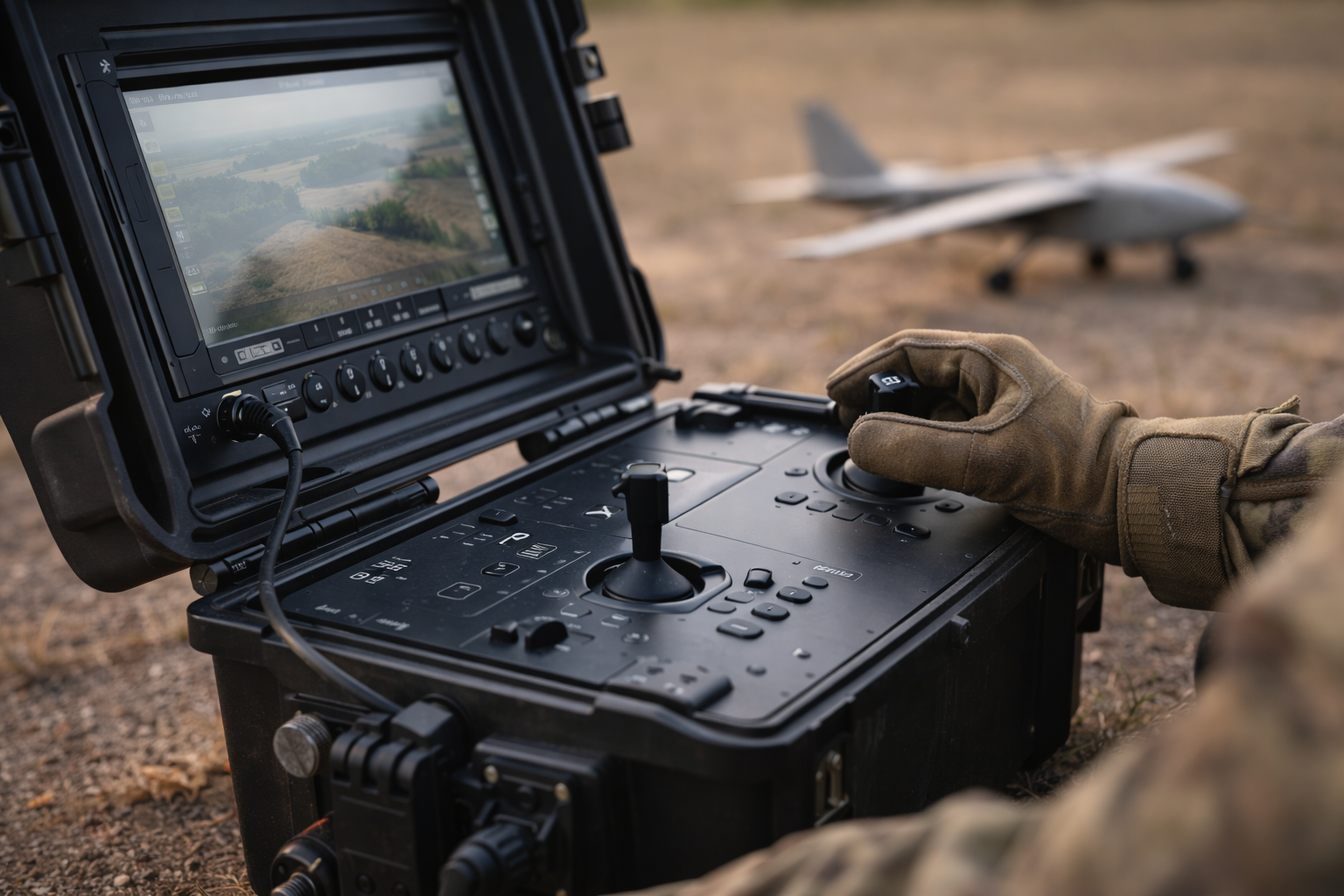
At the Katwijk aan Zee demonstration, radar, reconnaissance equipment and an interceptor contributed distinct observations and actions to one remotely coordinated engagement sequence. Artificial intelligence supported the assessment of the threat before an operator authorised the launch of an interceptor drone. The test concluded with the interceptor engaging the target, providing a practical demonstration of how separate detection, assessment and response functions can be brought together through the same software interface.
Because each manufacturer’s aircraft and sensor can arrive with its own controls and communications interface, Nexus seeks to exchange their data through a common command environment. Where each platform is controlled separately, information may have to be transferred between operators or applications before it can inform a wider decision. Intelic’s approach uses a common command environment to connect those functions, allowing commanders to work with information from multiple sources and select compatible systems through a unified interface.
Beyond placing video feeds on a shared display, the software has to reconcile different track formats, location measurements and command interfaces. Radar systems can produce tracks containing location and movement information, while optical sensors may contribute imagery or classifications. Uncrewed platforms also need commands, status information and mission parameters to be exchanged with their control systems. An integration platform has to interpret the information provided by each connected device and present it in a consistent form, while preserving the differences in what the underlying equipment can measure and perform.
Once radar and reconnaissance data are available together, observations can be correlated to help determine whether they refer to the same airborne object. A radar track may establish that something is moving through a monitored area, but additional sensing may be needed to determine what the object is. The September test used reconnaissance imagery and automated recognition to support that assessment before the interceptor was authorised. The sequence illustrates a division of functions between equipment collecting observations, software processing available information and the person responsible for the engagement decision.
Intelic Chief Executive and founder Maurits Korthals Altes has described the potential for greater automation, while distinguishing the decision-support role of the software from autonomous functions carried aboard individual drones. The tested arrangement retained human authorisation for the interceptor launch. That distinction remains relevant as systems are integrated, because automated tracking, target recognition and flight control represent different functions from the decision to employ a weapon. No public technical evidence establishes that Nexus has been authorised to conduct fully autonomous engagements in the reported deployment.
The interoperability work extends to a growing range of European suppliers whose reconnaissance and interceptor aircraft use different onboard systems. Their products may use different communications interfaces, mission-control applications and onboard computing arrangements, with some equipment designed for reconnaissance and other platforms intended for interception or attack. Supporting a changing collection of devices requires continued interface development and testing. A new drone may be technically compatible with a particular command system only after its operating functions, communications behaviour and software integration have been verified.
Although a common interface can reduce the need to coordinate separate applications, the connected systems remain subject to their own physical and operational limits. A sensor may lose contact with a target, an aircraft may have insufficient range to complete a task, and communications may deteriorate in a contested environment. Integration software must be capable of representing the information it receives without assuming that every connected device is available or functioning correctly. The public details of Nexus do not establish its performance under every form of electronic interference, nor do they disclose the protocols used for all connected platforms.
Intelic has established an office in Kyiv, and the company is rolling out its command-and-control technology for use alongside Ukraine’s Delta battlefield management system. The two applications perform related but distinct roles, with Nexus concentrating on interoperability between unmanned systems and Delta providing a broader operational information environment. Their relationship requires suitable data exchange and coordination rather than the wholesale replacement of the existing Ukrainian system. Details of the interface configuration, deployed quantities and individual customer installations have not been made public.
The €30 million Dutch defence contract provides an industrial framework for further development and integration work, while the September test shows how the software can combine selected equipment in a controlled demonstration. Expanding that capability will require engineering effort as additional suppliers, sensors and aircraft are introduced, alongside software assurance and configuration management to prevent changes to one component from disrupting others. Intelic’s next measurable progress will depend on successful integration across the equipment used by its customers and the performance demonstrated during operational use, rather than the number of platforms theoretically capable of connecting to Nexus.