IN Brief:
- Kuwait’s £370 million contract covers radar, electronic countermeasures, interceptors and integrated command systems.
- MARSS will coordinate sensors and defensive systems through its NiDAR command-and-control platform.
- The deal is expected to create 100 UK jobs, with production based in Bristol.
British defence technology company MARSS has secured a £370 million contract to provide an integrated air-defence system to Kuwait, the UK Ministry of Defence announced on 9 October 2026. The agreement is expected to create 100 jobs in the United Kingdom and support manufacturing and engineering at a Bristol production base.
MARSS, part of Electro Optic Systems, is to provide and integrate radar, jammers and interceptors using its NiDAR platform as an AI-enabled command-and-control centre. The announcement establishes the main categories of equipment but does not identify every supplier, provide full system specifications or disclose the numbers of individual components ordered.
A layered air-defence system has to connect surveillance, classification and response. Radars provide information about objects moving through monitored airspace. Other sensors may contribute information to the command system, which must determine whether separate detections correspond to the same object and whether further examination or action is required.
The technical problem becomes more demanding where threats include small uncrewed aircraft alongside larger aerial objects. Different targets present different radar signatures and flight patterns. Jamming may be an option against some remotely controlled aircraft, while interceptors are a separate response where electronic countermeasures are unsuitable or ineffective.
Neither technique is universally effective. Electronic disruption depends on the target’s equipment and operating behaviour. An interceptor requires an engagement decision, suitable target information and enough time and space to act. The architecture therefore has to match available defensive measures to the threat rather than assume one response fits every situation.
MARSS says NiDAR is intended to combine information from sensors and provide an integrated operational picture. Maintaining that picture involves correlating observations, updating tracks as objects move and ensuring that decision-making remains understandable to operators. The release does not report detailed detection ranges, engagement trials or independently measured system performance.
The agreement falls under Taskforce Sabre, the UK government initiative bringing industry and government together to support defence requirements in Gulf states. The MOD says Britain has already supported Kuwait with Rapid Sentry and that the Royal Air Force’s ORCUS system is operating in the country to help detect drones.
Existing British support does not mean that the newly ordered equipment has already been fully integrated. New command, sensor and defensive components will need to be configured and tested within their intended environment. Technical acceptance normally considers communications, sensor performance, interface reliability, safety and the system’s ability to maintain a coherent operational picture.
MARSS chief executive Johannes Pinl said the company would integrate sensors and effectors protecting Kuwaiti people, infrastructure and assets through 2027. That provides a broad implementation horizon, but the announcement does not specify the individual installation dates or formal customer acceptance timetable.
The manufacturing element is also significant. Defence integration programmes can require assembly, software engineering, component testing and specialist installation work. Expansion of the company’s UK offices and Bristol-based production suggests that executing this order will require both physical production capacity and technical integration staff.
Manufacturing an integrated system presents different challenges from delivering a stand-alone product. Equipment may arrive from suppliers operating to different designs, update schedules and quality systems. The integrator must verify interfaces and manage changes so that a revised component does not unexpectedly affect the behaviour of other parts of the system.
Longer-term availability depends on more than the installation milestone. Maintenance, software support, spare components and future upgrades have to be considered as the defensive architecture evolves. The disclosed contract does not set out detailed sustainment provisions, training commitments or the division of maintenance work between countries.
For the UK industrial base, the award demonstrates demand for integration expertise alongside radar and interceptor hardware. The announced value should not be interpreted as a breakdown of British-manufactured content or as a guarantee of future orders beyond this particular contract.
The immediate programme task is to turn the specified elements into a tested, coordinated air-defence capability. The MOD has confirmed the contract, anticipated UK employment and Bristol production; operational performance and completed integration will require evidence from later project milestones.
As integration proceeds, engineers will also need to document which sensor inputs are necessary for each command function and how the system behaves when a connection fails. Those are general systems-engineering requirements rather than capabilities independently confirmed for the Kuwait installation. The ministry has not published a detailed architecture or described the testing arrangements.
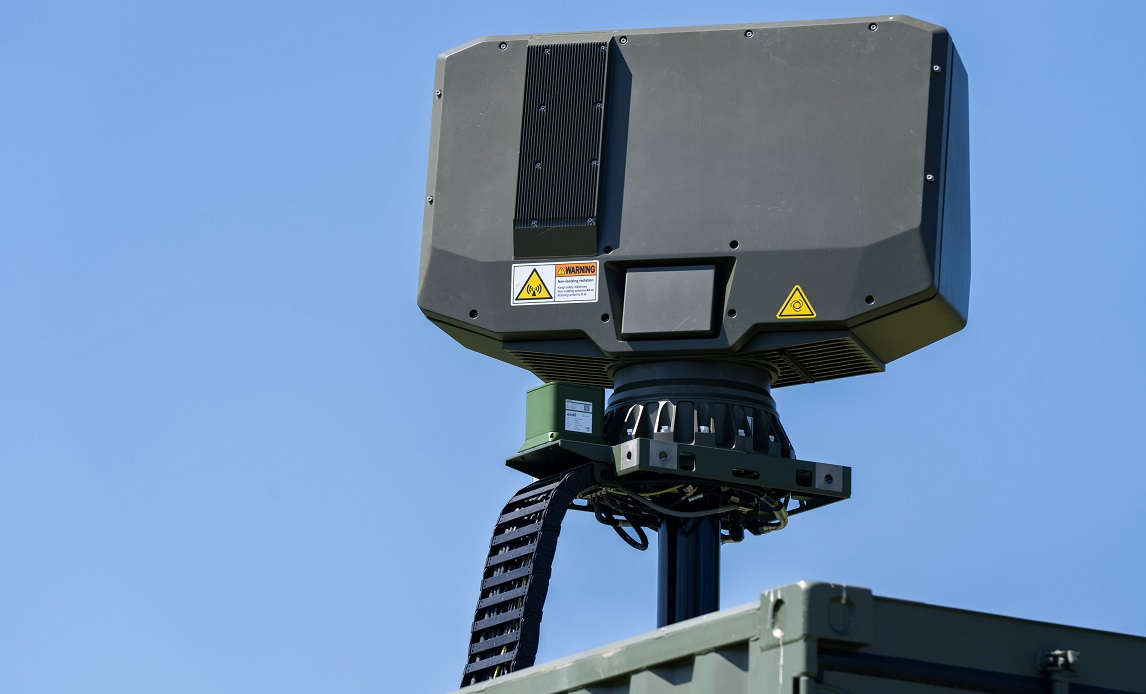
Featured image: Fixed-site air-defence radar (illustrative); not MARSS NiDAR or Kuwait deployment.