IN Brief:
- The contract award decision is dated 7 October, with the public notice appearing on 8 October.
- Tandem Solutions was awarded approximately £2.3 million for military aircraft airworthiness review support.
- The work supports the Joint Aviation Command continuing airworthiness management function.
The UK Ministry of Defence has published notice of a contract worth approximately £2.3 million for military airworthiness review services, awarded to Tandem Solutions. The award decision is recorded as 7 October and the public procurement notice is dated 8 October, the distinction required when describing the development's timing.
The commissioned work relates to the Joint Aviation Command's Continuing Airworthiness Management Organisation and the specialist review requirements identified in the official procurement notice. The official notice establishes the procurement result and value, but it does not provide an aircraft-by-aircraft schedule of reviews or identify new aircraft purchases associated with the contract.
Airworthiness management is a fundamental element of military aviation support. Aircraft that have been designed, built and certified must also remain safe to operate throughout their service lives. Maintenance activity, component replacements, inspections and technical modifications need to be recorded and assessed against approved requirements.
A continuing airworthiness process brings together information from several sources. Aircraft operators record usage and faults, maintenance teams document completed work and engineering authorities publish instructions when additional checks or modifications are required. Review activity helps determine whether the available evidence supports continued operation within the approved framework.
The contract concerns services rather than a new helicopter, aircraft system or manufacturing order. Its engineering content lies in technical record assessment and the application of airworthiness management procedures, which can be complex where aircraft have undergone extensive maintenance or operate in demanding environments.
Incomplete records can make airworthiness assurance more difficult. A component may have a defined operating life, or an inspection may need to occur after a particular number of flying hours or cycles. Reviewers need reliable evidence that the relevant limits have been tracked and that required maintenance has been completed.
Changes to aircraft configuration create another challenge. Equipment upgrades or repairs can affect wiring, structures, flight characteristics or maintenance requirements. Proper management requires the approved configuration and supporting documentation to reflect what is actually installed on each aircraft.
Independent technical review can support consistency, particularly where a fleet includes aircraft with different histories or where maintenance is performed across several locations. The official procurement notice does not describe the precise balance of technical assessment, administrative support and reporting under Tandem Solutions' agreement.
Military aircraft are subject to regulatory arrangements suited to the specific operating environment and national authority. These arrangements must provide assurance without assuming that civil aviation processes apply without adaptation. The procurement disclosure does not enumerate the regulatory publications or review criteria that will govern each contracted task.
For the supplier, the work calls for personnel who can interpret maintenance evidence, understand aircraft technical records and identify documentation gaps requiring further action. Such skills sit at the intersection of engineering, quality assurance and operational support.
Technical documentation itself must be controlled. A reviewer may need to distinguish a superseded maintenance instruction from a current one and ensure that the records reflect the authorised standard at the time work was completed. Differences in document versions can create apparent discrepancies that require engineering resolution.
The announcement should not be presented as confirmation that any named aircraft fleet has failed an airworthiness inspection or that a new technical problem has been identified. Procurement of review capacity may form part of routine assurance, and the notice does not attribute the award to a particular incident.
Further information would be needed to establish review volumes, contractual performance milestones and any subsequent procurement options. The confirmed development is a newly published MOD service award that supports the continuing airworthiness management function, with the contract decision and notice dates clearly distinguished.
Contract value alone reveals little about the level of technical effort. Workload depends on the fleet covered, the depth of each review, the quality of existing records and the number of discrepancies that require resolution. The official notice provides a procurement benchmark, not an estimate of the condition or reliability of military aircraft.
The distinction between the award date and notice date is also material for the news record. The contracting decision was made on 7 October, and the public notice followed on 8 October. Reporting both dates prevents the publication of procurement documentation from being mistaken for a separate contract decision. The supplier's technical delivery obligations will be governed by the underlying agreement rather than the short public summary alone.
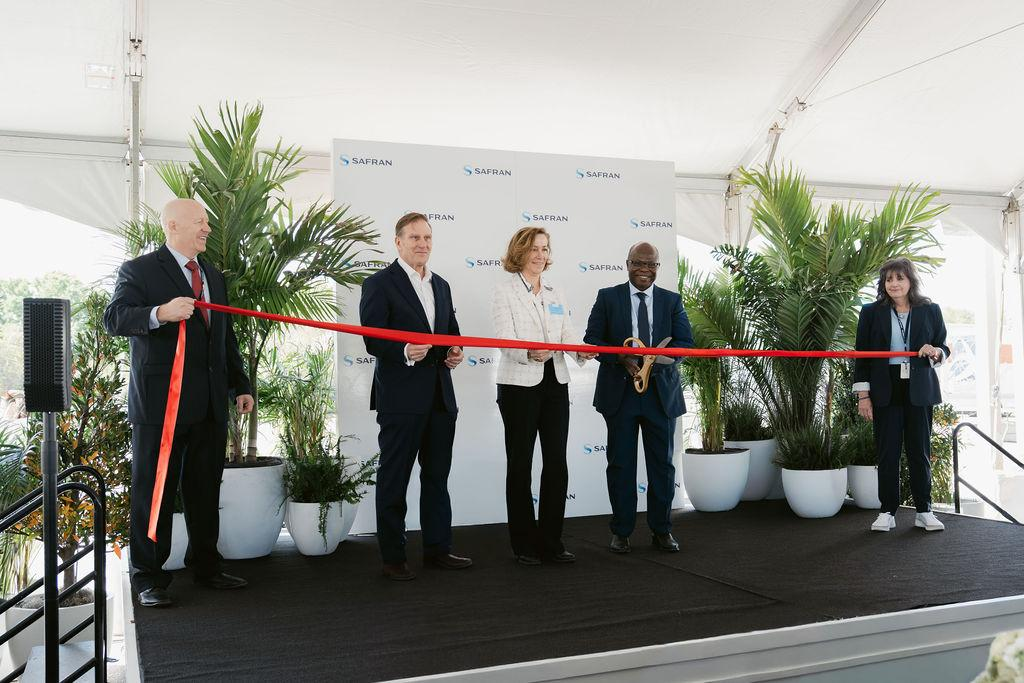
Featured image: Safran aircraft electrical maintenance facility (illustrative), not Tandem Solutions.