IN Brief:
- PDW says controlled testing of the combined autonomy software began on 30 September 2026.
- The integration uses Booz Allen software powered by Shield AI’s Hivemind on AM multirotor drones.
- PDW plans general availability in the first quarter of 2027 and further aircraft integrations.
Performance Drone Works has announced the integration of Booz Allen Hamilton mission autonomy software on its AM family of small uncrewed aircraft, alongside a secure system for distributing software changes across deployed drone fleets. The announcement was made on 9 October and identifies Shield AI's Hivemind as the technology underpinning the autonomy component.
The combined system entered controlled testing on 30 September. PDW expects broader availability in the first quarter of 2027, while work to extend the software to its C100 aircraft is planned for 2027. These are development and commercialisation plans, not evidence that the complete integration has passed every military qualification or been ordered in a specified quantity.
PDW describes the AM as an attritable multirotor drone platform designed for changing mission requirements. PDW says operators may employ it for intelligence, surveillance and reconnaissance, payload transport and other tasks, depending on configuration. The new autonomy component is intended to assist aspects of mission execution while leaving decisions over consequential actions with authorised operators.
Autonomy integration involves multiple engineering layers. Flight-control software must operate within the limits of the aircraft's sensors, propulsion system and navigation equipment. A higher-level mission application must issue instructions that the aircraft can execute safely and must recognise when onboard information is insufficient to continue as planned.
Operator authority is another design boundary. Automation may assist with interpreting information or generating manoeuvre options without removing the need for clear approval paths. The company describes an operator-authorised workflow; it has not supplied measured evidence on workload reduction or the performance of individual autonomous functions.
PDW's second announcement concerns fleet software updates. Booz Allen's product provides a managed route to deliver authorised software, check configurations and record deployment history. The intended use includes denied, disrupted, intermittent and limited-connectivity environments, where it may not be possible to contact every aircraft or ground station continuously.
Updating a single drone at a maintenance bench is different from maintaining consistent software across a dispersed fleet. Some devices may be off-line, others in transit, and still others operating with mission-specific payloads. A fleet manager needs to account for which version is installed, whether its dependencies are present and whether the device can safely accept a change.
Integrity controls are particularly important when aircraft are operating in sensitive environments. Update packages need trustworthy origins and an authorised delivery path, while devices must be able to recognise incomplete or inappropriate installation attempts. The announcement states the intended security function but does not publish the underlying cryptographic design or independent test results.
Fleet-wide change control can also affect maintenance and training. If operators have access to several software configurations, technical documentation and mission procedures need to identify which features are available on each aircraft. A structured deployment history helps maintainers investigate faults and determine whether a software change preceded an operational problem.
PDW connects this development with its Huntsville production facility, which it describes as having annual capacity for 100,000 drones. Factory capacity is not equivalent to annual customer deliveries, and the announcement does not state that demand or supply chains are sufficient to sustain that volume. It does, however, explain the company's interest in a software maintenance process capable of serving many aircraft.
Software release procedures may also need to distinguish urgent security fixes from changes that alter an aircraft’s operating characteristics. The evidence required to approve such a change can vary with the mission and the aircraft configuration. Managing that distinction at fleet scale is part of the engineering task, not merely an administrative concern.
The integration is technically distinct from a new airframe launch or a procurement award. Its importance lies in joining an existing drone platform to a mission application and an update mechanism intended to support a changing operational configuration over time.
The next evidence will come from controlled testing outcomes, the scope of the first generally available release and any later customer acceptance. The company's October announcement establishes the integration programme and timetable while leaving operational performance and fleet-scale deployment to be demonstrated.
Aircraft operators also need clarity over the boundary between an approved software feature and an experimental capability. Flight safety cases, operator training and mission approval processes can differ by use, so a new autonomy module may require additional verification even when it runs on an established airframe. PDW's statement does not identify the certifications or military acceptance stages involved in the first release.
The secure update component has a different success measure from the autonomy functions. It should be assessed for reliable delivery, recoverability and correct configuration records under interrupted communications. A test that demonstrates a single successful update over a strong network does not establish performance across an entire geographically dispersed fleet.
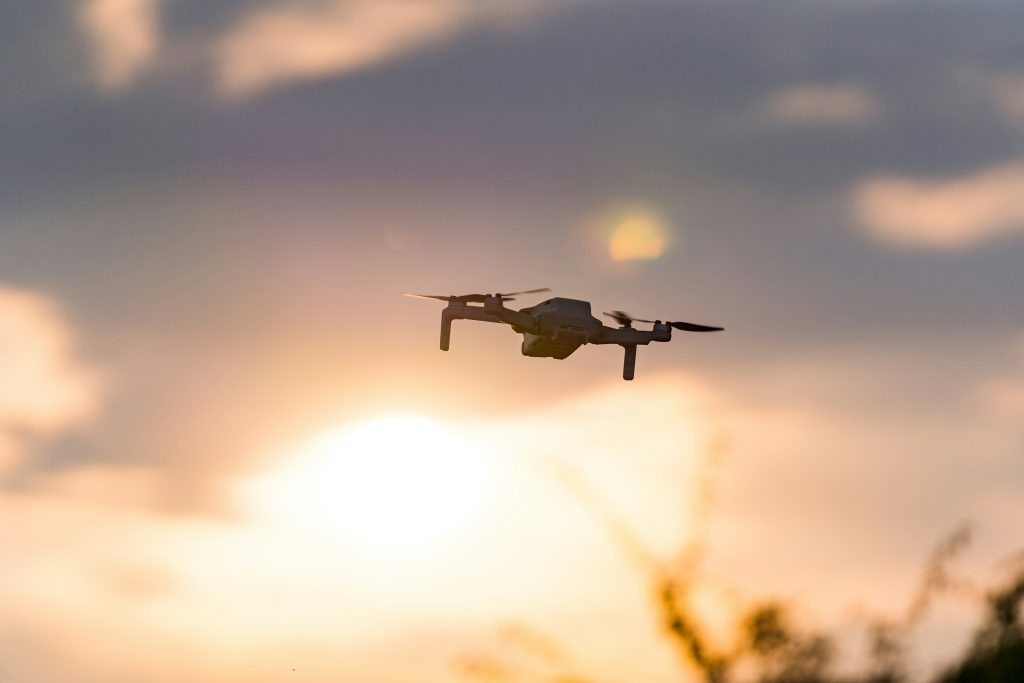
Featured image: Drone photograph from a Gelion battery article (illustrative), not PDW AM-series hardware.