IN Brief:
- The Army says open systems architecture will be an important evaluation criterion in its XM30 contractor selection.
- American Rheinmetall and General Dynamics Land Systems have each delivered a prototype for testing at Aberdeen Proving Ground.
- The competing prototype contracts are development awards; no contractor has secured XM30 production.
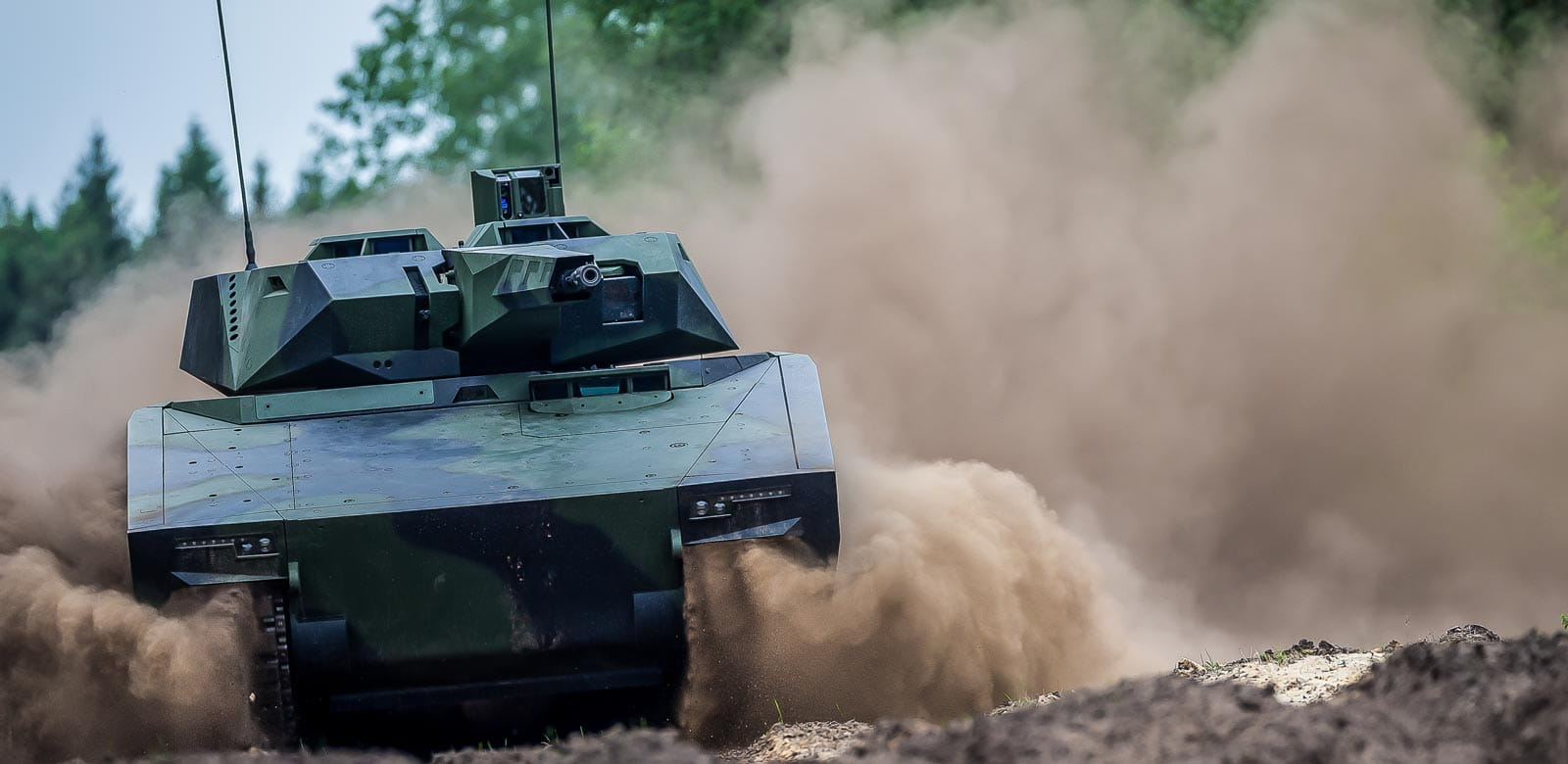
The US Army says open systems architecture will be an important evaluation criterion when it selects a contractor for its XM30 infantry fighting vehicle programme. Brigadier General Troy Denomy, portfolio acquisition executive for ground manoeuvre, said the ability to incorporate new hardware and software would be assessed alongside other vehicle requirements. His comments concern an ongoing competition between American Rheinmetall and General Dynamics Land Systems; neither contractor has won the XM30 production award or supplied an operational production fleet.
The two competitors have each delivered one prototype to the Army for testing at Aberdeen Proving Ground, according to Denomy. Prototype delivery does not determine the production winner: vehicle protection, performance, maintainability and integration will still be considered through the selection process. Denomy said it was too early to judge which company had implemented a more open architecture. The available tests therefore cannot be presented as a decisive technical ranking or a production selection for either design.
Open architecture is intended to allow equipment and software to be updated without rebuilding the whole combat vehicle around a proprietary interface. The XM30 programme adopts a modular open systems approach supported by a common infrastructure architecture and digital engineering. New sensors, communications equipment and defensive subsystems can then be considered against specified mechanical, electrical and information interfaces. In practice, an open interface does not remove qualification requirements: any replacement component still has to meet environmental, safety, cyber and performance demands in the integrated vehicle.
During initial prototype trials, the Army found software issues requiring adjustment, particularly in communications between vehicle subsystems. Denomy described the changes as normal prototype development and said both companies had responded. A component may meet its own bench test requirements while its messages or timing still cause integration problems when connected to another system. The correction process provides evidence for the architecture assessment, but identified software changes do not establish that either vehicle has failed qualification or that the Army has reached its final selection.
The XM30 effort was previously known as the Optionally Manned Fighting Vehicle programme. In June 2023 the Army awarded detailed design and prototype contracts to American Rheinmetall and General Dynamics Land Systems, worth approximately $1.6 billion combined. Those were competitive development awards; they did not choose a single production contractor. The 16 October 2026 comments introduce no new manufacturing award, vehicle quantity or approved fielding schedule. The programme aims to replace the Bradley, but production commitments remain subject to future selection and funding decisions.
Army planning has identified a remotely operated turret, a 50mm cannon, advanced fire control and the ability to support unmanned systems as elements of the broader design. Integrating those functions places demanding requirements on data networks, processing, power supplies and crew interfaces. A sensor update may change the information sent to fire control or the protection suite, while new counter-drone functions may depend on sharing track data with another system. A modular architecture can simplify the interfaces through which that information moves, provided both the interface specifications and their implementation are correctly controlled.
The Army’s fiscal 2026 development plans also describe Project Nexus, which is intended to establish a representative evaluation method for compliance with its common infrastructure architecture. That work envisages hardware and software test arrangements able to judge whether existing and future XM30 capabilities satisfy open interface requirements. It gives a more concrete procurement meaning to the latest official comments: claims of openness need to be assessed with defined technical criteria rather than accepted as an assertion from either contractor. The latest interview does not report a completed score for either prototype under that process.
Digital engineering supports the assessment by keeping requirements, design information and test evidence linked across development activities. The programme uses systems models and a software development environment to manage changes while the vehicle configuration matures. These methods can reduce the time needed to locate a conflicting interface or assess a proposed change, but they do not replace vehicle trials or physical inspection. Armour protection, automotive performance, survivability and maintainability still need evidence from relevant engineering tests and user evaluation.
Funding and scheduling also remain separate from the technical downselect criterion. Denomy expressed confidence that the programme could progress despite the continuing resolution and uncertainty over the fiscal 2027 appropriation. He did not report that the requested production funding had been approved or that an XM30 contractor had been selected. Industry reporting describes possible future downselect dates, but those possible dates are not a production award or a binding vehicle delivery schedule.
Once the Army chooses a design, interface documentation and configuration control will influence how readily authorised suppliers can integrate sensors, radios, protection equipment and software over the vehicle’s life. That opportunity depends on the winning design meeting the Army’s evaluation criteria and completing the necessary test and qualification steps. The immediate next decisions remain comparative prototype assessment, funding and contractor selection. Both competing companies have development hardware in Army hands, but neither holds the XM30 production award.