IN Brief:
- The US Navy has awarded Boeing a not-to-exceed $80 million MQ-25A IDIQ contract, number N0001927D1006.
- The scope covers system improvements, configuration development, integration, production readiness and sustainment.
- No funds were obligated at the initial award, and completion of the contracted ordering period is expected in October 2031.
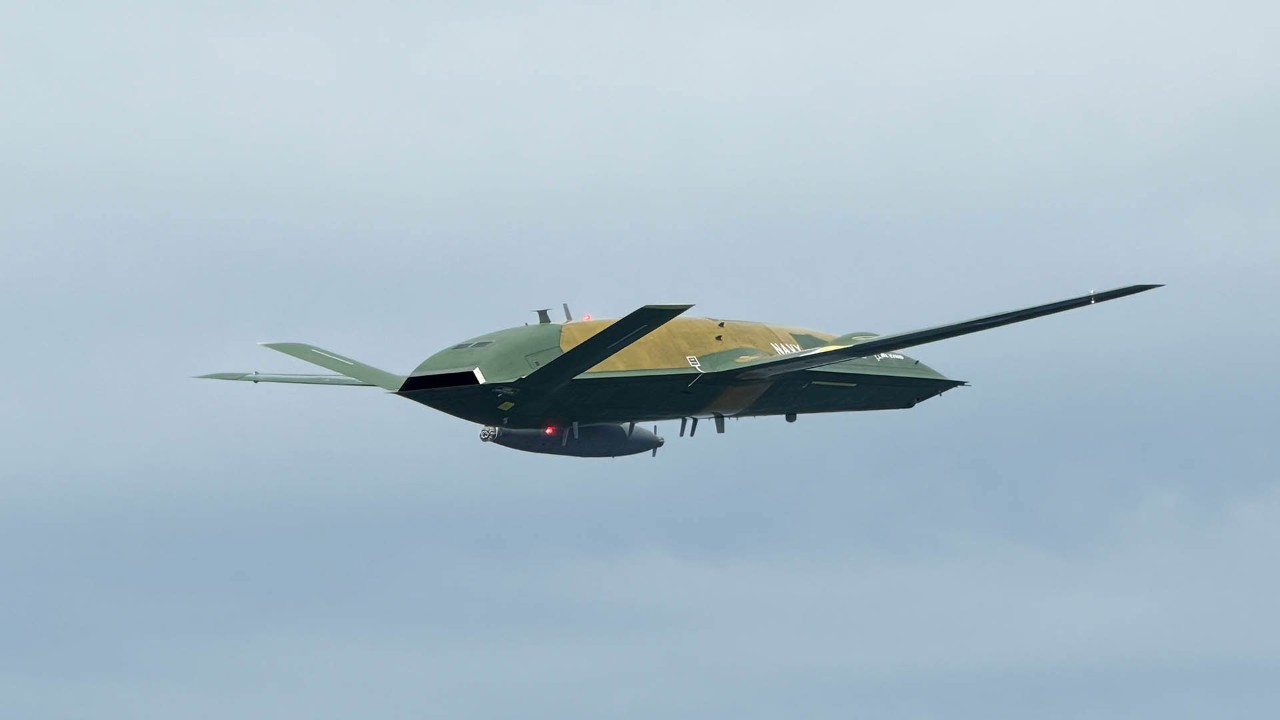
Boeing has received a US Navy contract with a not-to-exceed value of $80 million for further engineering work on the MQ-25A Stingray uncrewed aircraft system. The indefinite-delivery/indefinite-quantity arrangement covers system improvements, configuration development, integration, production readiness and sustainment. No funds were obligated when the contract was awarded on 16 October; financing will instead be committed against individual orders issued under the agreement.
The Naval Air Systems Command at Patuxent River placed the contract, N0001927D1006, with Boeing in St Louis, Missouri. The reported completion date is October 2031. The award combines cost-plus-fixed-fee and cost-no-fee ordering mechanisms. Its $80 million ceiling establishes how much work the Navy may order, but expenditure is incurred through future funded orders rather than at the award of this IDIQ.
MQ-25 is intended to provide carrier-based aerial refuelling using an uncrewed platform. The aircraft, its control equipment, communication links and the carrier operating environment must be developed as an interoperable system, not as a set of independent components. Modifications to one part of that system can require changes elsewhere before a revised configuration is suitable for production or fleet use.
Configuration development establishes which combination of hardware, firmware, software and approved interfaces constitutes an acceptable system at a given stage. On an uncrewed aircraft, flight-control functions must remain coordinated with sensing, mission management and the equipment used by remote operators. A configuration change may affect control timing, data interfaces or the behaviour of a redundant component, even when the changed software performs its intended function in isolation. Each modified baseline therefore needs integration and safety testing against the requirements relevant to its intended use.
Integration work must also account for how the tanker interfaces with ships and crewed aircraft. Carrier operations impose constraints on aircraft handling, communications, launch and recovery arrangements and support equipment. Refuelling introduces another set of compatibility and safety requirements involving the aircraft receiving fuel and the tanker’s mission configuration. The contract notice identifies integration and improvements as permissible work categories without identifying the next engineering-change package, the associated acceptance criteria or the timing of any future order.
Production readiness has a separate industrial meaning from aircraft procurement. Engineers must establish that the intended configuration can be manufactured, assembled and tested repeatably, with suitable instructions, production tooling, qualified parts and documented acceptance procedures. Production tooling, inspection plans and supplier qualification may therefore change even after a development aircraft has passed a flight-test milestone. The October IDIQ authorises an ordering mechanism for this work but does not identify an additional aircraft production quantity.
Sustainment engineering must be prepared while aircraft configurations are still evolving, because maintainers need controlled documentation and replaceable components matched to each approved build. Engineers need maintenance instructions, fault-isolation methods, software configuration records and spare-part definitions that correspond to the aircraft actually delivered. If components are changed during development, repair and logistics procedures must follow those changes; otherwise an aircraft and its supporting equipment can diverge into incompatible versions. No specific support-site investment or subcontract allocation was identified in the award notice.
The October agreement follows a separate September production arrangement for initial MQ-25A aircraft. The September production contract was separately valued at $562 million for three low-rate initial-production aircraft and long-lead components for a further three. The earlier $562 million production award has its own aircraft quantities and funding, separate from this October framework. The new contract supports subsequent engineering and sustainment tasking rather than constituting a second production lot.
The notice states that the $80 million IDIQ was not competitively procured. The same release also makes clear that no money was committed at signature. The Navy may issue orders under the ceiling when engineering requirements are defined; the published award does not specify whether all, part or none of that capacity will ultimately be used. Each subsequent order will have to be assessed for its actual funding, tasks and completion milestones.
Boeing’s industrial activity on MQ-25 now combines aircraft-production work with a longer framework for technical changes and support. The configuration accepted for early production can evolve as tests and integration reveal requirements that were not fully addressed in an earlier build. Under the stated October 2031 completion horizon, the Navy can place orders for documented system changes and supporting engineering. Which changes are ordered, how much money is obligated and whether they enter fleet configurations will be determined later, rather than by the IDIQ announcement.