IN Brief:
- Ingalls Shipbuilding received a US Navy modification valued at approximately $99 million for DDG 1002 sea trials.
- Lyndon B. Johnson has been at the Pascagoula yard since 2022 for combat-system installation, activation and testing.
- The ship is also being adapted to carry Conventional Prompt Strike, but the trials award does not confirm delivery or operational readiness.
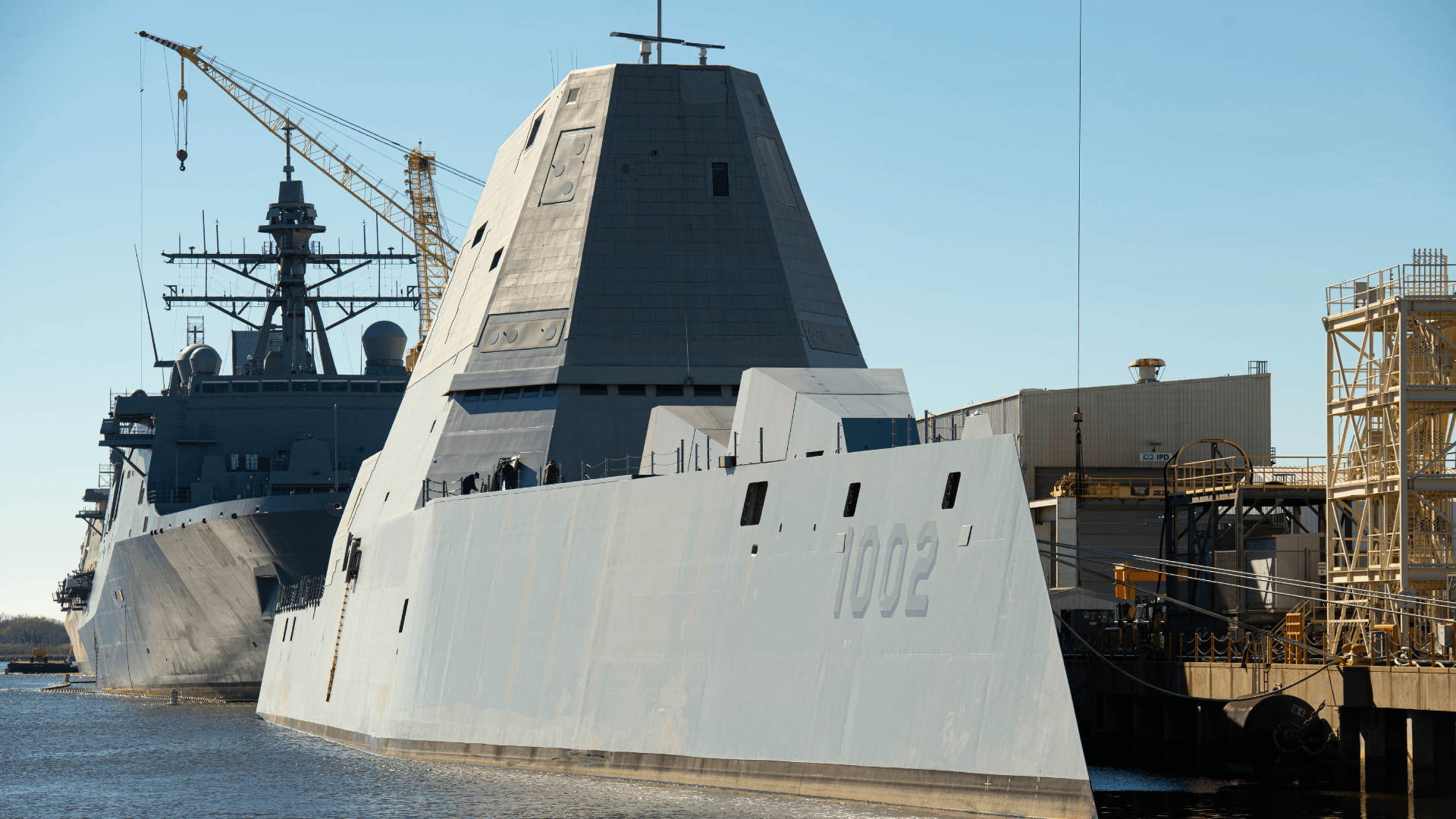
HII’s Ingalls Shipbuilding division has received a US Navy contract modification worth approximately $99 million to conduct sea trials of the Zumwalt-class destroyer Lyndon B. Johnson (DDG 1002). The modification adds a sea-trials work package to combat-system activation and testing already under way at the Pascagoula yard. Naval acceptance and operational entry still depend on subsequent verification rather than the award itself.
Lyndon B. Johnson arrived at Ingalls in January 2022 for installation, activation and testing of combat systems. The ship had been constructed at General Dynamics Bath Iron Works, with subsequent work at Ingalls forming part of the Navy’s phased approach to bringing the vessel to its required configuration. The Navy’s phased delivery arrangements bring shipbuilding, combat-system activation and trials into separate engineering steps, with Ingalls responsible for the work now covered by the modification.
A combat-system activation programme requires the ship’s sensors, computing equipment, communications paths and weapons-related interfaces to operate as an integrated set rather than as individually functioning assemblies. Engineers must verify the exchange of information between installed equipment, response times and safe behaviour under specified fault conditions before the combined system can enter its next acceptance stage. Those checks provide the engineering basis for later shipboard trials and acceptance decisions.
Sea trials extend testing from alongside and shore-based environments to operation at sea, where propulsion, electrical power, manoeuvring and mission systems interact under changing loads and operating conditions. Dockside testing can show that a subsystem starts and responds correctly, while trials at sea expose the same equipment to changing electrical loads, ship motion and concurrent mission-system use. The Navy will have to evaluate those results against its acceptance criteria before delivery.
The ship is also undergoing modernisation to accommodate the Conventional Prompt Strike weapon system. HII identifies Lyndon B. Johnson as the second Zumwalt-class platform planned to receive that capability. Integration of a different weapon requires accommodation of launch equipment as well as command interfaces, power distribution, system monitoring, safety controls and maintenance access within the existing naval design. HII has not supplied a completed installation or operational-qualification date in its announcement.
Adding the CPS equipment to a vessel already undergoing combat-system work introduces overlapping engineering tasks. Testing must distinguish faults within a newly installed subsystem from issues arising where that subsystem connects to the wider ship. Changes to cabling, software or equipment during trials must be recorded against the configuration used in earlier tests; otherwise the same result may not apply to the revised installation. No completed CPS qualification is announced with the trials modification.
The Zumwalt class distributes electrical power through an integrated power system, so the interaction of propulsion and combat-system loads is an important ship-level engineering consideration. Propulsion equipment, sensors and mission-system electronics have different demand profiles, and the interaction of those loads requires verification at ship level. Neither the contract modification nor the company announcement publishes a detailed test matrix, so individual performance outcomes, trial conditions and remaining technical deficiencies cannot be stated as facts.
HII states the modification value as $99 million. Separate contract reporting gives approximately $99.1 million, identifies Pascagoula as the principal work location and describes October 2028 as the expected completion date for the contracted scope. That prospective date is not an announced delivery or operational acceptance date; HII does not give completed sea-trial results in its release.
Ingalls must coordinate the trial preparation and shipboard testing with equipment integration teams and the Navy. Since the ship has been at the yard for combat-system activation since 2022, this award extends an existing delivery programme and keeps specialist engineering and testing activity at Pascagoula. Test instrumentation, defect rectification, engineering change control and shipboard access all affect the yard’s ability to move the vessel through successive verification stages without losing the traceability needed for formal acceptance.
A structurally complete hull can remain in an extended period of combat-system integration and verification before operational delivery. Modern warships incorporate complex, interconnected hardware and software that cannot be accepted solely through factory inspection. Subsequent trials must show that shipboard functions operate together within the required envelopes and that identified deficiencies have been addressed. HII has confirmed the funded sea-trials modification alongside ongoing CPS integration, while the Navy has yet to report the resulting test outcomes, completion of that integration or a final delivery decision.
Image: HII, accompanying its 19 October 2026 DDG 1002 contract announcement.