IN Brief:
- The partners won the auction at an announced joint purchase price of €138m.
- The shipyard is intended for both civilian and military work with separate security zones.
- The plan includes two offshore patrol ships and two diver-support vessels.
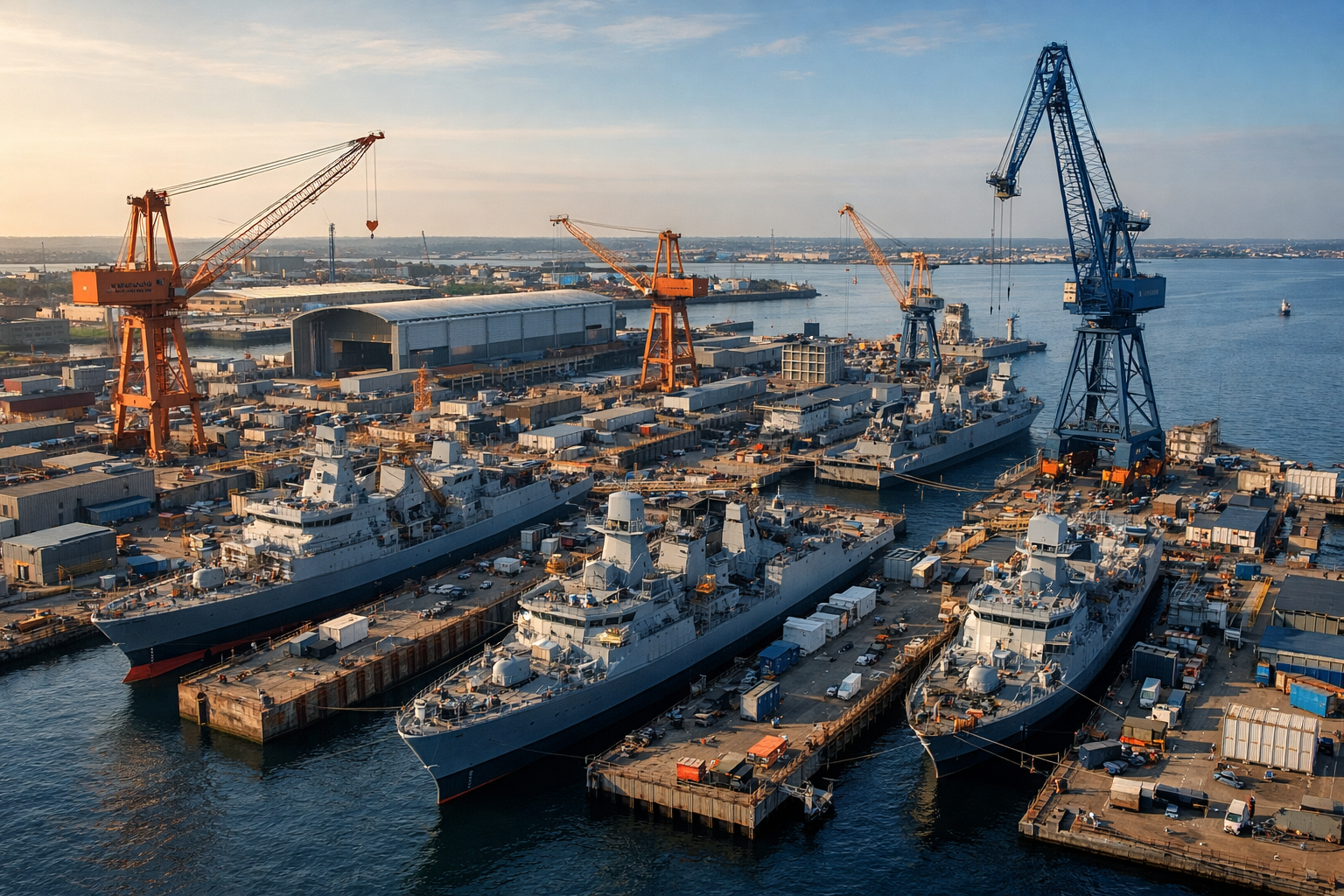
Rheinmetall and shipping group MSC have won the auction for Romania’s Mangalia shipyard, advancing a proposed joint acquisition intended to establish new civil and naval shipbuilding capacity on the Black Sea. The partners announced a combined purchase price of approximately €138 million on 19 October, with closing expected in the coming weeks. They have secured the bid, but the acquisition itself has not yet been completed.
The shipyard lies south of Constanța and is intended to operate as a dual-use industrial site. Rheinmetall Naval Systems plans to use its facilities in connection with four vessels commissioned by the Romanian government: two offshore patrol ships measuring 96 metres and two diver-support ships measuring 43 metres. The announcement identifies the planned role of Mangalia in the construction programme but does not publish a detailed allocation of hull blocks, equipment integration work or delivery milestones for each vessel.
Rheinmetall says the future yard will be divided into sectors and security zones to allow military and commercial activity to proceed alongside one another. Distinct security zones would govern access and information handling around naval work, while both military and commercial vessels could still depend on shared docks, lifting equipment and workshops. Military construction can also require separate component traceability and acceptance records. The company has stated its intended approach, but the required physical changes and regulatory approvals have not been itemised.
Operating the proposed civil and naval workloads concurrently would require careful scheduling of the yard’s shared production resources. Dock and quay availability, lifting equipment, specialist trades and workshops all affect the work that can proceed in parallel. Separate project zones may control access, while shared infrastructure still has to support a mixed schedule of commercial hull work, military outfitting and equipment delivery. Rheinmetall has not disclosed a capital expenditure programme for specific cranes, docks or fabrication lines beyond the proposed acquisition itself.
The naval construction scope also spans vessels with different functions. Offshore patrol ships generally require a combination of seakeeping capability, surveillance and maritime mission equipment; diver-support vessels place their own demands on deck arrangements, support equipment and working spaces. The exact design specifications, systems suppliers and integration responsibilities for Romania’s four vessels remain undisclosed in the acquisition announcement. Their published lengths do not establish displacement, endurance or installed weapon fit.
Tim Wagner, chief executive of Rheinmetall’s Naval Systems division, said the partners plan to expand and upgrade the shipyard after acquisition, improving production conditions and adapting capacity for future requirements. The proposed upgrade has not been accompanied by a quantified annual shipbuilding capacity, a published investment budget or construction start dates for all four naval vessels.
The proposed project would also extend Rheinmetall’s existing Romanian industrial presence. The group has operated through Rheinmetall Automecanica in Mediaș since 2024, giving it an established local base outside the maritime sector. A shipyard adds different activities, including metal fabrication, outfitting, repair infrastructure and the management of large multi-year projects. How the two Romanian operations might share suppliers or other functions has not been specified.
MSC brings commercial shipping experience to a venture in which Rheinmetall intends to expand its naval manufacturing business. The combination could support work for both civilian and defence customers, though neither partner has announced a confirmed breakdown of future output or a guaranteed portfolio of commercial shipbuilding orders. MSC’s involvement does not amount to a confirmed order for merchant ships at Mangalia, and neither partner has specified a commercial vessel programme for the site.
Romania’s Black Sea location offers a geographic basis for supporting national naval programmes, but physical proximity does not remove the need to qualify production processes or secure equipment suppliers. Delivering a military vessel demands configuration management across hull construction, propulsion, power distribution, sensors and shipboard integration. Those activities are often split between a yard and specialist subcontractors; the new owners have not yet described Mangalia’s proposed workshare in that level of detail.
A full commissioning schedule will also have to account for inspections and acceptance trials after hull and systems integration; no such timetable has yet been given. The auction award identifies proposed new owners, a future dual-use role for the yard and a potential contribution to Romania’s four-vessel naval programme, while the transfer and detailed production plan remain outstanding. Outstanding steps include completion of the acquisition and clarification of investment, workforce and project execution arrangements. Any additional shipbuilding opportunities remain prospective until the partners or customers announce specific orders.