IN Brief:
- HII Mission Technologies received a $16,191,130 US Navy delivery order for Truman overhaul and elevator support.
- The scope includes aircraft and weapons elevators, deck-edge doors, hangar-bay doors and vertical package conveyors.
- The Navy obligated $11,023,028 at award, with contract work expected to continue through June 2027.
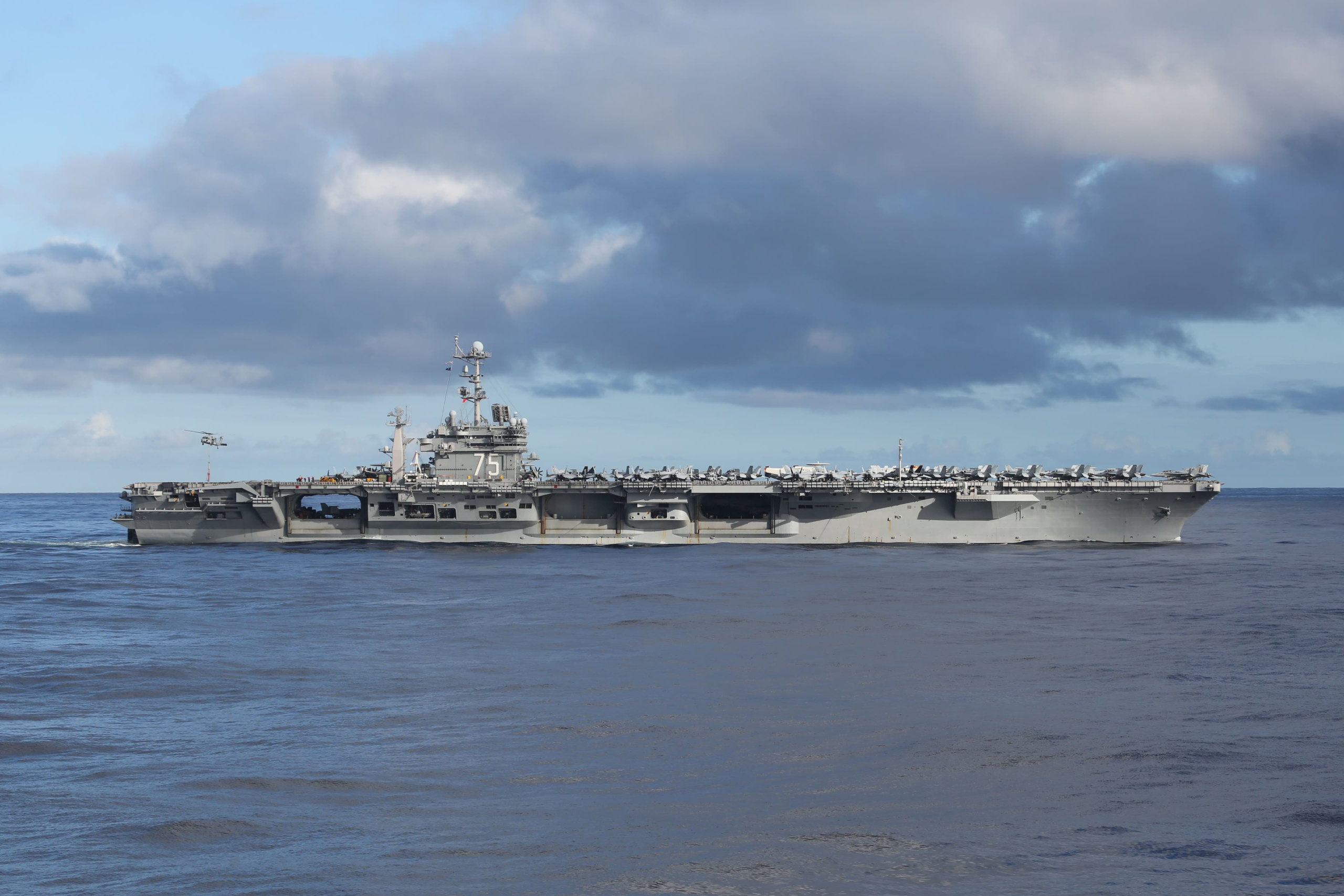
HII Mission Technologies has received a $16,191,130 US Navy delivery order for equipment support during the refuelling and complex overhaul of the aircraft carrier Harry S. Truman (CVN 75). The work covers aircraft and weapons elevators, doors and vertical handling systems, together with technical assistance, testing, repairs and training. The equipment-specific support order supplements the carrier’s much larger shipyard overhaul, with a separate contractor, scope and completion target.
The Navy placed order N6279327F7512 against an existing agreement, N0002426D4103, with work scheduled at Newport News, Virginia, through June 2027. The contract announcement identifies $11,023,028 in fiscal 2027 shipbuilding and conversion funding obligated at award. The Navy committed $11.02 million when the order was placed; the larger $16.19 million figure is the announced order value, not an amount already spent on completed equipment work.
An aircraft carrier’s elevators and internal handling systems are essential links between equipment storage, maintenance spaces and the flight deck. Aircraft elevators move aircraft between the hangar and flight deck, while weapons elevators and vertical conveyors serve different supply and ordnance movements within the ship. Deck movement, structural openings, marine conditions and safety interlocks impose linked requirements on the lifting machinery and its controls. A failure at any interface can interrupt aircraft or stores movement even when the main lifting mechanism itself remains operational.
The scope also includes deck-edge doors and hangar-bay divisional doors. These closures are connected to the way spaces are separated, secured and used during maintenance and flight operations. Repairs or control adjustments can alter the conditions under which doors and associated handling systems are permitted to move. The completed work must be tested for command response, stopping behaviour, limit-switch operation and mechanical clearances, as well as for the condition of motors, actuators and load-bearing components.
Maintenance during a refuelling overhaul differs from routine checks performed while the carrier is on deployment. Equipment can be dismantled, accessed and inspected alongside other intrusive shipboard work, but it must later be reassembled and tested to an approved configuration. Changes to surrounding structures, electrical feeds or control-system connections can affect how lifting and handling machinery performs. Engineers must document the equipment configuration and test the restored lifting and handling systems against approved requirements after surrounding shipyard work has changed access, cabling or controls.
The delivery order explicitly includes operator training and assistance to the ship’s force. Technicians may be responsible for repairs and testing, while crew members must learn the approved procedures for operation, fault reporting and recovery following maintenance. In equipment with several interlocked movements, correct sequencing is as important as mechanical availability. Where overhaul work changes a control sequence or safety device, operating instructions and training must reflect the approved post-maintenance configuration.
The technical-support scope also provides for investigating intermittent faults found during equipment testing or subsequent operation. Loads, cycle frequency and combinations of simultaneous shipboard activity can expose behaviour that is difficult to reproduce during individual workshop tests. Engineering staff must identify whether a problem lies in the lifting mechanism, control logic, sensors or the interfaces between them. The contract notice does not publish the number of units requiring repair, their present condition or the specific alterations scheduled for each system.
The previously awarded $5.1 billion contract for Truman’s refuelling and complex overhaul covers reactor refuelling and wide-ranging ship modernisation. This latest $16.19 million task has a much narrower equipment-support scope and a separately stated delivery schedule. The main shipyard programme and this elevator-support task therefore have different financial values, deliverables and completion schedules, although both contribute to the same carrier overhaul.
Responsibility for the specialist elevator-support work sits with HII Mission Technologies, distinct from the broader carrier overhaul performed at Newport News Shipbuilding within HII’s wider business. Mission Technologies provides the specialist equipment support while the wider Newport News shipyard programme involves reactor and ship modernisation, with separate contractual responsibilities. The Navy’s notice identifies the Supervisor of Shipbuilding, Conversion and Repair in Newport News as the contracting activity, underlining the inspection and oversight arrangements applying to the specific support services.
The agreed June 2027 completion target concerns this order’s maintenance, technical and training services; it does not establish when the entire carrier overhaul will finish or when Truman will return to deployment. Before flight-deck handling operations can resume in full, the relevant equipment must satisfy required functional and safety checks within the wider ship configuration. The separate support order provides funded technical and maintenance capacity for the ship’s lifting and handling equipment through June 2027; carrier-wide overhaul and return-to-service dates remain separate decisions.