IN Brief:
- Lockheed Martin completed a three-day Spike NLOS live-fire demonstration at Dugway Proving Grounds in Utah.
- All 17 reported precision engagements were launched from an ISV-U, with most firings conducted by US Army infantry soldiers.
- Further validation is planned before Phase 3, when initial operational production and delivery of final prototypes are expected to begin.
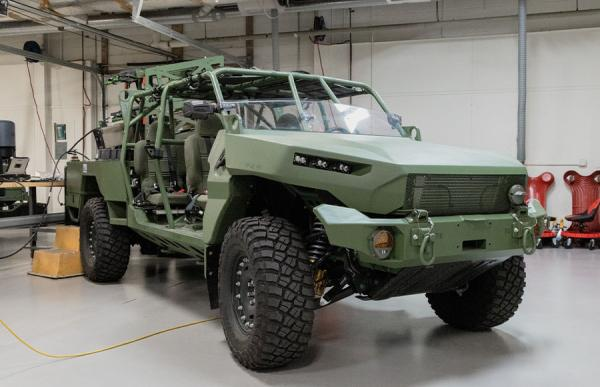
Lockheed Martin has completed a three-day live-fire demonstration of the Spike Non-Line-of-Sight missile from an Infantry Squad Vehicle – Utility variant (ISV-U) at Dugway Proving Grounds in Utah. The event included 17 precision engagements against simulated operational targets and was intended to assess the missile's use from a mobile ground platform for the US Army's Mobile-Long-Range Precision-Strike Missile requirement.
All the reported firings were conducted from an ISV-U, making the demonstration the first Spike NLOS live firing from that vehicle configuration. Most of the shots were made by US Army infantry soldiers rather than solely by company test personnel. Lockheed Martin describes varied engagement ranges, but did not publish the precise distance of each shot, the target types in engineering detail or individual test results that would support an independent performance assessment.
The 17 reported precision engagements describe firing activity during the demonstration, not confirmed destruction of 17 targets. The targets were simulated operational threats, and the published account did not provide a list of results for individual targets of impacts, assessment criteria or lethality results. The published results establish a live integration exercise, while leaving individual target effects and missile performance figures unquantified.
Mounting a guided weapon on a light military vehicle requires a compatible arrangement for transport, power, operator controls, launch equipment and safe firing. The platform also has to accommodate the loads and operating procedures associated with firing, while allowing soldiers to prepare and use the weapon within the vehicle's operating constraints. The Utah firing programme exercised the missile and ISV-U together under live-fire conditions, providing an engineering basis for subsequent refinement of the installation and its operating procedures.
Spike NLOS is intended to engage targets beyond direct visual contact from the firing position, using guidance and targeting arrangements appropriate to that role. This changes the relationship between the launch vehicle and the target: the vehicle does not need to occupy the same exposed firing position demanded by a direct line-of-sight weapon. Detailed performance assessments will be determined through the Army's continuing test process, including the treatment of the vehicle, missile and operator as an integrated system.
The Army's Mobile-Long-Range Precision-Strike Missile effort is the procurement context for the test. Lockheed Martin says feedback from Transformation-in-Contact units is helping shape the directed requirement and the configuration of the system. Personnel from those units were among the early users, with the company reporting that soldiers undertook training and conducted live-fire missions within the same week. The training and handling results supply practical input for the Army's ongoing requirement work alongside the missile and platform test data.
During a trial of this kind, information about preparing a launcher, sequencing firing tasks and operating the equipment can sit alongside data gathered from missile flights. Soldier participation can reveal whether controls and procedures are practical for the intended unit, while technical testing addresses whether the integrated system performs as required. Lockheed Martin says this combination of trial data and user feedback will inform the final requirements, meaning that the configuration remains subject to additional validation rather than being frozen for routine Army service.
The company has identified further validation testing over the next year before Phase 3. Under the stated programme sequence, Phase 3 is the point at which initial operational production begins and final prototypes are to be delivered to the Army. That is a prospective milestone. No completed Phase 3 production contract, volume order or date for general fielding was disclosed alongside the Utah test results, and the demonstration should not be presented as proof that the Army has already received a production fleet of these systems.
The trial builds on earlier phases of Lockheed Martin's work with Spike NLOS, but the October event specifically concerns integration with the utility variant of the Infantry Squad Vehicle and soldier operation from that platform. Its industrial implications concern the equipment configuration, repeated testability, control interfaces and any design changes prompted by the Army's evaluation. Decisions on series production will depend on the subsequent programme stages and the Army's acceptance of the system's demonstrated performance.
Further validation will determine whether the integrated platform proceeds into Phase 3 activities, including the planned initial operational production and delivery of final prototypes. The achievement reported at Dugway comprises 17 test engagements from the ISV-U, with most firings conducted by infantry personnel. Subsequent test findings and soldier feedback will inform the Army's assessment of the production configuration.