IN Brief:
- OpenWorks Engineering received a purchase order to provide Vision Pace counter-UAS capability to the US Department of Homeland Security.
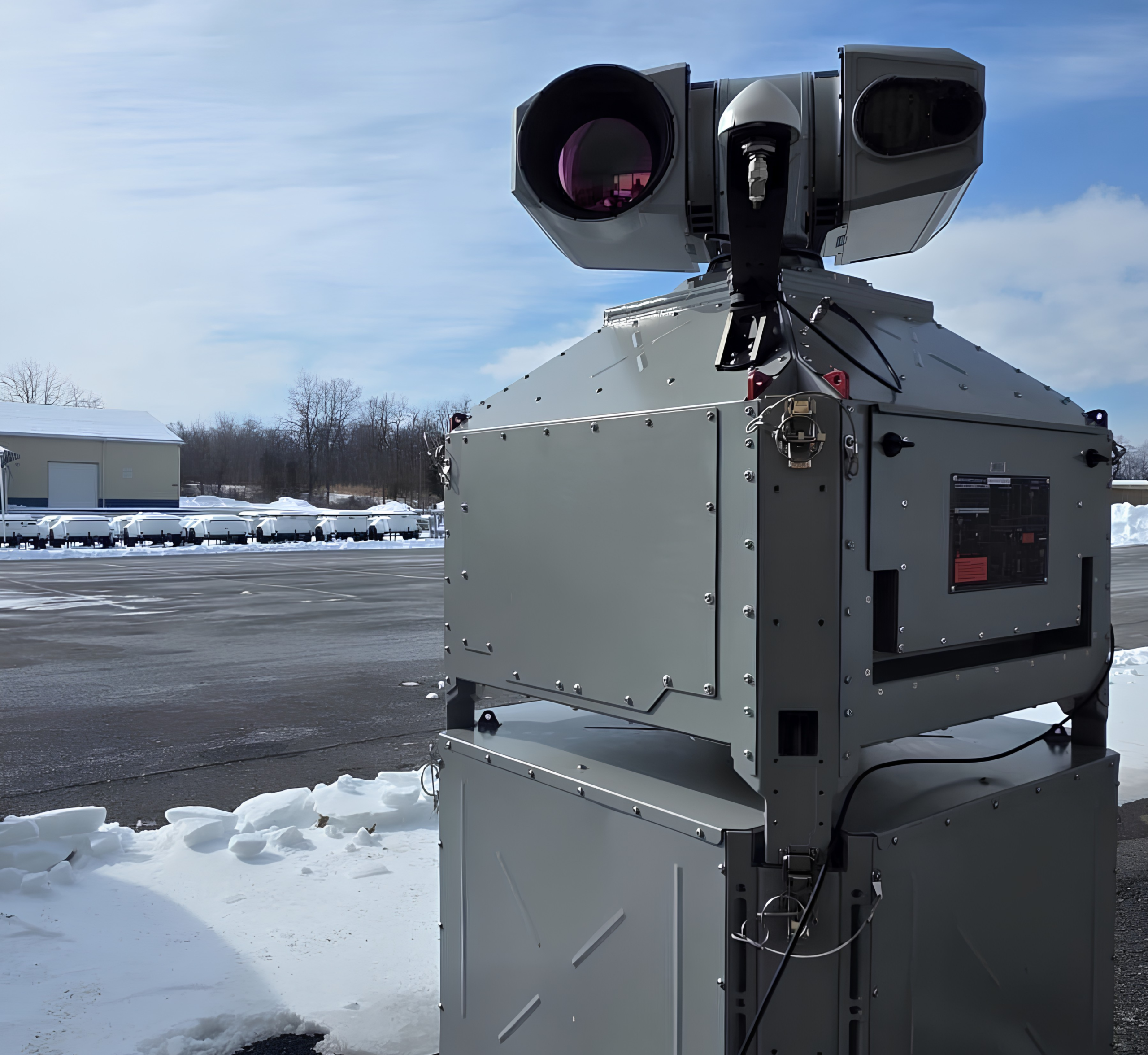
- The Vision Pace system supports stabilised optical tracking alongside AI modules, radar integration and laser rangefinding.
- The order uses Amentum’s existing DoD IAC multiple award contract vehicle; neither order value nor equipment quantity has been disclosed.
OpenWorks Engineering has received a purchase order to supply Vision Pace counter-drone capability to the United States Department of Homeland Security (DHS). The British developer says its optical tracking and targeting equipment has been provided under a procurement arrangement supported by Amentum’s Department of Defense Information Analysis Center Multiple Award Contract. The value, quantity of equipment and exact government deployment locations have not been disclosed, limiting the scale that can be attributed to the order.
The underlying research and development contract is held by Amentum and was awarded through the US Air Force’s 774th Enterprise Sourcing Squadron. As an indefinite delivery, indefinite quantity vehicle, it provides a procurement route for research, development, testing and evaluation activities for defined tasks across authorised federal requirements. The OpenWorks purchase order is a defined supply arrangement within that framework, not a new award of the entire Amentum contract to the British supplier.
Vision Pace was introduced in 2025 as a configurable system for detecting, identifying and following moving aerial objects from fixed or mobile platforms. The technology combines imaging equipment with a low-friction, direct-drive positioner that controls the optical assembly while the target or platform is moving. OpenWorks describes the positioning mechanism as designed for precise stabilisation, including when the system is installed on a vehicle or another mobile mounting rather than on a stationary observation tower.
Stabilised tracking requires the sensor’s line of sight to remain aligned with an object even when the object changes direction or the supporting platform vibrates. A direct-drive mechanism can make fine positioning changes without the intervening mechanical characteristics of a conventional geared arrangement. The performance of the complete tracking chain will also depend on the camera, software, mounting stiffness, visibility and the target’s movement. OpenWorks refers to microradian precision, but no independent performance assessment of the specific DHS configuration has been released.
The architecture can incorporate two built-in artificial intelligence modules or work with third-party classifiers and trackers. Imaging data allows software to identify objects of interest and maintain a track after detection, while the operator or a connected system may use that information to make subsequent decisions. Classification quality, tracking continuity and speed of response cannot be inferred simply from the presence of AI modules. The company has not disclosed detection probabilities, classification error rates or operating conditions measured during government acceptance testing.
Radar is another component that can be integrated with Vision Pace. A radar detector can provide information about the presence and movement of an airborne object, allowing optical sensors with a narrower field of view to be directed towards it. Data from different sensors can then be associated in a common track, subject to time alignment and accurate positioning. The product supports such sensor fusion, but the radar model and complete sensor configuration supplied under the DHS order were not specified.
Laser rangefinding provides an additional measurement by establishing distance to an observed object. Combined with information about where the sensor is positioned and pointing, this can support geospatial reporting to a wider counter-UAS network. Accuracy depends on the underlying measurements and calibration of the system. These functions make Vision Pace a component of detection, classification and targeting arrangements, but do not establish that it includes a weapon or another means of physically intercepting an aircraft.
OpenWorks has previously demonstrated Vision Pace with equipment made by other defence companies, including radar-cued applications and integration with an external weapon system. Those demonstrations show possible configurations rather than the exact equipment delivered to DHS. The October supply notice does not identify an interceptor, electronic attack component or automatic engagement authority within the order. The company describes the system as suitable for both stationary and moving platforms, with integration arrangements selected to meet a customer’s requirements.
For temporary use, the Vision Pace Rapid Deployment Kit incorporates its own battery pack, storage and lifting points. These elements allow equipment to be moved and positioned without assuming permanent site infrastructure is available, although practical deployment still depends on power endurance, mounting and the external components connected to it. OpenWorks has not specified setup time, operating duration or a transport configuration for DHS. Describing the kit as mobile does not establish continuous operation while in transit for every supplied configuration.
OpenWorks chief commercial officer James Cross linked the government order to security planning for large sporting and cultural events in the United States. The company did not, however, identify any event, venue or particular DHS operation at which the equipment will be used. The purchase order therefore establishes a technology supply, not a public account of operational results or coverage across specified public locations.
Founded in Northumberland, OpenWorks has expanded its American presence while developing modular optics and other counter-UAS technologies. It reports Vision Pace deployment capability across three continents since the product’s launch, without breaking down the individual customers or installations associated with that statement. The DHS procurement is a further identified application, but no national rollout, additional order or delivery programme has been publicly quantified.
The next concrete points of verification concern the equipment configuration, government acceptance and any further orders through the existing contract vehicle. The published information confirms a new DHS purchase order and describes the Vision Pace functions it covers, while leaving the system quantities, financial terms and operational installation details undisclosed.