IN Brief:
- USS Pinckney has begun its second depot modernisation period under DDG MOD 2.0 at General Dynamics NASSCO.
- The phase installs the SPY-6(V)4 radar and high efficiency super-capacity air conditioning plants for new combat systems.
- The ship previously received the SLQ-32(V)7 electronic warfare system; the September 2026 yard contract anticipates work through September 2028.
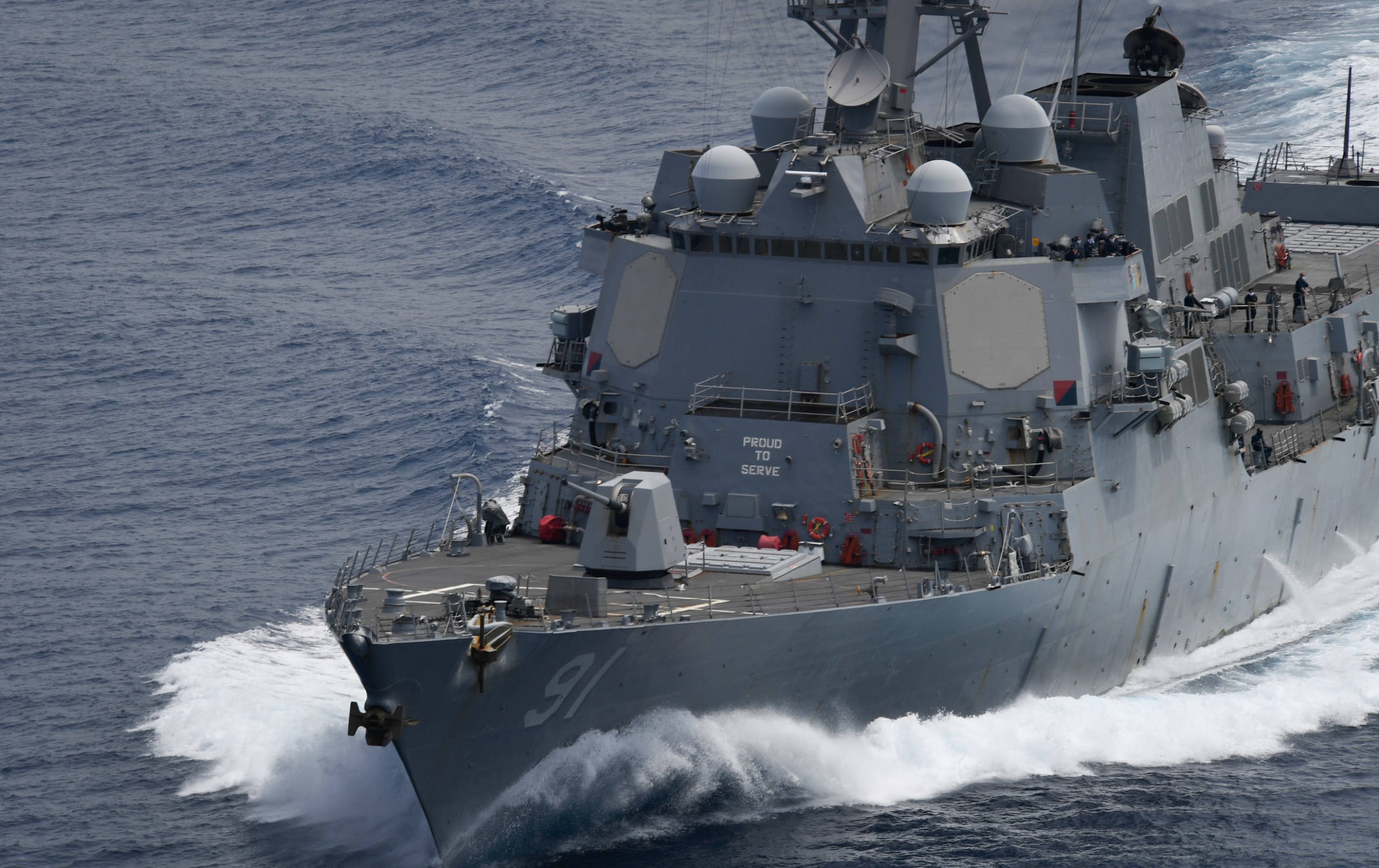
The US Navy has begun the second depot modernisation period for USS Pinckney (DDG 91) at General Dynamics NASSCO in San Diego, moving the Arleigh Burke-class destroyer into the next phase of the DDG MOD 2.0 programme. The work centres on installing the SPY-6(V)4 radar and high efficiency super-capacity air conditioning plants, with the upgraded radar intended to operate alongside Aegis Combat System Baseline 10. The Navy confirmed the start of the phase on 22 October.
The new period follows a 2024 DMP 1.5 availability during which Pinckney received the SLQ-32(V)7 Surface Electronic Warfare Improvement Program system and structural sponsons to support it. After that work, the ship returned to service and deployed before entering the latest yard period. Splitting the installations allows the Navy and shipyard to sequence major changes across separate availabilities, but the current commencement does not mean the new radar or cooling equipment has completed integration or acceptance.
SPY-6(V)4 is the radar configuration selected for the destroyer modernisation programme, using fixed electronically scanned arrays to support surveillance and tracking. Information from the sensors must be processed through the Aegis Combat System Baseline 10 configuration included in the upgrade. The Navy describes Pinckney as the first installation combining this radar variant with its High Efficiency Super-Capacity (HESC) air conditioning plants. The resulting performance remains subject to shipboard testing rather than being established by the start of installation.
Fitting fixed radar arrays requires controlled alignment and structural support, together with reliable electrical distribution and data connections. The associated processors and power electronics generate waste heat that must be removed without exceeding the capacity available to other ship services. Installation teams also have to account for electromagnetic compatibility, antenna fields of view and access for subsequent maintenance. The Navy has identified the systems selected for the ship but has not made the complete platform-specific interface design public.
The HESC air conditioning plants form part of that wider integration. New radar and combat system equipment can concentrate electrical and thermal demand in spaces designed around earlier systems, making cooling capacity an essential part of the modernisation rather than an optional efficiency measure. NASSCO must coordinate the plant installation with the electrical services and equipment receiving conditioned air. No capacity rating or quantified efficiency saving has been released for Pinckney‘s new installation.
The previously installed SLQ-32(V)7 electronic warfare system and its supporting sponsons must remain compatible with new radar equipment, antennas, navigation systems and shipboard services. Each subsystem has its own maintenance and access requirements, while the overall ship must preserve safe arrangements for crew movement and operational tasks. The phased programme offers experience from earlier installation work, but it does not remove the need to verify the complete modernised configuration as one functioning vessel.
The shipyard work is covered by a contract awarded to General Dynamics NASSCO on 4 September, rather than a new contract announced with the 22 October milestone. The fixed-price incentive-fee action was valued at $149,599,723; options would bring the total to approximately $149.9 million if exercised. The notice specified maintenance, repair, modernisation, production, testing and quality assurance, with work expected to finish in September 2028. The value covers the defined yard availability, not the overall cost of upgrading the destroyer fleet.
Execution has to account for access to compartments, removal of older equipment, preparation of foundations, cable and pipe routes, and the sequence for installing large systems. Some tasks can proceed in parallel, while others depend on earlier structural or services work. The Navy’s contract announcement did not allocate each job to an individual subcontractor or identify a detailed shipboard installation schedule. Those omissions prevent a precise account of the work sequence beyond the systems and broad contract scope disclosed.
The Navy introduced its split-start approach to capture experience across industry partners and improve the sequencing of repeated destroyer upgrades. Practical lessons may emerge from equipment access, design maturity and coordination between shipyard trades, but the service has not released a quantified time or cost saving for this approach. Pinckney‘s latest availability is therefore both a specific ship upgrade and an early integration test of the programme’s phased execution model.
Installation will be followed by harbour checks, integrated system tests, trials and acceptance before the ship returns to routine service. The Navy expects the current depot period to run through September 2028. Until those milestones are complete, the SPY-6(V)4, Baseline 10 and HESC combination remains work under way rather than a capability already delivered to the fleet.