IN Brief:
- HII has installed a commemorative hull plaque on the first ROMULUS 151 unmanned surface vessel under construction.
- Breaux Brothers, Halimar Shipyard, and Bayou Metal are supporting a distributed production programme in Louisiana.
- The vessels will incorporate HII's Odyssey autonomy architecture, previously evaluated during US Navy-monitored trials.
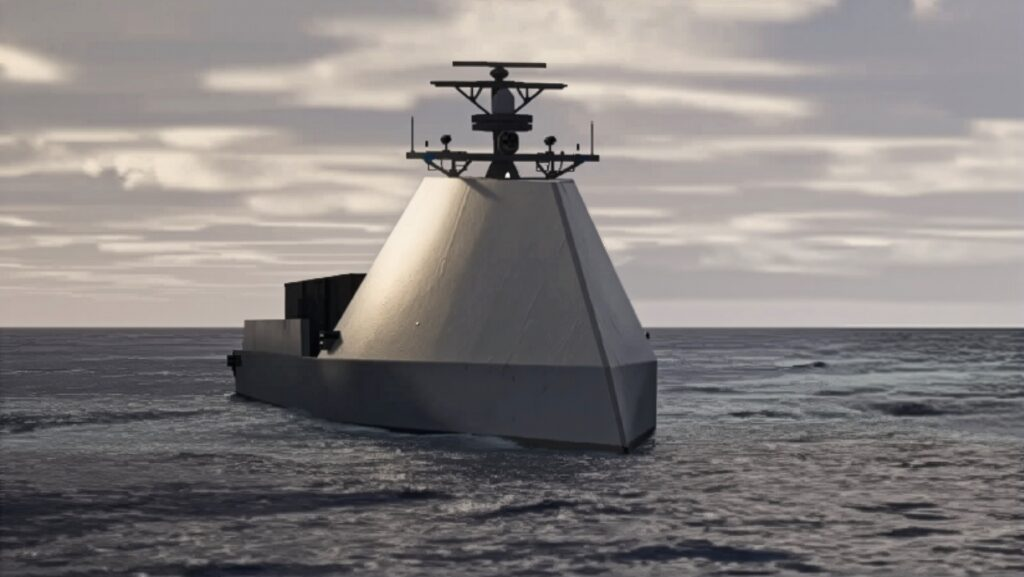
HII has marked continued construction of its first ROMULUS 151 unmanned surface vessel at Breaux Brothers Enterprises in Louisiana, highlighting the regional shipbuilding network supporting production for the US Navy.
The event, held in New Iberia on 27 October, included installation of a commemorative hull plaque on the first vessel. It recognised progress under the Navy’s Medium Unmanned Surface Vessel (MUSV) programme, alongside the companies and skilled workers undertaking the manufacturing activity.
The Navy awarded HII a contract for ten ROMULUS 151 vessels in September. Construction was already under way before the award, with HII developing production capacity through a network of specialist Gulf Coast shipyards and suppliers.
The latest ceremony is a recognition of that continuing work rather than a formal launch, completion, or delivery of the first vessel. The industrial activity involves hull fabrication, structural assembly, equipment integration, and the preparation of autonomous control systems for installation and evaluation.
Breaux Brothers Enterprises is constructing ROMULUS vessels at its New Iberia facility, drawing on experience building aluminium craft for demanding maritime applications. Halimar Shipyard in Morgan City provides additional construction capacity, while Bayou Metal Supply & Manufacturing supports the programme through specialist fabrication.
HII developed ROMULUS in partnership with Beier Integrated Systems and Incat Crowther. Its production arrangements combine that engineering work with the facilities and manufacturing experience available through the Louisiana shipbuilding businesses.
The distributed approach allows major components and structural assemblies to be produced at different locations before they are incorporated into completed vessels. Each stage requires compatible manufacturing specifications and a defined sequence for transferring work between participating organisations.
Bayou Metal established a dedicated production operation supporting structural component fabrication for the programme. Its work includes the cutting, forming, welding, and assembly activities needed to provide larger structural units to the shipyards responsible for subsequent vessel construction.
Those assemblies must meet the dimensional and material requirements of the vessel design. Consistent fabrication allows the receiving shipyard to incorporate components into the hull structure without extensive modification, supporting a more predictable construction sequence.
Breaux Brothers completed the principal structure of the first ROMULUS 151 hull earlier this year and subsequently turned the assembly over to continue work on the deck and pilothouse. HII had five vessels under construction at the time of that September milestone, with four at Breaux Brothers and one at Halimar.
The sequence illustrates how the programme has progressed through overlapping construction activities. Different hulls can occupy separate stages of fabrication while suppliers prepare components and equipment needed for later installation.
Once a hull’s structural work is completed, the remaining production activities include machinery installation, electrical distribution, control equipment, navigation systems, communications, and other equipment specified for the vessel.
These systems must be accommodated within the platform’s internal arrangement. Cable routes, equipment mounts, machinery access, and the location of sensors influence the work undertaken during outfitting, while the installation sequence determines which operations can proceed simultaneously.
ROMULUS combines conventional marine engineering with autonomy technology intended to allow the vessel to conduct assigned tasks without a continuously embarked crew. Propulsion, steering, electrical generation, and onboard equipment remain necessary, but their operation must be connected with an appropriate remote and autonomous control architecture.
HII’s Odyssey Autonomous Control Solutions provides that software and control environment. Its functions are intended to support navigation, situational awareness, the management of onboard systems, and coordination with other crewed or uncrewed platforms.
The architecture is modular, allowing different sensors and mission equipment to be incorporated according to the requirements of a particular vessel configuration. Software and equipment interfaces determine how information is exchanged between the installed systems and the autonomy functions responsible for processing it.
The ROMULUS family is designed to support missions including intelligence, surveillance, reconnaissance, mine countermeasures, and other naval applications. The capability available on an individual vessel depends on the payloads, sensors, and command arrangements ultimately installed and accepted for operation.
Before the current production programme, HII completed a Navy-monitored evaluation of Odyssey with Applied Intuition, Greenroom Robotics, and Rodi Marine. The assessment included 13 days of testing and a long-duration mission simulation covering 420 nautical miles over 28 hours.
The evaluation provided evidence of the autonomy architecture’s performance against the test criteria. Production vessels still require their own equipment installation, integration checks, and acceptance activity before the Navy can determine that completed systems satisfy the requirements applicable to them.
Manufacturing several vessels through different shipyards introduces another set of requirements. Common documentation, component specifications, and inspection procedures must support consistent production, while the specialist equipment installed on each vessel has to remain compatible with its structural and electrical arrangements.
HII began securing the industrial partnerships and facilities required for ROMULUS production during 2025. Establishing that capacity ahead of the Navy’s September award enabled construction activity to progress using an existing network of maritime manufacturers.
The arrangements also create work for regional suppliers whose capabilities cover different stages of vessel production. Structural fabrication, mechanical engineering, electrical installation, and system integration all contribute to the completed platform, with coordination required between companies carrying out separate parts of the programme.
The first vessel’s hull-plaque ceremony recognised those industrial contributions while construction continued at Breaux Brothers. The remaining manufacturing and integration activities will determine when the vessel progresses to testing and eventual delivery.
HII’s ROMULUS programme now combines an established Navy contract, vessels already in production, and an autonomy architecture evaluated through earlier trials. The Louisiana shipyards will continue the construction work needed to bring the first vessels towards completion under the MUSV programme.