
IN Brief:
- Japan and the United States have agreed to establish an AMRAAM final assembly and check-out facility in Japan.
- The countries will share technical information intended to increase production of jointly developed SM-3 Block IIA interceptors.
- The arrangements advance Operation Supercharge, with the Japanese facility's location, production schedule, and output still to be determined.
Japan and the United States have agreed to establish a final assembly and check-out facility for Advanced Medium-Range Air-to-Air Missiles (AMRAAM) in Japan, advancing bilateral missile manufacturing cooperation alongside measures intended to increase production of SM-3 Block IIA interceptors.
The agreement was reached during talks between Japanese Defence Minister Shinjiro Koizumi and US Defense Secretary Pete Hegseth on 28 October, on the sidelines of the ASEAN Defence Ministers’ Meeting Plus in the Philippines.
The Japanese Ministry of Defense confirmed that the countries would establish an AMRAAM final assembly and check-out facility, known as FACO, and share the technical information necessary to expand production of SM-3 Block IIA missiles.
Both activities form part of Operation Supercharge, the initiative through which Japan and the United States are accelerating defence equipment and technology cooperation. The new agreements progress industrial discussions that have been under way for more than two years.
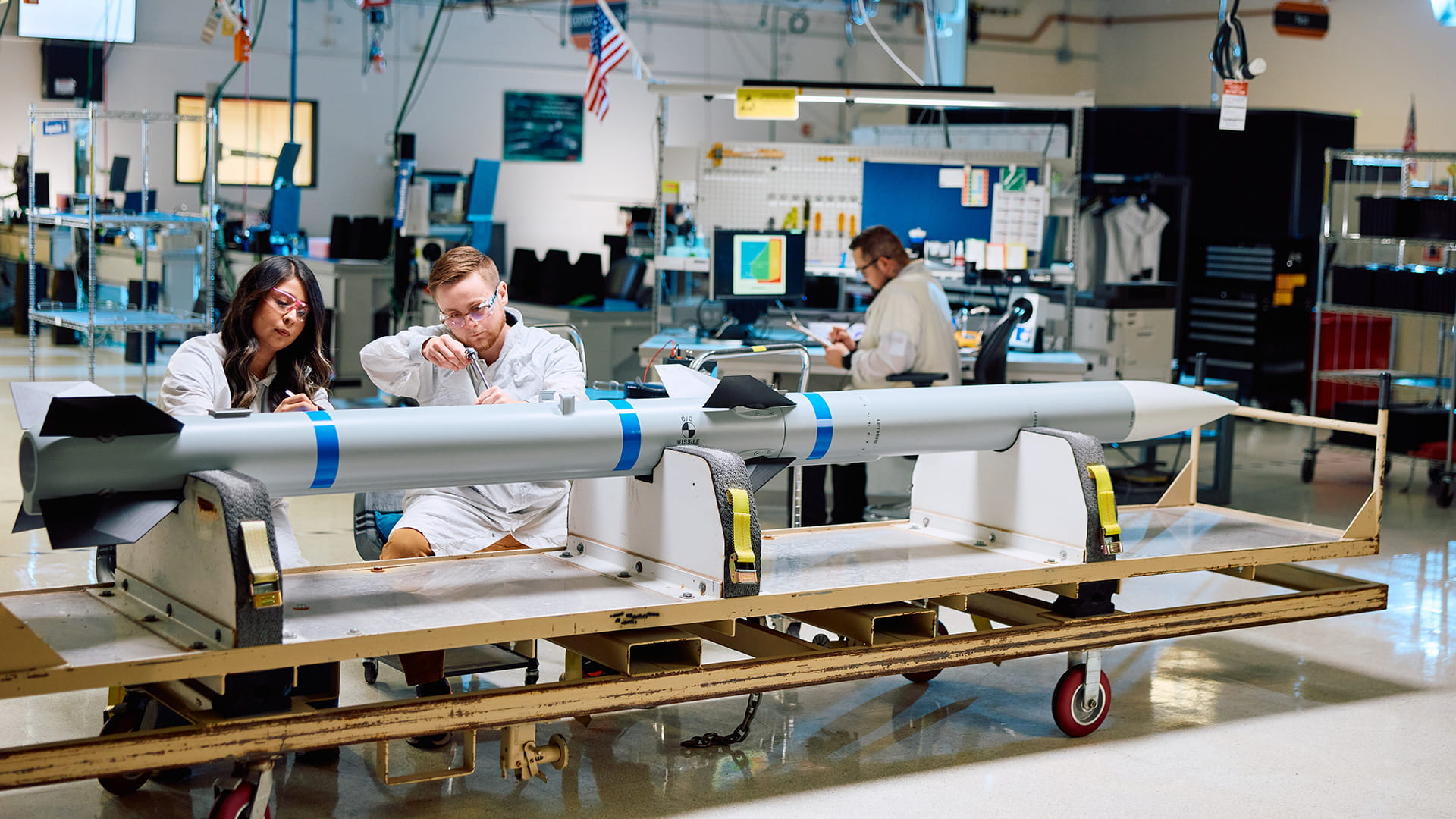
AMRAAM is manufactured by Raytheon, an RTX business, and is used by several combat aircraft types, including the F-35. The AIM-120 family combines propulsion, guidance, control electronics, and other components within a complete air-to-air missile.
Production is organised through multiple manufacturing stages, with components and subsystems produced before integration into the completed equipment. The final assembly operation brings these elements together in the configuration specified for the customer, supported by inspection and check-out procedures.
Establishing that capability in Japan would extend local industrial participation into the later stages of missile manufacturing. The arrangement requires manufacturing infrastructure, appropriate technical documentation, specialist personnel, and agreed processes for accepting completed equipment.
The precise division of work between Japanese and American facilities remains to be determined. Component availability, engineering responsibilities, and the procedures used to complete and inspect missiles will influence the industrial arrangements established for the facility.
Japan and the United States previously examined the feasibility of local AMRAAM manufacturing through cooperation involving Mitsubishi Electric and Raytheon. The study provided a basis for identifying activities that could be undertaken through a bilateral production arrangement.
During April 2026 discussions under the Defence Industrial Cooperation, Acquisition and Sustainment framework, the countries identified circuit card assembly manufacture as part of the proposed Japanese contribution. They also agreed to examine the possibility of establishing an AMRAAM final assembly facility.
The October decision progresses that earlier discussion into an agreement to establish the facility. The governments have yet to specify the location, operating organisation, initial manufacturing capacity, or date on which production will begin.
Circuit card assemblies contain electronic components and their supporting connections, providing defined functions within larger electrical systems. Their production involves specialist electronics manufacturing, component inspection, and testing before integration into higher-level equipment.
Final assembly and check-out involve different industrial activities from circuit card manufacture. Completed assemblies and other components must correspond to the agreed configuration, with the finished equipment undergoing the verification procedures established for the programme.
Distributing these activities across two countries creates requirements for coordinated technical documentation, component supply, and quality management. The completed manufacturing arrangement will also depend on the permissions and contractual responsibilities applicable to participating companies.
Raytheon has been expanding AMRAAM manufacturing through a separate multiyear agreement with the US government. The company is targeting annual production of at least 1,900 missiles, providing a wider industrial context for the Japanese initiative.
The Japanese FACO agreement establishes an additional manufacturing arrangement rather than confirming that this production target has already been achieved. The contribution from the planned facility will become clearer once its capacity and implementation schedule are established.
The second October agreement concerns the SM-3 Block IIA ballistic missile interceptor, which Japan and the United States developed through an established bilateral programme. The system forms part of the Aegis ballistic missile defence architecture and involves specialised manufacturing responsibilities distributed between participating organisations.
The countries agreed to share technical information needed to increase production of the interceptor. That cooperation will support efforts already under way to expand the programme’s industrial capacity, with manufacturing and supply arrangements requiring coordination across the relevant companies.
In April, the two governments identified measures intended to increase SM-3 Block IIA production by approximately four times, alongside further assessment of opportunities for acceleration. The October decision advances the necessary technical cooperation without confirming completion of that increase.
Missile production depends on several specialised industrial processes progressing at compatible rates. The availability of electronic components, mechanical assemblies, propulsion equipment, and qualified manufacturing capacity influences the number of completed systems that can be supplied.
Expanding output may therefore require investment beyond the final assembly operation. Suppliers responsible for individual components must be capable of supporting the planned production schedule, with inspection and acceptance procedures maintained as manufacturing volumes change.
Japan already participates in licensed and cooperative production of defence equipment, including missile technologies. The AMRAAM and SM-3 agreements add specific industrial objectives to that established relationship, with responsibilities extending across different stages of manufacturing.
Operation Supercharge will provide the framework for implementing both measures. The next steps involve establishing the Japanese AMRAAM facility’s production arrangements and progressing the information sharing necessary for increased SM-3 Block IIA output.
The agreements define new manufacturing cooperation commitments while leaving operational details to subsequent implementation. Facility selection, equipment installation, technical arrangements, and production planning will determine when the additional capacity can contribute to missile supply.