IN Brief:
- LAHAB has completed its first dynamic firing trial of UAE-designed 155mm Extended Range Full Bore ammunition.
- Testing confirmed expected chamber pressures, projectile trajectories, grouping, structural integrity, and compatibility with JBMOU-standard artillery.
- Arena testing and qualification against military standards remain ahead of demonstrating Safety and Suitability for Service.
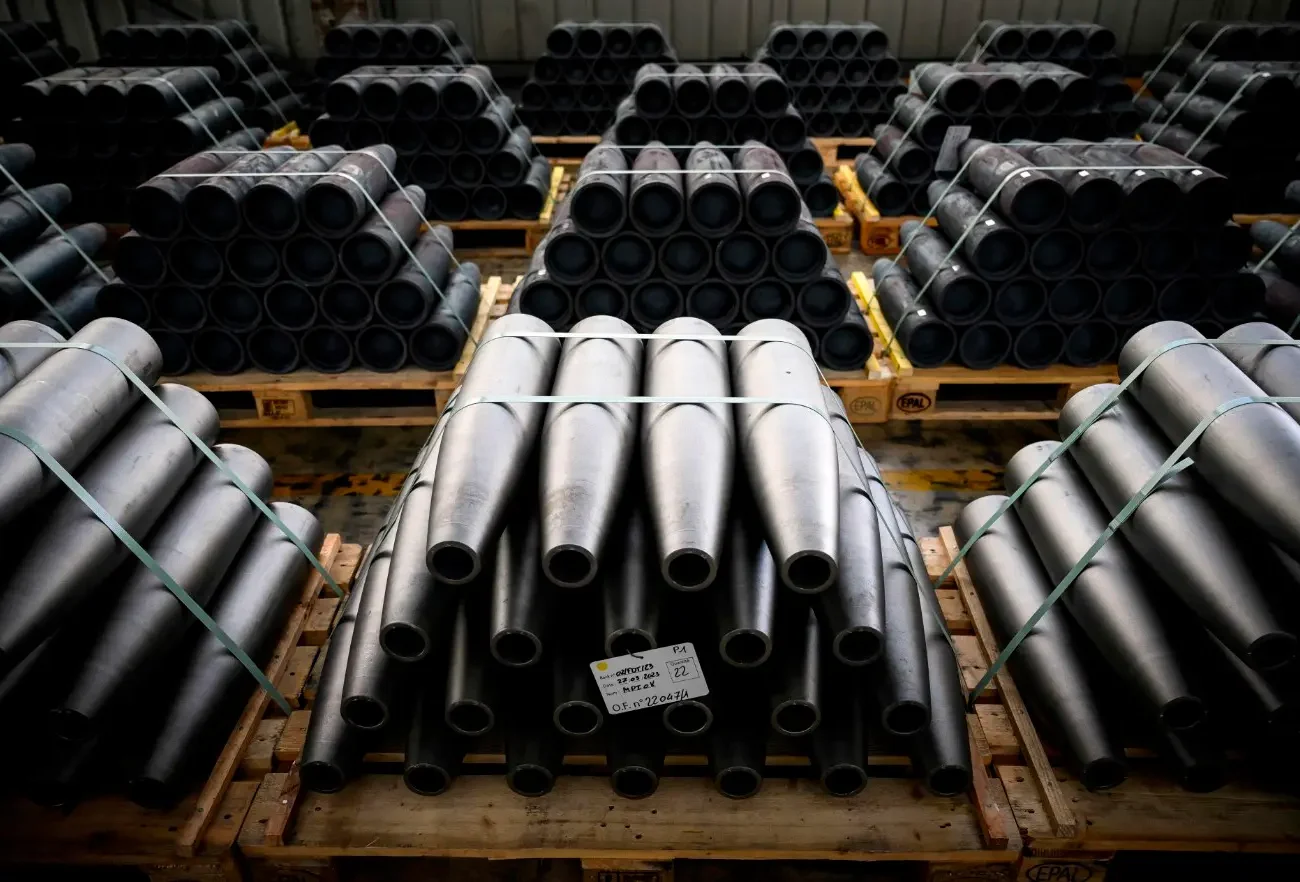
EDGE Group subsidiary LAHAB has completed the first dynamic firing trial of its UAE-designed 155mm Extended Range Full Bore (ERFB) artillery ammunition, advancing development of the projectile under the HAZEEM programme.
The testing used a 52-calibre artillery barrel, with all projectiles following their predicted trajectories and reaching the designated target area. LAHAB recorded consistent grouping and tight dispersion, while measured chamber pressures corresponded with the values established during the ammunition’s development.
The projectile was designed and manufactured internally by LAHAB, which specialises in medium- and large-calibre ammunition. Its development forms part of EDGE’s wider programme to establish domestic engineering and manufacturing capabilities for artillery ammunition.
The initial firing examined several elements of the completed projectile’s behaviour. Engineers assessed compatibility with weapons conforming to the Joint Ballistics Memorandum of Understanding (JBMOU), compared theoretical and measured performance, and examined the structural condition of the components after firing.
LAHAB completed the objectives established for the trial, providing experimental evidence supporting progression to further testing. The results cover the conditions examined during the first firing campaign, with additional assessment required before the ammunition can complete military qualification.
The JBMOU establishes common technical requirements for 155mm artillery systems and ammunition. These arrangements support compatibility between equipment produced by different manufacturers and used by participating armed forces.
Manufacturers developing ammunition for this market must account for the specified interfaces and operating requirements of the relevant artillery systems. Compatibility assessment forms part of the wider evidence needed to establish whether completed equipment meets the requirements of prospective customers.
The ERFB projectile incorporates an extended-range aerodynamic design and a deep intrusion fuze well. These characteristics form part of its specified configuration, which must be evaluated as a complete assembly rather than through assessment of individual components alone.
Structural integrity was among the principal objectives of the first firing. The projectile’s components were examined to establish whether they retained their expected condition following exposure to the mechanical and environmental demands associated with the test.
The measured results also provided a comparison between predicted and observed ballistic behaviour. Such comparisons allow engineers to assess how closely the completed hardware performs against the expectations established during its design and development.
Repeatability is an important consideration when equipment progresses towards industrial production. Successive units must correspond to the approved configuration, with manufacturing procedures and inspection controls supporting consistent results across production batches.
LAHAB’s first trial combined ammunition produced through its domestic manufacturing arrangements with evaluation against defined performance criteria. The next stage will expand the evidence available for assessing the projectile’s suitability for its intended applications.
EDGE has identified arena testing as the next major activity. This will assess the projectile’s effectiveness under controlled test conditions, providing additional information beyond the structural and ballistic measurements collected during the initial firing campaign.
Further qualification will follow applicable Military Standard requirements and NATO Standardization Agreement 4224. The programme aims to demonstrate Safety and Suitability for Service, establishing whether the ammunition satisfies the relevant requirements before operational acceptance.
These evaluation stages cover different aspects of the equipment. Ballistic testing examines defined characteristics of projectile behaviour, while subsequent assessments contribute evidence about performance, safety, and suitability under the conditions specified for the completed product.
Test results must also correspond to the manufacturing configuration ultimately intended for supply. Engineering changes introduced during development require appropriate assessment so that the evidence supporting qualification remains relevant to the equipment produced.
LAHAB’s HAZEEM programme is intended to establish a UAE-designed and manufactured family of artillery ammunition. The current projectile represents one development within that initiative, which combines specialist engineering with the manufacturing and qualification activities needed to support future ammunition supply.
Producing large-calibre ammunition domestically requires access to suitable materials, precision manufacturing capabilities, inspection equipment, and personnel experienced in controlled industrial processes. The availability of these resources affects the ability to manufacture components consistently and maintain production over time.
Manufacturing responsibility also extends to documentation, quality management, and the control of component configurations. Suppliers must be able to demonstrate that production equipment corresponds to the agreed specifications and that appropriate verification has been completed before delivery.
EDGE has been developing these capabilities across its specialist defence businesses, including LAHAB’s existing ammunition operations. HAZEEM extends that work into the development of locally designed products, supported by the testing and qualification processes required for military applications.
Saif Al Dahbashi, EDGE’s president of Missiles and Weapons, identified the relationship between domestic manufacturing and dependable ammunition supply as a principal objective of the programme. The initial trial provides a measurable step towards that objective, with subsequent qualification determining the projectile’s readiness for wider production and service.
The completion of the first firing campaign establishes a technical milestone for the UAE-developed 155mm projectile. LAHAB will now undertake arena testing and the remaining qualification activities, using the results to progress HAZEEM towards an accepted ammunition configuration.