IN Brief:
- India's IG Defence and Oman's MSA Global have signed a memorandum covering defence technology development and manufacturing cooperation.
- The proposed partnership encompasses KAL long-range unmanned aircraft, BAJ counter-UAS interceptors, and JWALA micro-missile technology.
- The companies will assess local manufacturing and joint development opportunities, with production commitments and investment arrangements still to be established.
IG Defence has signed a memorandum of understanding with Oman-based MSA Global LLC to explore joint development and local manufacturing of defence technologies for Oman and the wider Gulf Cooperation Council (GCC) region.
The Indian company will examine opportunities to develop and localise three of its indigenous platforms: the KAL long-range one-way attack unmanned aerial system, the BAJ unmanned aerial interceptor, and the JWALA micro-missile system being developed for counter-drone applications.
The agreement was exchanged during the India–Oman Defence Industry Seminar in Muscat between Bodhisattwa Sanghapriya, founder and chief executive of IG Defence, and retired Colonel M. S. Atwal, chairman of MSA Global.
The seminar was facilitated by India’s Department of Defence Production, part of the Ministry of Defence, in association with the Federation of Indian Chambers of Commerce and Industry (FICCI). Government and diplomatic representatives from India and Oman attended alongside participating businesses.
The memorandum provides a framework for examining possible industrial projects. Individual manufacturing responsibilities, investment requirements, and customer commitments will need to be established through subsequent agreements as the companies assess the technologies suitable for local development.
IG Defence develops unmanned aircraft, counter-UAS equipment, missile systems, and associated defence technologies. The proposed cooperation would extend its engineering and commercial activities into Oman while providing a basis for examining potential manufacturing opportunities across the GCC.
KAL is the first platform identified for the partnership. IG Defence describes the system as a long-range, one-way attack unmanned aircraft with a manufacturer-stated operating range of up to 1,000km, intended for military applications requiring an unmanned platform capable of operating over extended distances.
The system is part of IG Defence’s existing unmanned aircraft portfolio. Its proposed localisation would require the partners to establish which manufacturing and support functions could be undertaken in Oman, drawing on the original developer’s engineering information and the capabilities available within the local industrial network.
Unmanned aircraft manufacture involves several distinct technical disciplines, including airframe production, propulsion integration, electrical systems, onboard computing, and the equipment required to control and support the aircraft. The production responsibilities allocated to individual companies depend on the selected configuration and the scope of the manufacturing agreement.
The 1,000km operating range remains a capability stated by IG Defence. Specific equipment configurations, acceptance requirements, and the technical arrangements for any Omani manufacturing programme would be determined through further development of the partnership.
BAJ, the second proposed platform, is an unmanned aerial interceptor designed for counter-UAS applications. IG Defence positions the system within its portfolio of technologies intended to address unmanned aircraft threats, providing an airborne element that could operate alongside wider detection and command capabilities.
Counter-UAS architectures can combine surveillance sensors, information processing, communications, and different response systems. Integrating an interceptor with such equipment requires compatible interfaces and technical arrangements appropriate to the command structure established by the customer.
The company’s BAJ-MK1 product is described as a vertical take-off and landing interceptor. The precise configuration proposed for Oman will depend on the engineering and commercial work undertaken by the partners, including any requirements for integration with existing equipment.
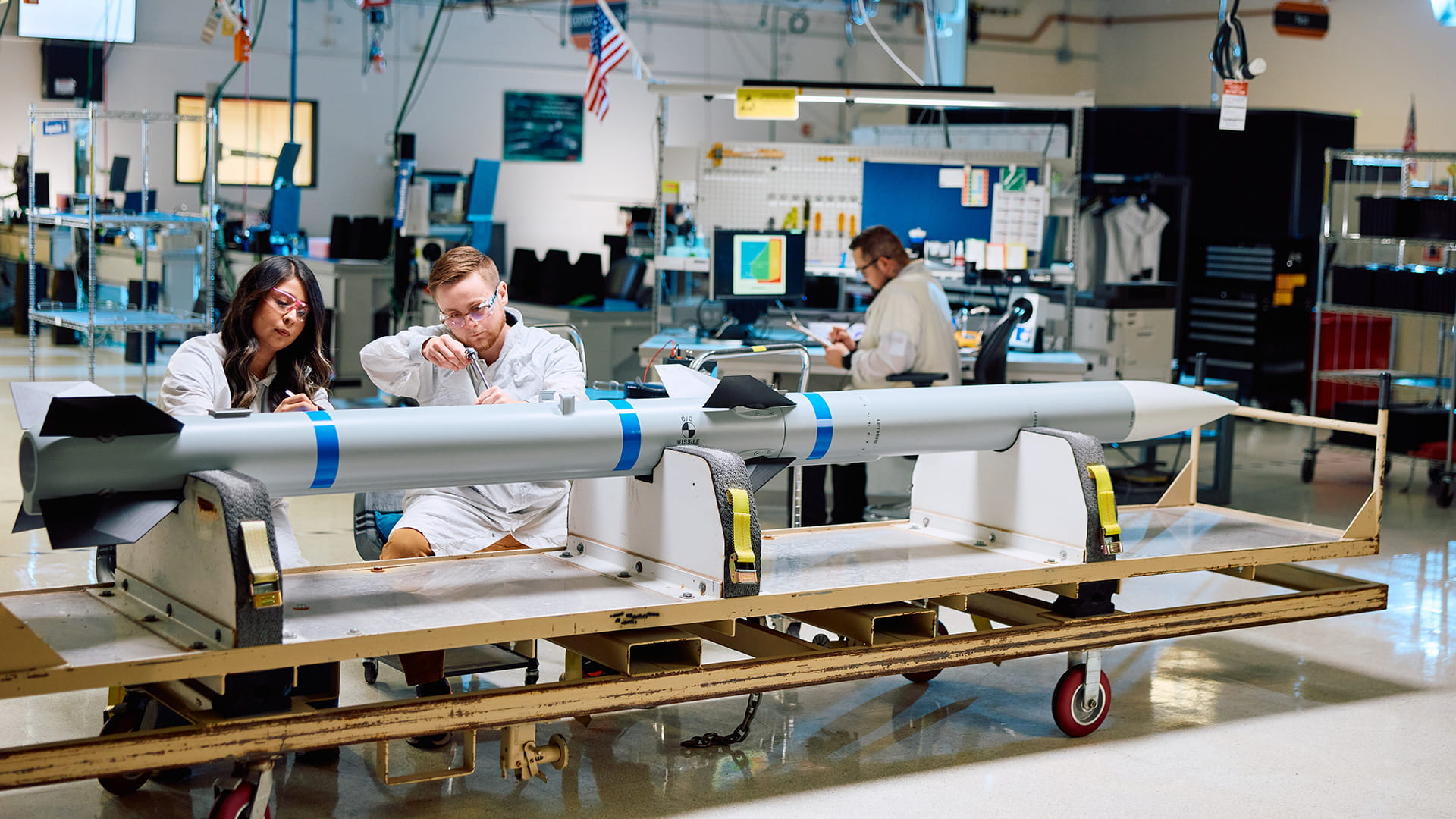
The third technology is JWALA, which IG Defence is developing as a micro-missile system for counter-drone applications. The company’s broader product information identifies JWALA MK1 as a short-range surface-to-air missile system under development.
The partnership would examine opportunities for local development and manufacture of this technology alongside the two unmanned aircraft platforms. Each product involves a different industrial configuration, with manufacturing processes, equipment requirements, and qualification activities specific to the system concerned.
Production localisation therefore extends beyond providing a facility for final assembly. The participating organisations would need to determine the component manufacturing activities, specialist equipment, technical documentation, and quality procedures that could be established within Oman.
Where equipment is developed by one company and manufactured through an overseas partner, the agreement must also define the responsibilities of the original design organisation. Approved specifications, engineering changes, technical support, and production verification need to remain consistent with the configuration intended for customers.
These arrangements can differ considerably between products. An unmanned aircraft manufacturer may require suppliers of structural components and electronic assemblies, while other defence technologies can involve distinct specialist materials, manufacturing processes, and testing facilities.
The proposed projects would also require arrangements for training, technical documentation, and support after equipment is delivered. Manufacturing partners must be able to maintain the relevant production standards, with future equipment modifications coordinated through the responsibilities established by the development agreement.
IG Defence’s wider technology portfolio includes GRID, an artificial intelligence-powered battle management system. Sanghapriya referred to GRID when describing the company’s ambition to provide integrated defence capabilities, alongside its unmanned systems, counter-drone technologies, and missile products.
The three platforms specifically identified for possible localisation are KAL, BAJ, and JWALA. GRID provides context for IG Defence’s wider product strategy, with any separate development or integration arrangements requiring further definition between the partners.
MSA Global’s participation is intended to connect Indian engineering capabilities with Oman’s industrial environment. The companies will assess opportunities for local production and joint development, together with the requirements of potential customers in Oman and neighbouring GCC countries.
Atwal said the collaboration offered a means of combining Indian defence engineering with Omani industrial capabilities, supporting the development of regional manufacturing capacity and longer-term industrial relationships.
Sanghapriya positioned the partnership within IG Defence’s international expansion strategy, linking the company’s indigenous products with opportunities to develop manufacturing relationships outside India. The arrangement could provide a route for supplying regional customers through future projects involving the two businesses.
Government-supported industrial cooperation forms part of the wider relationship between India and Oman. The Muscat seminar brought together companies and defence representatives, providing a setting for examining opportunities in technology development, manufacturing, and related commercial activities.
Any subsequent projects will depend on agreed customer requirements and the industrial responsibilities established by the companies. Production investment, technical approvals, manufacturing schedules, and equipment deliveries will be defined as those arrangements progress.
IG Defence and MSA Global will now examine the technical and commercial basis for cooperation across the three named platforms. Specific development agreements, manufacturing commitments, or customer orders will determine how the proposed India–Oman partnership moves into industrial activity.