IN Brief:
- Naval Air Systems Command has awarded Leonardo DRS a three-year IDIQ for low-rate initial production of AN/AAQ-45 DAIRCM.
- The integrated suite combines missile warning, laser warning, hostile-fire indication, and directed infrared countermeasures for smaller aircraft.
- Manufacturing will take place in Dallas and San Diego, with integration and logistics support from Fort Walton Beach; order quantities are undisclosed.
US defence electronics manufacturer Leonardo DRS has secured a three-year Naval Air Systems Command contract for low-rate initial production of the AN/AAQ-45 Distributed Aperture Infrared Countermeasure (DAIRCM) aircraft survivability system. The award follows the programme’s engineering and manufacturing development phase and provides a production route for an integrated warning and countermeasure suite intended for military aircraft where equipment size, weight, and available power are constrained.
Hardware will be manufactured at Leonardo DRS facilities in Dallas, Texas, and San Diego, California, with aircraft integration and logistics work based at Fort Walton Beach, Florida. Systems engineering and programme management are also within the contractual scope. The company has not published a ceiling value, an initial funded order, production quantities, or a timetable for deliveries, so the three-year framework does not establish how many aircraft will receive the system.
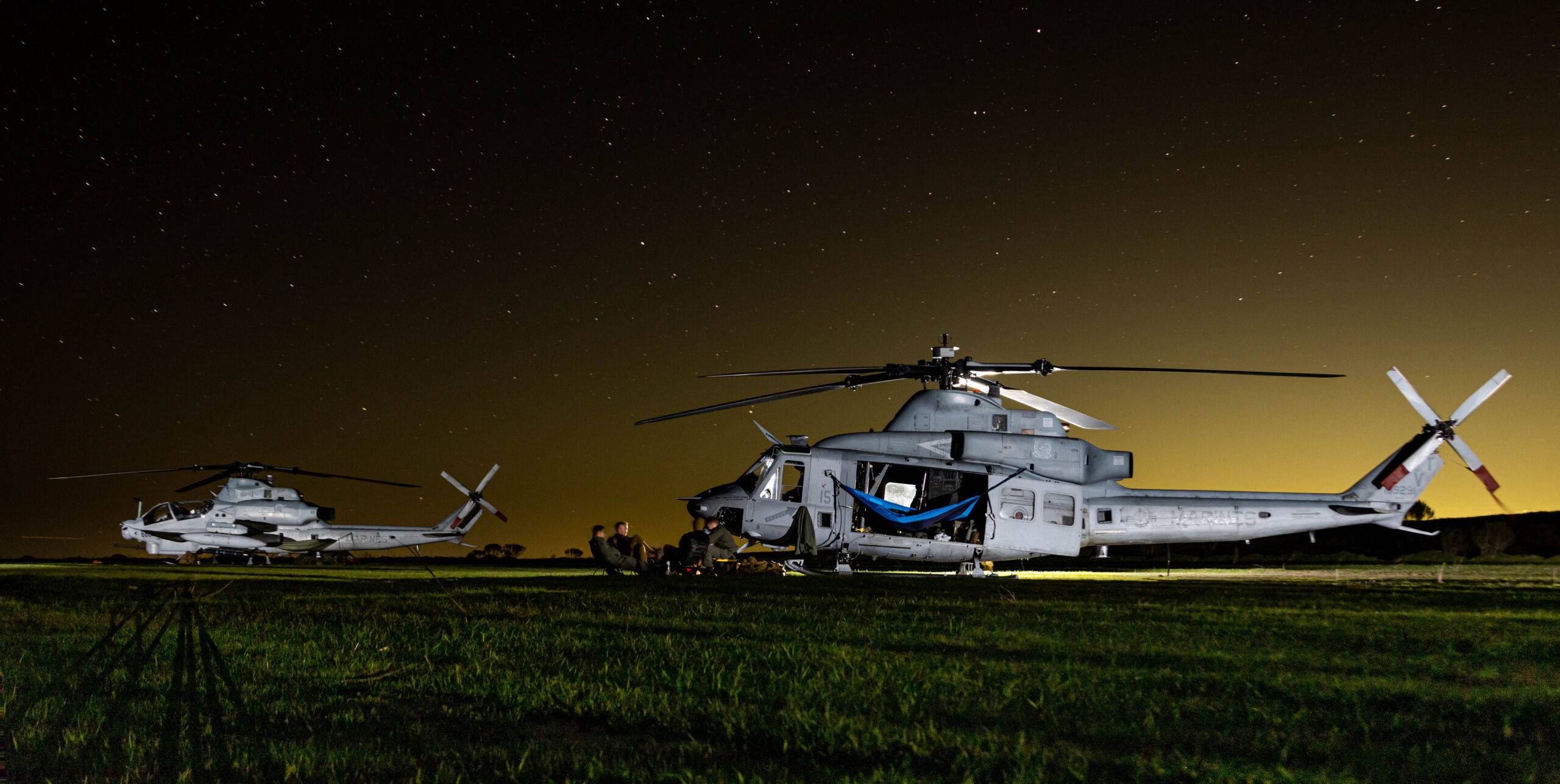
DAIRCM combines infrared missile warning, directed infrared countermeasures, laser warning, and hostile-fire indication in a modular architecture. Leonardo DRS identifies the AH-1Z Viper and UH-1Y Venom in imagery accompanying the 10 November award and describes the system as suitable for small and medium-sized aircraft. The aircraft type and its installation configuration determine whether sensors, optics, electronics, and support equipment can be positioned without interfering with existing systems or exceeding available electrical and thermal capacity.
Distributed aperture describes the use of sensors positioned around the aircraft rather than relying on a single narrow field of view. By distributing warning coverage, a system can observe activity approaching from different directions, although actual coverage depends on installation geometry, airframe obstructions, sensor performance, and the operational configuration. Leonardo DRS describes its DAIRCM approach as using two-colour infrared missile warning with countermeasure equipment and associated warning functions to provide aircraft self-protection.
When a potentially hostile object is detected, the warning subsystem has to evaluate the signal before directing a response. Infrared sensing can look for characteristics associated with an approaching missile, while laser warning addresses a different class of illumination. Hostile-fire indication adds another form of cueing. Combining these inputs in a common processing architecture can help avoid separate, disconnected alerts, but public information does not establish the detection probabilities or false-alarm rates of the production configuration.
A directed infrared countermeasure attempts to disrupt the guidance process of a heat-seeking missile by sending controlled infrared energy towards its seeker. The process differs from releasing conventional infrared flares because it requires an optical countermeasure device to be aimed or otherwise directed towards a detected threat. Effective operation therefore depends on the warning sensor, processing electronics, optical equipment, and aircraft interfaces working together within the response time available.
Integration presents a substantial engineering task even when the protective equipment has completed development. Sensors must be mounted with appropriate sightlines and structural support; electronic units need reliable power, cooling, wiring, and data connections; and the aircraft must be able to present warnings without overwhelming the crew. Access for inspection and replacement also affects where equipment can be installed. Those considerations become more restrictive on compact rotary-wing or tiltrotor platforms with limited spare capacity.
The low-rate production phase follows several years of development and field use. In July 2020, Leonardo DRS received a $120 million NAVAIR engineering and manufacturing development contract covering improved design, integration, testing, and production-representative equipment. DAIRCM had already been fielded under a Joint Urgent Operational Needs programme on aircraft in the US armed services. The 2026 award advances a defined AN/AAQ-45 configuration into production after further system development, rather than marking the first field use of DAIRCM technology.
Leonardo DRS says it incorporated capability and producibility enhancements during engineering and manufacturing development, although the latest disclosure does not identify the redesigned components. Production engineering generally requires stable assembly instructions, component traceability, repeatable inspections, and acceptance tests for each unit. Without published factory measurements, there is no basis for assigning a percentage reduction in production time, improvement in yield, or unit-cost saving to the revised configuration.
Splitting hardware manufacture between Dallas and San Diego while retaining integration and logistics support in Florida creates a multi-site delivery arrangement. Electrical assemblies, sensors, optical components, and control hardware must be built and tested to agreed specifications before being delivered for installation. Configuration management is particularly important when hardware and aircraft software evolve, because an accepted component must remain compatible with the aircraft’s approved installation and operating procedures.
Aircraft survivability systems also require continuing support after installation. Maintenance personnel must be able to distinguish a failed sensor, damaged connection, software issue, or degraded optical component without unnecessarily removing other equipment. Leonardo DRS supplies testing and support technology for aircraft sensors, and its new award explicitly includes logistics activities. Those services can become significant as different aircraft types carry slightly different configurations of the same underlying protection system.
The award establishes a low-rate production framework for an aircraft-protection suite with an existing operational and development history. Its funded quantity and individual airframe installation schedule remain undisclosed. Subsequent task orders, acceptance testing, and aircraft-specific integration work will determine how quickly hardware built at the Texas and California facilities moves into service.