IN Brief:
- AirMatrix says deployment is under way on a second Innovative Solutions Canada contract supporting the Department of National Defence.
- Its Libra software correlates radar and optical tracks and uses automatic camera cueing to support identification of low-altitude aircraft.
- The award follows a completed National Research Council deployment; contract value and full operating timetable have not been published.
Canadian airspace technology company AirMatrix has begun a second federal deployment of its Libra sensor-fusion and command platform under an Innovative Solutions Canada contract supporting the Department of National Defence. The latest installation combines information from multiple radar and optical systems to maintain tracks of low-altitude aircraft, automatically cue cameras, and present detections through a shared operating picture.
The new engagement follows an initial federal deployment with the National Research Council of Canada that AirMatrix says has been completed. Its latest work adds overlapping radar coverage and electro-optical or infrared systems to a more complex detection environment. The company has not disclosed the value of the second contract, the installation site, its acceptance criteria, or the date by which the Department of National Defence expects the system to be fully operational.
Libra is designed as a hardware-agnostic software layer rather than a radar manufactured by AirMatrix itself. The system can ingest information from radar, radio-frequency receivers, optical and infrared cameras, acoustic sensors, Remote ID, ADS-B, and other sources. Its central purpose is to assemble those different observations into tracks that remain intelligible when an aircraft moves between sensor coverage areas or is detected by more than one technology.
Radar returns, radio emissions, and optical images contribute different kinds of evidence to a surveillance track. Radar can indicate range and movement without necessarily identifying the object; a camera may provide visual detail when its view, lighting, and the target’s distance permit. Radio-frequency sensors can register transmissions from an aircraft or controller, but a radio-silent object may generate no useful emissions. Combining these inputs can improve the information available to an operator without making every track unambiguous.
Combining these observations requires software to determine whether different sensors are referring to the same physical object. That association depends on time synchronisation, sensor location and orientation, coordinate systems, and the accuracy of each measurement. Without those controls, multiple reports can generate duplicate tracks or cause an operator to confuse two nearby objects. A common operating picture must therefore communicate uncertainty rather than merely place apparently precise symbols on a map.
The announced integration includes multi-radar fusion, persistent tracking, automated camera cueing, and AI-assisted visual confirmation. Radar can provide an estimated target position, which is used to direct a camera towards the same part of the sky. Optical observations may then refine classification or supply a record for human review. The sequence depends on accurate time synchronisation, pointing calibration, processing delay, and an unobstructed view; AirMatrix has not supplied measured performance figures for the new installation.
Classification software can help prioritise tracks that require attention, but the company has not provided independently assessed accuracy or false-alarm data for this deployment. The announcement gives no quantified detection range, classification improvement, or reduction in response time. Those results would depend on the radars, cameras, viewing geometry, weather, and target types used in the trials, and should be distinguished from general product performance claims on the company’s website.
Libra uses application programming interfaces and modular connections so different sensors can feed the command layer. This approach can allow serviceable radar and camera equipment to remain in use when additional devices are installed. Integrating new hardware still requires consistent data formats, time references, secure access, and interface testing; software changes in either the sensor or command platform can also require compatibility checks before an operating configuration is accepted.
The Canadian-built software layer is intended to let government operators control how sensor information is combined and which equipment suppliers contribute to it. That architectural choice does not by itself establish independence from every external component or cloud service. Procurement teams will also have to determine who can access operational data, how user permissions are controlled, and which functions remain available when individual communications links or sensor feeds fail.
The company says research support through the National Research Council’s Industrial Research Assistance Program contributed to its work on sensor fusion, cueing, and visual confirmation. It also states that it has qualified in five streams of Canada’s Defence Drone Initiative marketplace, covering systems, digital capabilities, engineering, evaluation, and innovation. Qualification creates a route for future competitions or orders, but it should not be interpreted as five separate contracts or evidence of funded deliveries.
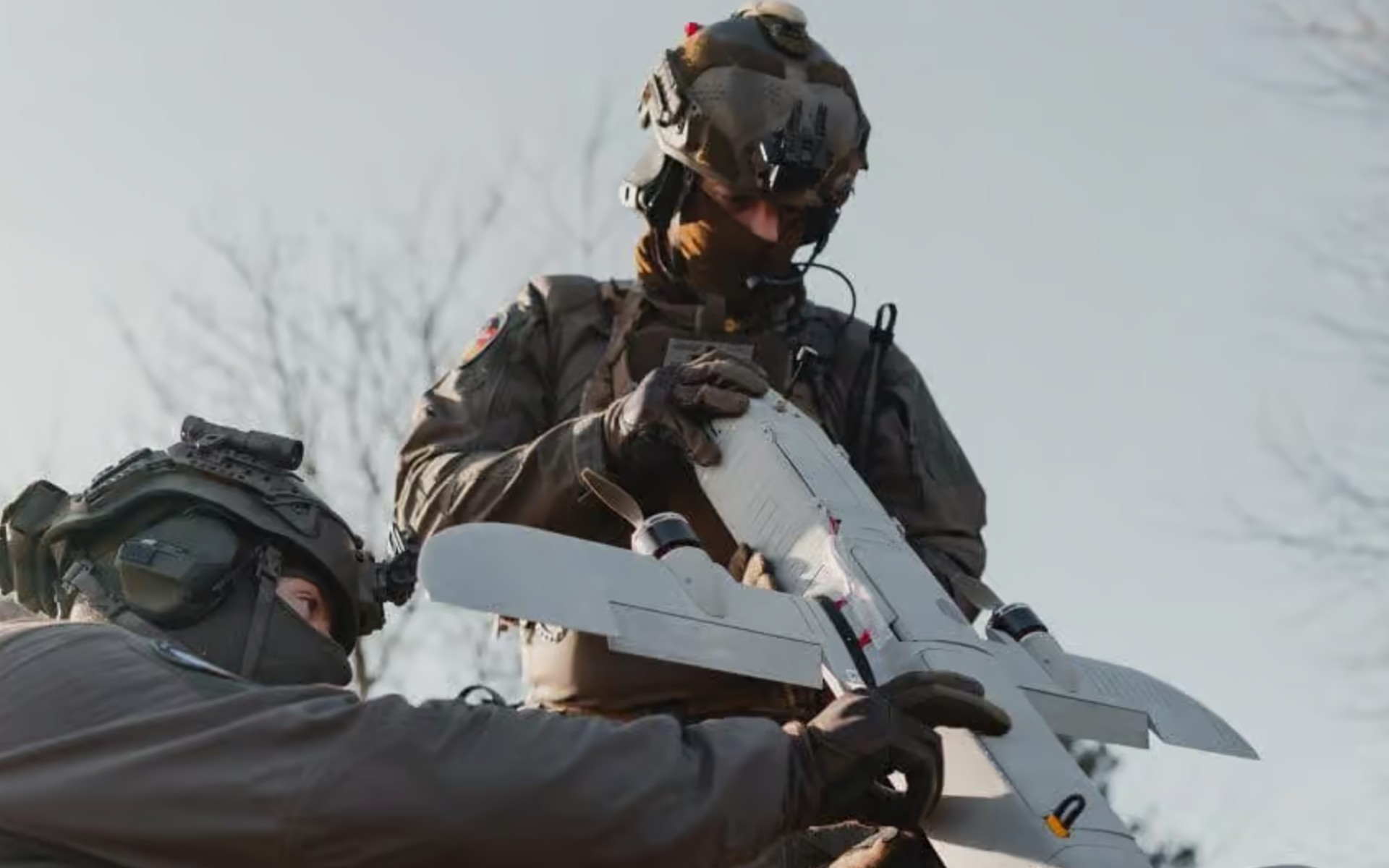
AirMatrix also says it is delivering technology to Ukraine, but has not disclosed installation quantities, locations, or configuration. That work is separate from the new Canadian Department of National Defence contract. The current deployment will involve integrating additional sensor feeds and maintaining a usable track picture across different detection methods, with the resulting field performance still to be established by the customer.
Deployment has commenced under the second federal contract, but full system acceptance and any broader Canadian procurement remain unconfirmed. The next reportable milestones are the completion of integration, the Department of National Defence’s evaluation of fused tracks and camera cueing, and any subsequent order identifying additional installations.