IN Brief:
- The US Army has awarded Safe Pro Group a $2.5m prime contract under a ground threat-detection commercial solutions opening.
- Ground Truth Air is intended to process Ghost-X video onboard the aircraft, marking potential explosive threats for Army digital systems.
- Integration, testing, and mapping performance remain central deliverables; the announcement does not establish broad fleet deployment.
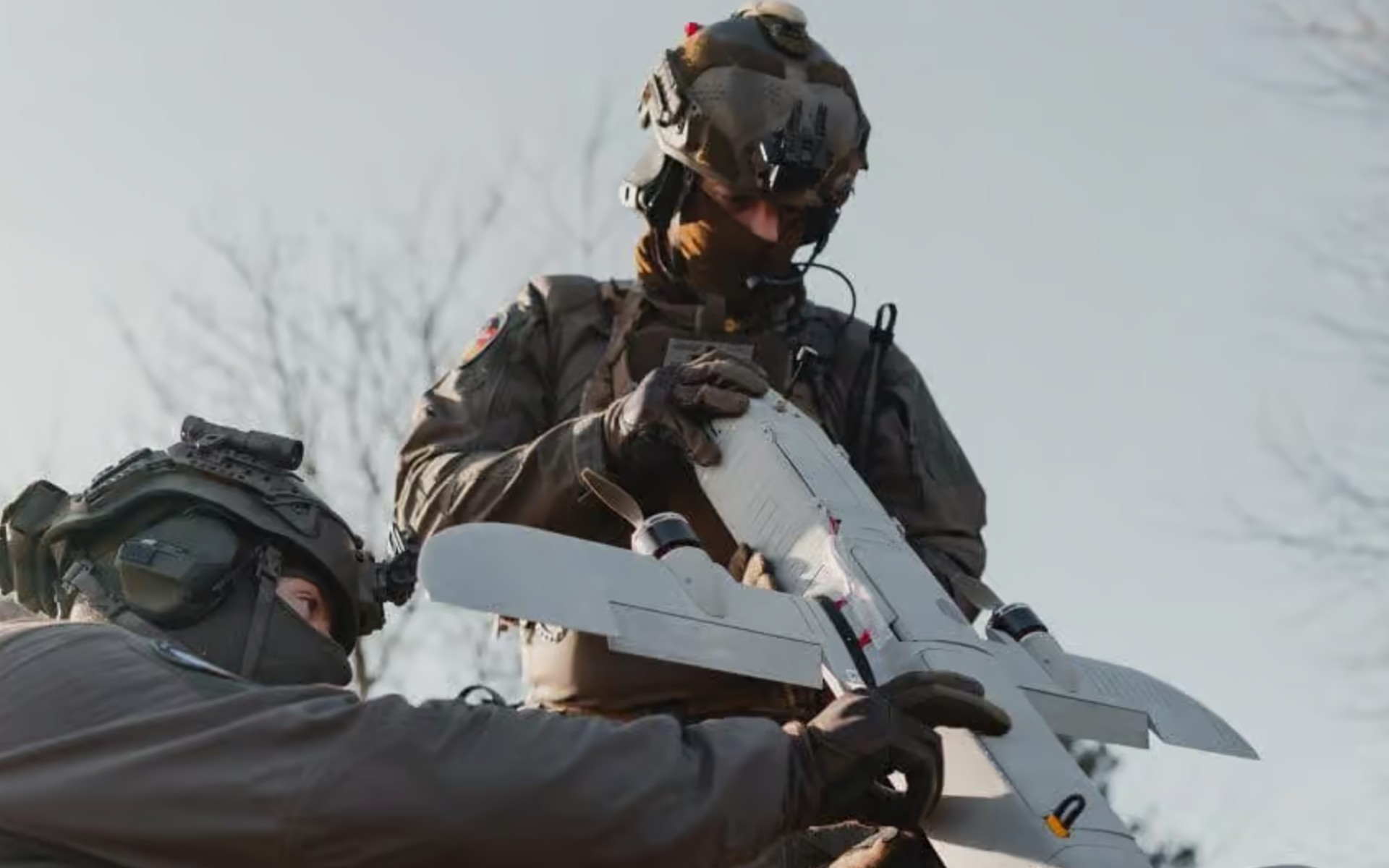
Safe Pro Group has secured a $2.5 million US Army prime contract to integrate explosive-threat recognition software aboard Anduril Industries’ Ghost-X unmanned aircraft. The award covers aerial reconnaissance intended to detect hazards relevant to Abrams tank operations. Safe Pro will adapt its Ground Truth Air software for onboard processing and for the transfer of geolocated detections to Army command systems, marking its first direct US Army prime award.
The work was awarded through a Commercial Solutions Opening for Ground Threat Detection through Aerial Reconnaissance. According to the company, its Ground Truth Air software will run on processing equipment aboard the Ghost-X, examining video as it is collected and identifying objects that could present a danger to troops and vehicles. Detected locations are intended to be shared with Army digital systems, including Android Tactical Assault Kit (ATAK) and Anduril’s Lattice software.
Safe Pro says the underlying recognition models identify more than 150 types of potential explosive hazard, including landmines, cluster munitions, and ambush first-person-view drones. The company has not published a detection probability, false-alarm rate, or independently verified test result for the newly contracted Ghost-X configuration. The announced threat categories therefore describe the intended recognition scope, rather than proof of identical performance across terrain, camera angles, and operating conditions.
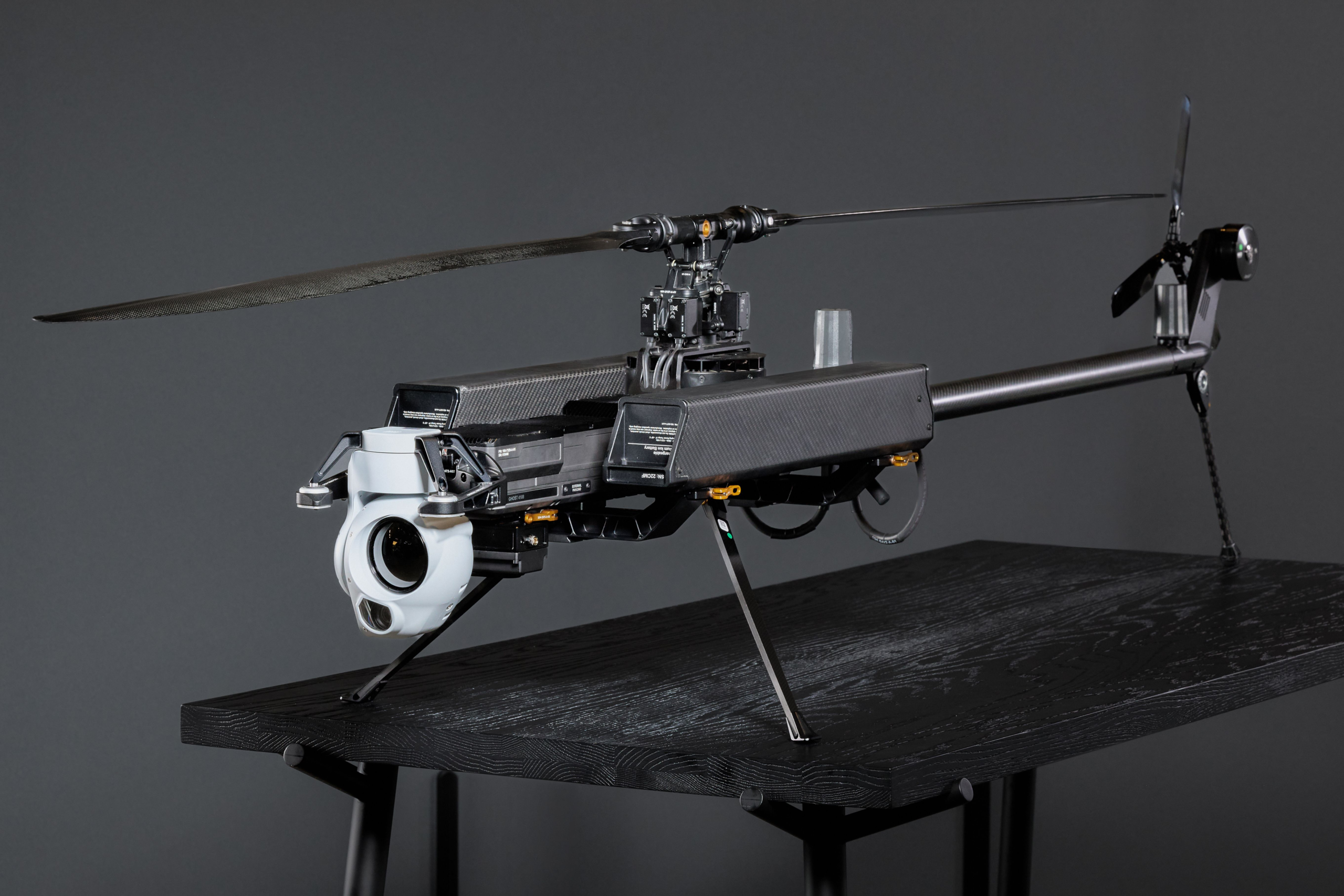
A camera aboard Ghost-X supplies the imagery that Ground Truth Air is intended to examine during flight. Machine-learning models compare visual features in the incoming frames with learned patterns and flag possible hazards. A detection is usable only when it can be tied to location information, placed in the context of the surrounding imagery, and transferred in a form that Army personnel can assess alongside other reconnaissance data. A highlighted image region is not confirmation that an explosive device is present.
Processing on the aircraft changes the communications and computing problem compared with an arrangement that sends all footage to a remote server. An onboard processor must run the model within limits imposed by available electrical power, heat rejection, and computing capacity while the aircraft continues to fly and operate its sensors. When the connection to the ground is intermittent, transmitting selected detections rather than every frame of raw video can reduce the volume of information needing immediate transfer.
That approach does not remove the need for robust data quality. Camera movement, changing light, vegetation, dust, shadows, image compression, and viewing angle can make small objects difficult to distinguish. Aerial imagery may also show objects that resemble explosive hazards without establishing their identity. Reliable use therefore depends on suitable imagery, controlled georeferencing, confidence reporting, and an operational process that treats automated identification as decision support rather than physical confirmation of a safe route.
Anduril’s Ghost-X provides the aerial host for the contracted work. The manufacturer lists 80 minutes of cruise endurance, range up to 25 kilometres, and payload capacity of approximately 11 kilograms for the platform’s published configuration. It also describes a modular mounting arrangement for sensors and other equipment. Those figures are baseline aircraft specifications, not measured endurance, range, or payload performance following installation and acceptance of Safe Pro’s onboard computing and recognition software.
Connecting Ground Truth Air to ATAK and Lattice introduces additional software integration requirements. Detection records need consistent position information, timestamps, object classification, and handling rules so that data remains interpretable when displayed in a map or passed into another system. Operators must also be able to understand whether a marker represents a fresh observation, a repeated detection, or information whose location has changed because the underlying navigation estimate was revised.
Safe Pro says its training and assessment material includes more than 3.2 million drone images and over 60,200 confirmed detections covering more than 40,520 acres in Ukraine. These are company-reported figures for the accumulated imagery collection, not independently assessed results of the US Army’s Ghost-X integration. They also cannot be used to calculate performance in a new environment without knowing the number and types of actual threats present, how targets were labelled, and the conditions in which observations were made.
The award follows earlier Safe Pro work on both ground and airborne software. In October, the company described its Ground Truth suite as combining air and ground image analysis. Previous development included processing on local equipment and integration work for unmanned ground vehicles. The latest contract is distinct because it identifies the Ghost-X host aircraft and a direct Army procurement route focused on reconnaissance supporting armoured operations.
During integration and testing, camera data, model outputs, navigation information, and the maps presented through Army systems will need to remain aligned over repeated flights. Different terrain, lighting, camera positions, and communications conditions can change the quality of an observation or its reported location. Safe Pro has not announced an accepted Ghost-X flight-test result under this award, a quantity of production installations, or the date on which the Army might begin fielding an approved configuration more widely.
The contracted work centres on software adaptation, onboard computing, aircraft interfaces, and evaluation using an existing unmanned platform. Its value and scope are defined, but the Army has not committed in this announcement to a wider procurement of Ghost-X aircraft or a fleet-wide Safe Pro deployment. The next measurable development will be the outcome of the integration and evaluation work, including whether the system delivers sufficiently reliable geolocated threat information under the Army’s test conditions.