IN Brief:
- AEVEX has received a multi-year US customer IDIQ with a maximum value described as nearly $400m.
- The framework allows future orders for uncrewed aircraft systems and associated services, but specifies no named platform or production quantity.
- Orders will determine the realised contract value, industrial workload, and delivery timetable; the ceiling is not committed spending.
US autonomous systems manufacturer AEVEX has received a multi-year indefinite-delivery, indefinite-quantity contract with a ceiling of nearly $400 million for unmanned aircraft systems and related services. The company identified the customer only as a US organisation and did not disclose initial funded orders, aircraft types, production quantities, or delivery dates. The ceiling sets a maximum for possible orders rather than an amount committed at award.
An indefinite-delivery, indefinite-quantity agreement establishes a contracting route through which a customer can place orders under specified terms. Individual orders define the equipment or services required and the expenditure authorised. AEVEX has not disclosed minimum guaranteed purchases or an ordering schedule in its 10 November statement. The size of the award therefore describes potential procurement capacity, while actual manufacturing workload will be determined by subsequent contract actions.
The framework covers unmanned aircraft systems and associated support across several possible mission requirements, but AEVEX has not named a platform or a particular operating service. Airframes in this market differ in their propulsion, launch and recovery equipment, payload capacity, communications, and maintenance procedures. Until the customer specifies a configuration, it is not possible to establish which systems will be produced, what modifications will be needed, or which manufacturing sites will carry the work.
AEVEX’s existing business combines autonomous aircraft development, mission software, sensing, electronic warfare, and industrial production. The company describes vertically integrated engineering and manufacturing operations across US locations. Its contract disclosure does not assign the new framework to a named factory, subcontractor, or product line. Any additional production investment, workforce commitment, or supplier order would need to be established through separate programme information.
Unmanned aircraft manufacture involves more than producing a repeatable airframe. Flight-control electronics, propulsion, antennas, power distribution, payload mounts, and ground-control interfaces must work together as a defined configuration. A change to one component can affect mass properties, electromagnetic compatibility, thermal performance, and the aircraft’s ability to meet its stated endurance or range requirements. The configuration ordered by the customer therefore determines both the qualification work and the manufacturing tasks needed.
Modularity can provide a route to changing mission equipment without redesigning the entire aircraft, although interchangeability is constrained by mechanical attachment points, electrical power, software interfaces, and data rates. A sensor package that is physically small enough to fit may still demand more electrical capacity or processing than a particular aircraft can supply. Each supported configuration requires integration evidence before production and fielding, especially when aircraft are being operated with different payloads by the same customer.
When aircraft configurations are ordered, controlled materials, repeatable assembly procedures, component traceability, and suitably equipped test facilities will be needed to reproduce the approved design. Final acceptance involves more than checking the assembled airframe: propulsion, flight-control functions, communications, and payload connections must meet the relevant specification. The exact sequence of ground and flight tests will depend on the product ordered, which the November announcement does not identify.
Supply-chain continuity is another constraint for multi-year orders. Small aircraft may depend on motors, batteries, processing devices, sensors, and radio components drawn from several specialist suppliers. Changes to availability or approved sourcing can require engineering substitutions and renewed testing. An ordering framework can offer flexibility to the customer, but the manufacturer still has to plan component procurement against actual orders rather than treating the upper contract ceiling as a guaranteed production schedule.
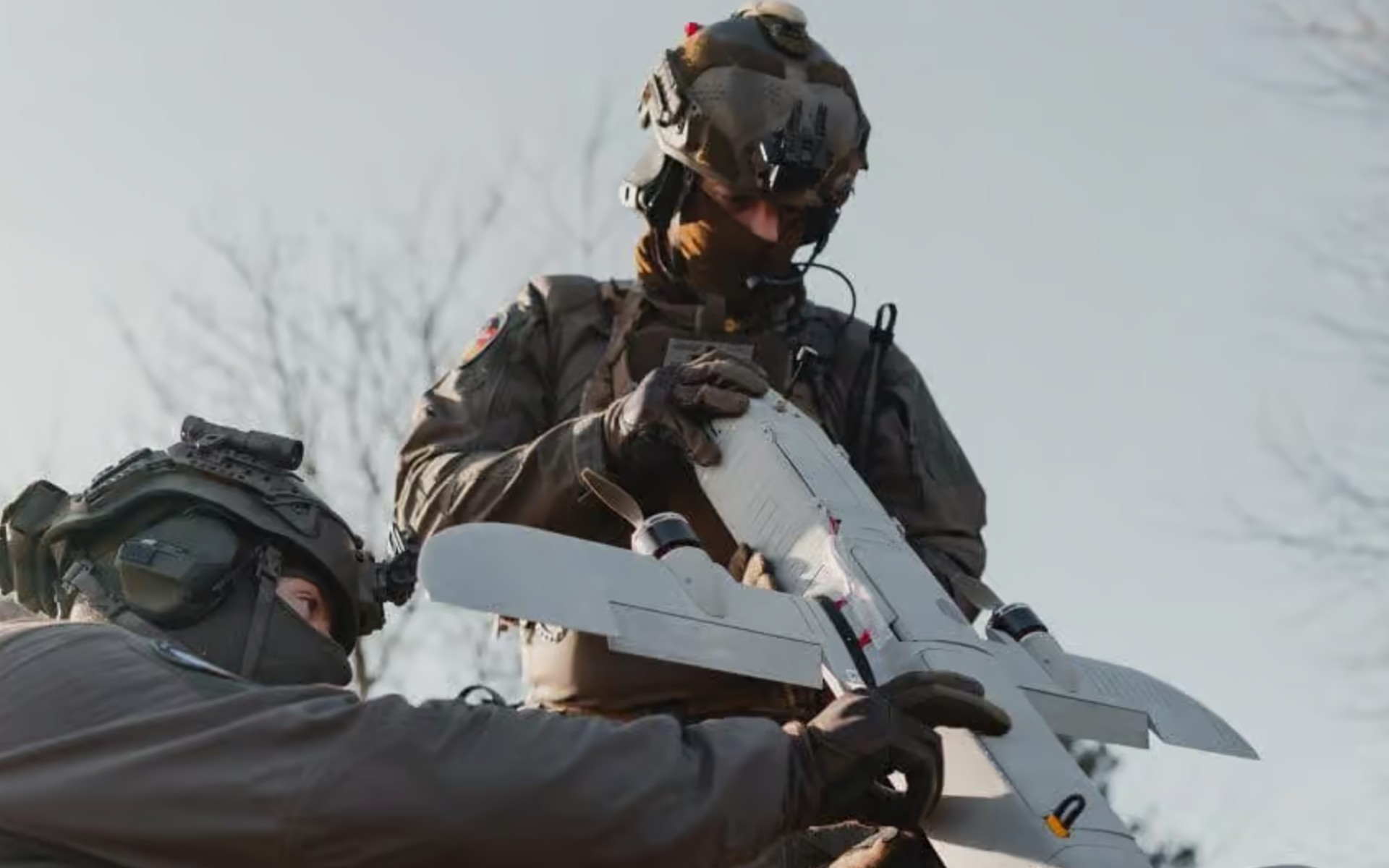
AEVEX has publicised several different unmanned aircraft developments, including its Disruptor system. The US Army documented Disruptor integration during Exercise Arcane Thunder 26, providing evidence of an existing aircraft programme and its military evaluation. Neither the Army exercise nor the November framework establishes that the unnamed customer has ordered Disruptor aircraft. The manufacturer’s wider portfolio cannot be treated as the contract’s confirmed production list.
Support services may also contribute to contract value once orders are placed. Depending on future requirements, customers can need spare assemblies, maintenance documentation, testing, training, configuration updates, and engineering assistance after delivery. The announcement does not enumerate those services or provide separate monetary allocations, so no proportion of the near-$400 million ceiling can yet be assigned confidently to hardware manufacture rather than through-life support.
AEVEX says its engineering and manufacturing organisation is designed to adapt modular aircraft to changing customer requirements. That capability may be relevant when individual orders are placed, but the company has not tied any stated factory expansion or production rate to this contract. The number of accepted aircraft, required spare systems, software configuration work, and support obligations will be established only by the terms of those orders.
The new IDIQ gives an unidentified US customer a purchasing framework for unmanned aircraft and related support over several years. No initial aircraft quantity or committed spending has been reported. Funded orders identifying platforms, acceptance milestones, delivery schedules, and sustainment obligations will determine how much of the nearly $400 million ceiling is converted into a production programme.