IN Brief:
- Hanwha Defense USA launched a Chunmoo missile from a palletised launcher aboard a vessel off Mississippi on 15 November.
- The two-launch test campaign examined whether the system and its electronics can operate from a vessel at sea.
- Further work will analyse the launcher, electronics, and operating data before any shipboard acquisition or deployment can be claimed.
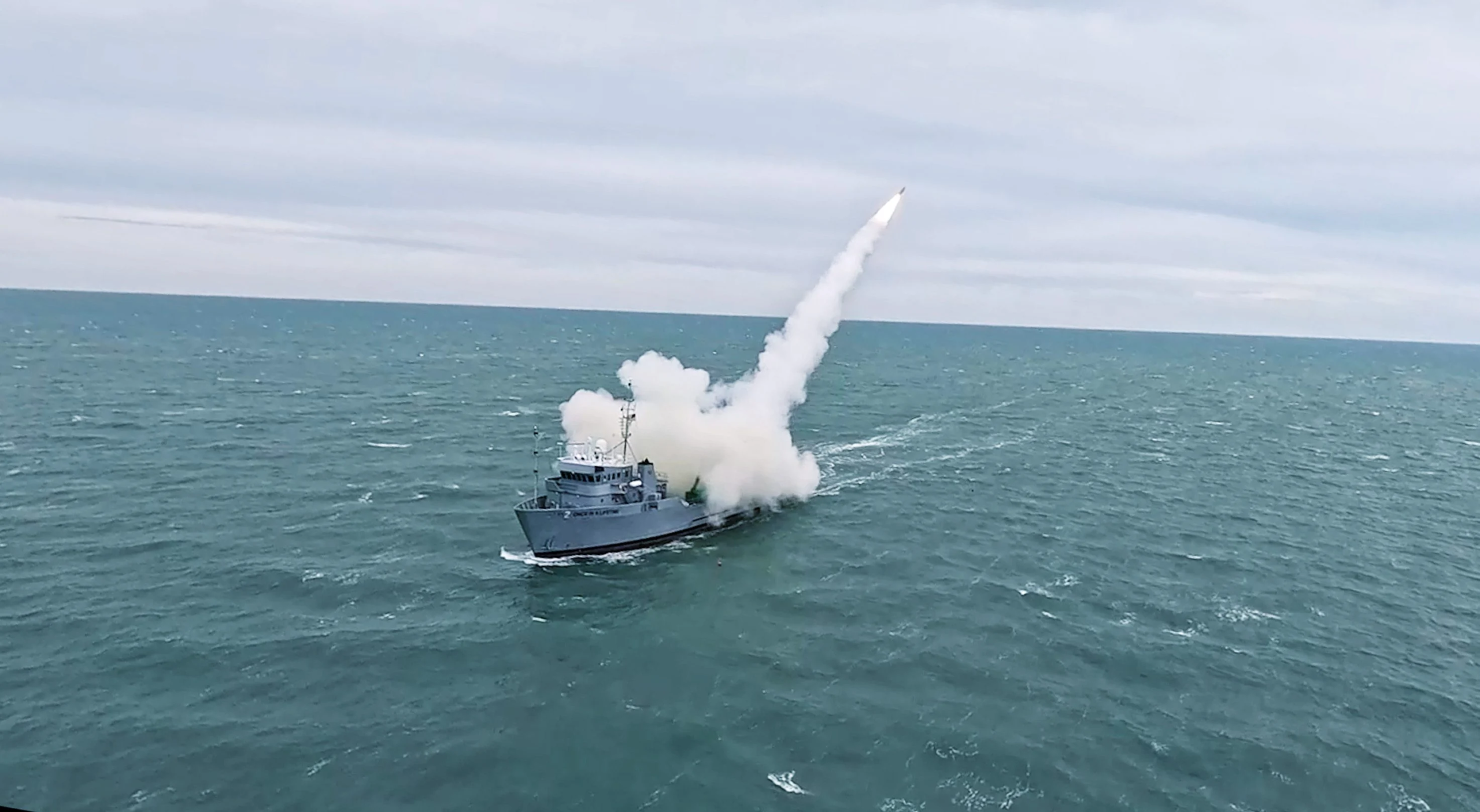
Hanwha Defense USA and its parent Hanwha Aerospace have completed a maritime missile launch demonstration off the coast of Mississippi, firing a Chunmoo guided missile from a palletised launcher aboard a test vessel on 15 November. The launch, disclosed on 17 November, concluded a two-launch campaign examining whether the system and its associated electronics can operate from a moving maritime platform. The event moves the programme beyond the planned trials reported earlier in November, although Hanwha has not identified a naval procurement award resulting from the campaign.
The launch used a vessel operated by Mississippi-based offshore launch provider The Spaceport Company and a palletised Multiple Launch Rocket System Family of Munitions (MFOM) arrangement. The two-launch campaign generated test evidence for maritime operation, but Hanwha has not disclosed the precise missile variant, vessel dimensions, target profile, firing distance, or accuracy measurements. Such results will be needed to assess performance in more demanding conditions and to determine which ship classes could accommodate the launcher.
A vessel’s roll and pitch continually change the launcher’s orientation, even when the deck appears comparatively stable. The effects must be considered alongside recoil and launch loads, the load path through deck securing points, and the effects of vibration, saltwater, and moisture on the launcher and electronics. The Mississippi demonstration establishes that a missile was fired from the test installation; the disclosed evidence does not cover the full range of sea states, ship motions, or environmental exposure that naval qualification would require.
Hanwha used a palletised configuration that could, in principle, be moved between suitable vessels without dedicating an entire hull design to the launcher. Making that approach practical requires an approved method of fastening the equipment to the deck, confirming structural load limits, and defining safe firing sectors around superstructures and personnel. The ship must also provide power and suitable connections to control and targeting equipment. No standardised installation package, approved host list, or fleet integration order accompanied the test results.
Missile launch electronics must maintain a reliable chain between the fire-control decision, safety interlocks, and the launcher, while accounting for the ship’s changing orientation and position. Hanwha says the two launches were intended to develop the launcher and electronics for precision-guided maritime fires. The company has not specified the command architecture, onboard navigation arrangements, sensor inputs, or generation of the firing solution in the Mississippi trials. Those details will have to be established before a naval customer could assess an operational configuration.
The company is examining applications on both crewed and uncrewed vessels, placing the trial within a wider effort to distribute precision strike capability across maritime platforms. Small or remotely operated vessels have particular constraints on weight, stability, available deck area, power, communications, and onboard personnel. Carrying a missile launcher does not remove the need for remote control, safety assurance, secure communications, and integration with the wider command system. The 15 November demonstration establishes a physical firing milestone, not autonomous operation of the launcher from an uncrewed warship.
Magnet Defense, which has previously worked with Hanwha on a medium uncrewed surface vessel initiative, attended the demonstration and used its Magnet Research Vessel to track and assess the launch. The arrangement adds an independent observation platform to the trial activity, though no quantitative results from Magnet’s measurements were published. Hanwha has separately described a partnership with Magnet on potential medium uncrewed surface vessels for US defence requirements. That industrial relationship should not be confused with a contract to acquire maritime Chunmoo launchers.
Hanwha’s existing Chunmoo family provides the underlying launch and munition technology, while the new effort concerns the practical adaptation of launcher architecture to a maritime environment. Weapons developed for land vehicles may share munition and control components with naval configurations, but changes to packaging, environmental protection, integration, and qualification still need to be assessed. The company is also considering containerised concepts alongside the palletised configuration used in this firing, without stating that either is ready for fleet service.
The completed campaign gives the manufacturer evidence to support further work on distributed naval fires. A modular launcher could interest operators seeking weapons capacity on auxiliary or expeditionary vessels, but potential adopters will have to evaluate stability, protected ammunition storage, fire safety, communications, and integration into their existing combat systems. Hanwha has not disclosed a purchase quantity, delivery programme, or host ship class for the maritime configuration.
Hanwha intends to continue collecting technical and operational data for sea-based launches, although a further firing date and formal acceptance schedule have not been released. The 15 November shot follows the preparation reported earlier in the month and demonstrates a maritime firing arrangement. Platform compatibility, repeatability, environmental qualification, and incorporation into fleet command arrangements remain to be tested.