
IN Brief:
- Northrop Grumman has received a $1.6bn multiyear order for PAC-3 MSE solid rocket motors and ignition safety devices.
- The propulsion assemblies are manufactured for Lockheed Martin’s interceptors, with dual-pulse motor production centred at Allegany Ballistics Laboratory in West Virginia.
- The order builds on August 2026 agreements; no new interceptor quantity, complete programme delivery timetable, or guaranteed output rate was disclosed.
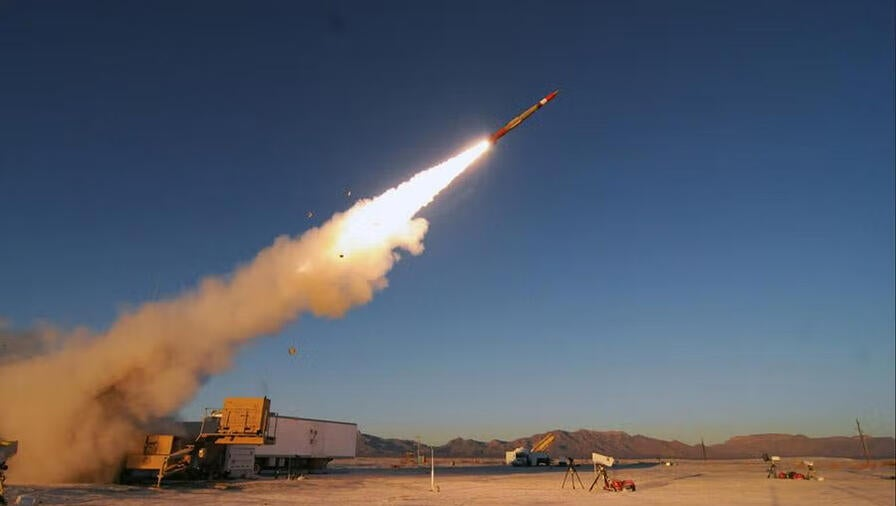
Northrop Grumman has disclosed a $1.6bn multiyear order covering solid rocket motors and ignition safety devices for the US Army’s Patriot Advanced Capability-3 Missile Segment Enhancement (PAC-3 MSE) interceptor. The company announced the order on 16 November 2026 as part of the broader $3bn arrangements made public in August. Specialist reporting indicates the component contract itself was awarded in mid-to-late October, so the November development is the disclosure of its value and production scope rather than necessarily a newly signed agreement.
The $1.6bn value sits within the earlier $3bn arrangements and must not be added to them as though it represents separate programme funding. Northrop’s award covers propulsion components destined for interceptors manufactured by Lockheed Martin; it does not represent a contract for complete missiles. Neither company has disclosed a motor quantity, an annual PAC-3 MSE production rate attributable to this order, or an agreed delivery schedule for the components.
At Allegany Ballistics Laboratory in Rocket Center, West Virginia, the manufacturer produces the dual-pulse solid rocket motor that powers PAC-3 MSE. A solid propellant rocket motor converts stored chemical energy into thrust, while its casing, insulation, nozzle, and ignition components must operate within tightly controlled mechanical and thermal conditions. In a dual-pulse design, separate propulsive phases can help manage energy across the interceptor’s flight. That is a feature of the motor design, not a disclosure of classified performance or a quantified engagement range.
Ignition safety devices are a separate, safety-critical part of the propulsion supply chain. They must enable the intended ignition sequence while guarding against inadvertent initiation during manufacture, storage, transport, and handling. Manufacture and acceptance consequently require tightly controlled materials, assembly procedures, inspection, and testing. Northrop has not stated what share of the order value relates to motors or safety devices, nor identified the production sites responsible for each subcomponent.
Scaling solid rocket motor manufacture requires more than increasing machine capacity. Energetic materials processing involves controlled environmental conditions, qualified equipment, specialist personnel, and extensive inspection and test activity. New production stages must be proven to yield acceptable hardware before throughput can rise reliably. A multiyear demand signal can support investment in facilities and suppliers, but the rate at which accepted motors reach the missile integrator remains subject to programme controls and component availability.
Northrop has outlined capacity investments at multiple locations. Since 2021, it says solid rocket motor capacity at its Utah facilities has doubled, capacity at Allegany Ballistics Laboratory has nearly tripled, and capacity at Elkton, Maryland, has increased by 25%. Those figures describe changes at different facilities across the company’s wider propulsion business, not the number of PAC-3 MSE motors now available. They also cannot be added together into a single programme-wide percentage increase without comparable production baselines.
Since 2019 Northrop says it has committed more than $2bn to munitions technologies and facilities, of which over $1bn relates to solid rocket motor production. That expenditure predates the present disclosure and is background to the expansion. It must not be treated as additional capital investment authorised by the $1.6bn award, and no newly completed PAC-3-specific production facility was identified in the announcement.
PAC-3 MSE forms part of an integrated air and missile defence system in which sensors, command equipment, launchers, and interceptor missiles have separate engineering and industrial responsibilities. Northrop’s propulsion work is one of several major manufacturing inputs to the missile, while Lockheed Martin remains responsible for interceptor production and integration. Output at the motor supplier therefore affects, but does not by itself determine, the number of complete missiles available to a customer.
An earlier PAC-3 guidance processor contract concerned electronic subsystems, not propulsion. Guidance processing, motor production, mechanical assembly, and final interceptor integration follow different supply chains and test requirements. Increased throughput at Rocket Center would support missile production only insofar as the other stages can deliver components at the required rates. The new order gives no basis for calculating overall interceptor output from motor capacity percentages alone.
Greater production capacity also depends on the stability of supply for motor materials, mechanical parts, and test services. Procurement contracts that run over several years can help suppliers justify tooling and workforce investments, while programme managers still need to reconcile funding, schedules, and acceptance standards. Northrop says the order supports faster delivery to the US and allied forces, but it has not provided an updated annual PAC-3 MSE motor delivery figure against which that objective can yet be measured.
The November disclosure puts a defined value on propulsion work under the August arrangements. Northrop intends to increase deliveries of rocket motors and ignition safety components, but has not supplied the quantities or timing needed to measure the scale of that increase. Motor acceptance rates at Allegany Ballistics Laboratory and resulting Lockheed Martin interceptor deliveries will be the next concrete indications of the order’s effect on manufacturing output.