
IN Brief:
- India’s defence secretary expects selection of an AMCA prototype development partner within approximately one month.
- Three proposals are under review through a competitive model open to eligible Indian public and private sector businesses.
- The selection concerns prototype development; manufacturing awards, aircraft flight milestones, and future fleet deliveries remain separate decisions.
India expects to name the industry partner responsible for developing prototypes of its Advanced Medium Combat Aircraft (AMCA) within approximately a month, according to Defence Secretary Rajesh Kumar Singh. Speaking at a defence and national security event on 16 November, Singh said three shortlisted bidders had submitted proposals and that the government intended to move the fifth-generation fighter programme into its next industrial phase.
Singh’s one-month timetable applies to selection of a development partner; the government has not awarded the contract or confirmed a first-flight date. The three teams submitted bids before the November remarks, and their proposals remain under evaluation. A decision expected by mid-December would settle the competition for a prototype partner, not complete the engineering or production programme.
The programme is being executed by India’s Aeronautical Development Agency (ADA), the design organisation responsible for managing development through an industry partnership model. In May 2025, the Ministry of Defence approved an execution approach allowing eligible Indian companies to compete independently, in joint ventures, or through consortia. The policy explicitly opened the prototype opportunity to both private and public sector organisations on a competitive basis.
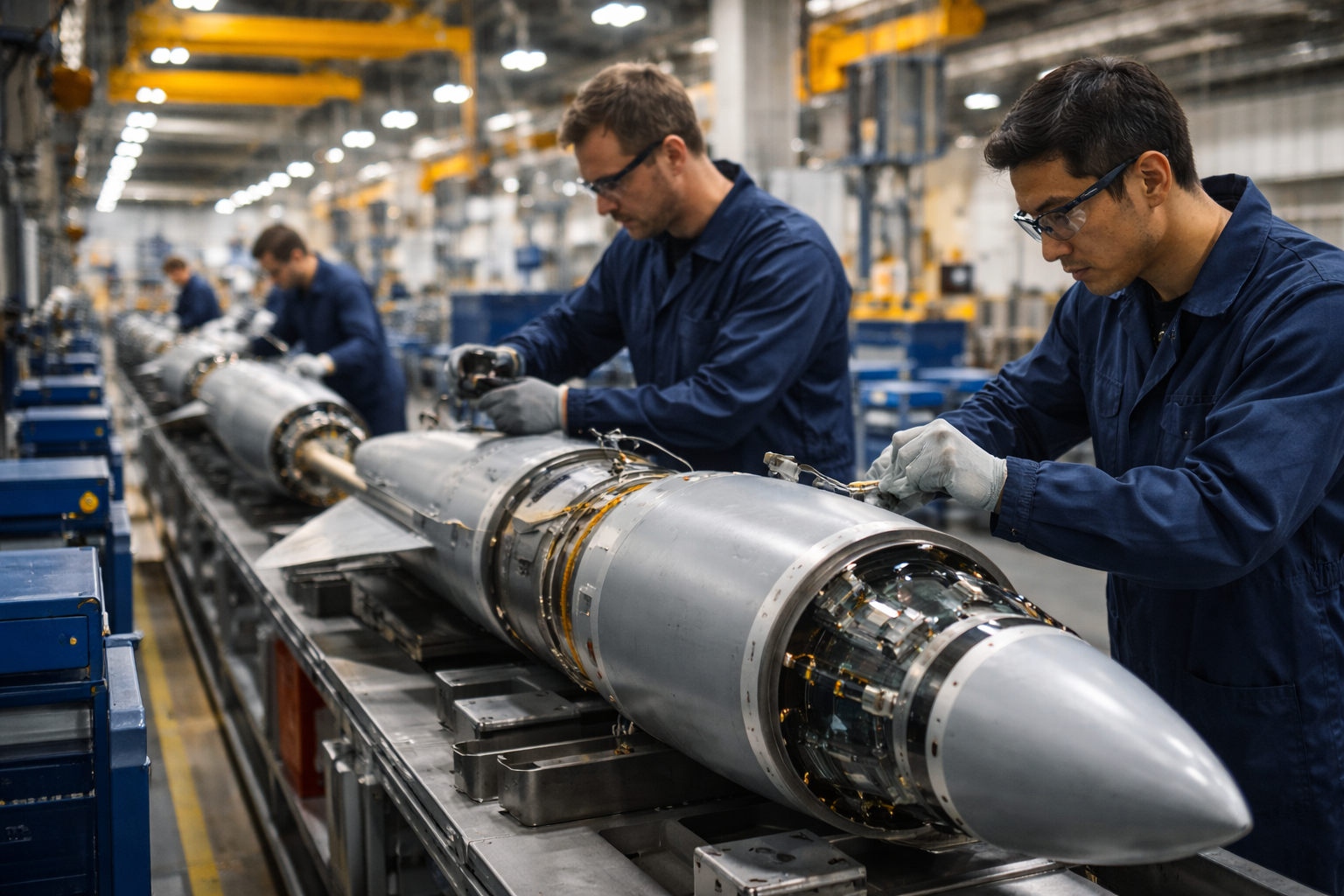
The selected industrial partner will need to convert ADA’s design work into controlled manufacturing processes for flight and structural test articles. Prototype construction requires instrumented assemblies, traceable parts, and repeated engineering revisions before a stable configuration is established. That work is materially different from serial manufacture of an aircraft whose systems, production methods, and suppliers have already been qualified. Manufacturing data and test records will have to remain aligned as prototype configurations change, especially when new materials or equipment are introduced during development.
Three industrial teams are reported to be competing: Tata Advanced Systems, a Larsen & Toubro-led consortium with Bharat Electronics and Dynamatic Technologies, and a Bharat Forge-led consortium involving BEML and Data Patterns. Singh confirmed that three bids had been received and referred to a consortium involving L&T and a public sector undertaking. The membership of the competing teams is reported tender information, not an announcement of the successful contractor.
Current reporting describes a prototype phase involving five flying aircraft, with a separate structural test article also identified in accounts of the competition. For a low-observable combat aircraft, engineers must control airframe geometry, materials, assembly tolerances, and the interfaces between major systems. An external shape change can affect radar observability, while internal equipment revisions can alter heat rejection, electrical loads, maintenance access, and mass balance. The precise configurations and acceptance criteria will be determined through design and test work.
Ground test structures and flight prototypes will require separate evidence from load testing, systems integration, and flight trials. Manufacturing records must identify which configuration was used for each test and which design or supplier changes require further verification. Detailed workshare, configuration control, and qualification responsibilities have not yet been published for the winning team.
The aircraft’s future engine development is being assessed separately from the prototype manufacturing competition. At the same 16 November event, Singh said a public sector proposal involving the Gas Turbine Research Establishment and Safran was under consideration alongside a private sector option for an indigenous advanced fighter engine. The two decisions involve different industrial responsibilities and need not follow the same timetable.
Partner selection should establish which company or consortium will lead the industrial execution of the prototype programme, but the division of design authority, fabrication, assembly, systems integration, and testing has not been disclosed. No basis yet exists for assigning particular airframe sections, avionics work packages, or flight testing responsibilities to individual bidders. These allocations will depend on the awarded scope and later programme agreements.
The AMCA programme sits alongside India’s existing combat-aircraft manufacturing commitments. Indian Air Force leaders have indicated that the Light Combat Aircraft Mk1A is expected to enter service during the current financial year, while development continues on the larger LCA Mk2. Singh connected those programmes to the need to maintain near-term aircraft capability while AMCA development progresses, but did not identify the AMCA prototype decision as a resolution of current aircraft delivery constraints.
A formal partner selection is the next decision expected from the Indian government. Until then, the three teams remain bidders rather than appointed contractors, and the industrial workshare and prototype delivery schedule are unconfirmed. Flight testing and any eventual production award will require separate evidence and decisions after development work proceeds.