IN Brief:
- Aerodata flew the AeroForce X prototype from Strausberg on 14 November 2026 with a pilot aboard, meeting the company’s initial flight-test objectives.
- The proposed MALE aircraft has a 26m wingspan, with a design target of up to 40 hours’ endurance and a payload capacity of around 1,300kg.
- Further piloted flights and autopilot evaluation must precede the first uncrewed flight; no military production order has been identified.
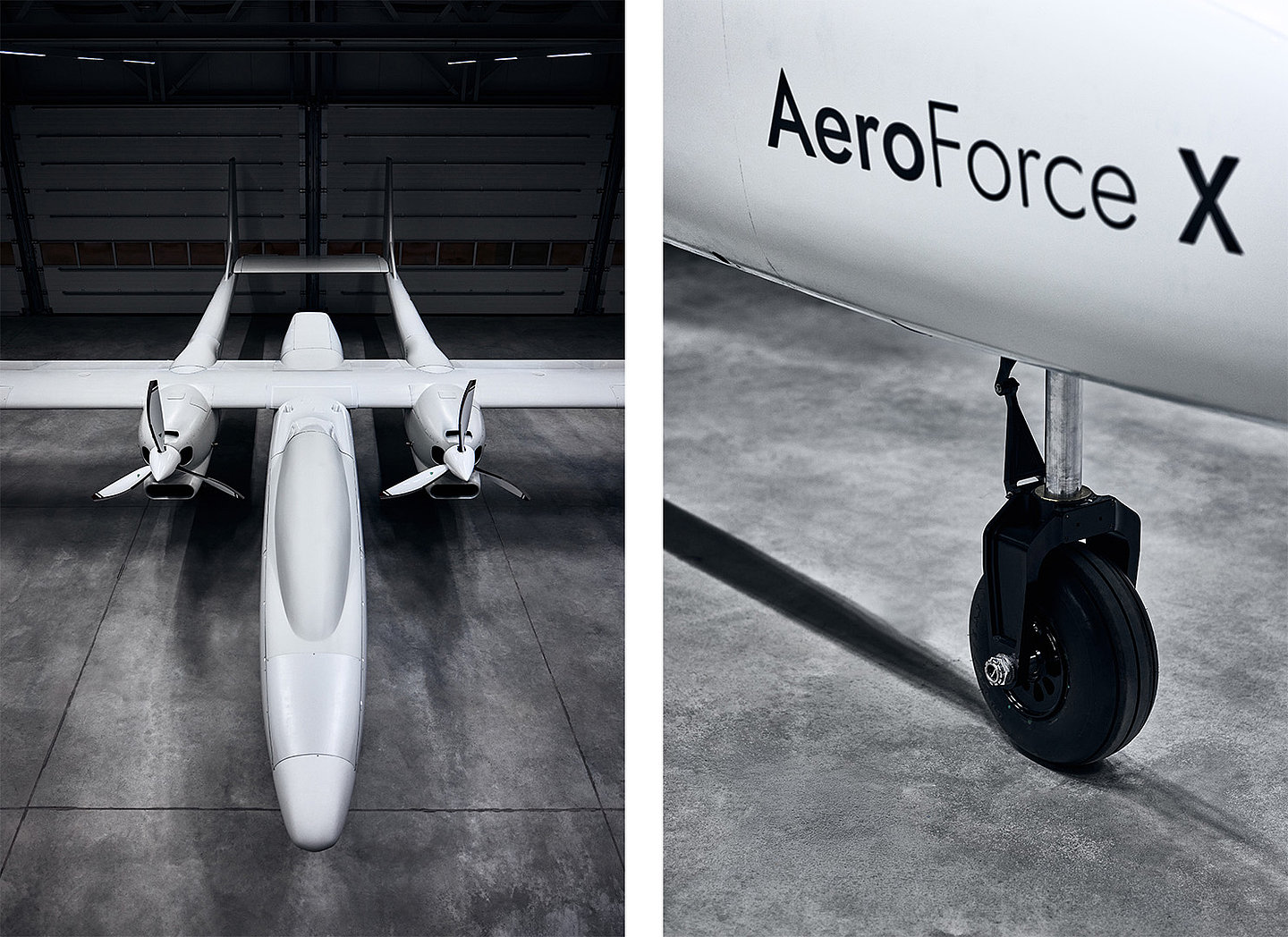
Aerodata has flown the prototype of its AeroForce X medium-altitude, long-endurance aircraft for the first time, beginning a new flight-test phase for the German surveillance platform. The aircraft took off from Strausberg airfield in Brandenburg on 14 November 2026. The first sortie was conducted with a pilot on board; despite its intended role as an unmanned aircraft system, AeroForce X has not yet completed an uncrewed flight.
Aerodata says its first flight examined controllability, stability, and core aircraft systems under real conditions. The manufacturer reports that the objectives set for the sortie were met, but it has not published the flight-test card, measured endurance, payload carried, or an independently assessed performance envelope. The aircraft’s advertised endurance and payload figures remain design targets rather than results established during the 14 November flight.
First shown publicly in August, AeroForce X is intended for medium-altitude, long-endurance (MALE) intelligence, surveillance, and reconnaissance missions. The transition from a completed airframe to a flying prototype tests assumptions about aerodynamics, control forces, instrumentation, and systems behaviour that cannot be resolved by ground trials alone. An initial piloted take-off and landing establishes a starting point, not the endurance or remotely piloted capability needed for routine operational service.
Aerodata quotes a 26-metre wingspan and a potential endurance of up to 40 hours, alongside a mission payload of approximately 1,300kg. Those figures describe the programme’s design objectives rather than measurements obtained during the inaugural flight. Actual endurance will depend on factors such as airspeed, altitude, fuel reserve, weather, aircraft configuration, and the electrical and aerodynamic demands of installed equipment. The current flight-test announcement offers no measured duration, fuel-consumption figures, or demonstrated payload mass.
The platform is being developed with a modular mission approach. Aerodata identifies airborne surveillance as a central application, with potential sensor fits involving electro-optical and infrared systems, radar, and electronic sensing equipment. Such payloads place different demands on electrical power, data processing, antennas, structural attachment, and cooling. A configuration optimised for persistent maritime observation will not necessarily have the same endurance or handling characteristics as one carrying heavier equipment or multiple specialised sensors.
One proposed application is monitoring critical maritime infrastructure, where surveillance aircraft may have to watch widely dispersed installations for long periods. The programme’s endurance target could support such missions if achieved, but useful coverage also depends on sensor performance, weather, ground-control links, access to the airspace, and the processing of collected information. No maritime mission trial or government customer acquisition was identified in the first-flight disclosure.
Aerodata is deliberately using piloted flights before attempting uncrewed operation. A pilot can assess control response and aircraft behaviour directly while engineers develop confidence in the basic airframe; autopilot trials then need to evaluate automated control through the flight conditions and transitions required by the programme. The company lists further crewed flying followed by autopilot testing before a first flight without a pilot, but has not announced a date for that transition.
Testing an autopilot is a broader task than proving that it can maintain a heading or altitude. A complete remotely operated system needs reliable transitions between control modes, appropriate fault responses, and robust communications between the aircraft and its ground segment. Flight safety and operating approvals also depend on the circumstances in which the aircraft will be used. The present announcement does not establish the maturity of those functions, and no assumption about certification or permission for routine uncrewed operations is justified.
Aerodata has more than four decades’ experience in specialised airborne surveillance and flight inspection systems, much of it involving equipment installed on other aircraft. AeroForce X adds an airframe programme to that mission-systems background. The company completed the prototype’s final assembly earlier in 2026 and presented the aircraft publicly in August, before beginning flight testing at Strausberg in November. Assembly, presentation, and a maiden flight are separate development milestones; none establishes serial production deliveries.
Aerodata describes the platform as designed to be ITAR-free, an approach intended to avoid dependence on certain US-controlled components in export configurations. Actual sales and sustainment arrangements would still require a customer-specific assessment of component origins, technology transfers, and applicable licensing rules. The company has not identified an agreed production quantity, military purchaser, acceptance timetable, or output rate in its announcement of the first flight.
Further flights will need to expand the tested envelope and demonstrate the autopilot behaviour required for uncrewed operation. Endurance, payload integration, secure mission control, and surveillance performance also remain to be substantiated. The verified achievement is a successful first piloted flight from Strausberg on 14 November, followed by a programme of tests that must be completed before AeroForce X can fly without a crew.