IN Brief:
- The Netherlands has signed the CAVS Technical Arrangement, becoming the eighth participating country in the multinational programme.
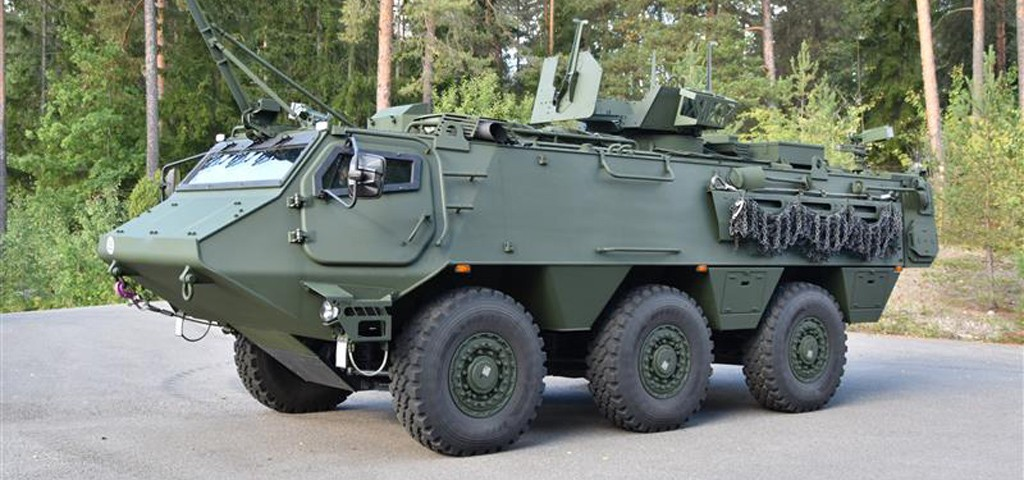
- Patria's common 6×6 vehicle platform supports several military configurations, including troop transport, command and medical roles.
- Dutch accession enables further development and industrial cooperation, although no national procurement quantity or manufacturing allocation has been confirmed.
The Netherlands has joined the multinational Common Armoured Vehicle System programme, signing a technical arrangement that establishes its participation in the development of a common European 6×6 armoured vehicle platform. The agreement was concluded at the NEDS defence exhibition in Rotterdam on 19 November 2026, making the country the eighth member of the Patria-led initiative.
Dutch State Secretary for Defence Derk Boswijk signed the arrangement on behalf of the Ministry of Defence. The Netherlands joins Finland, Latvia, Sweden, Germany, Denmark, Norway and the United Kingdom, extending an existing programme through which participating governments coordinate vehicle development, procurement requirements and industrial participation.
The agreement does not establish a Dutch purchase order for completed vehicles. No equipment quantity, contract value, delivery date or selected national configuration was confirmed when the country’s accession was announced. Those decisions will require further work to determine how the common platform corresponds with Dutch operational and technical requirements.
CAVS was established in 2020 around the development of a protected wheeled vehicle intended to meet requirements shared by several armed forces. Patria is responsible for the principal vehicle design and acts as prime contractor, working with national industrial partners on production, integration and support arrangements.
The programme uses the Patria 6×6 as its common platform. The vehicle can accommodate a range of military functions, including personnel transport, command and control, medical evacuation and specialist support. Each configuration requires different equipment, but the basic vehicle architecture provides a foundation on which national mission systems can be installed.
Shared automotive systems can simplify certain aspects of maintenance and logistics. Common mechanical components, powertrain arrangements and vehicle structures can reduce the number of distinct items that technicians need to inspect and repair. The extent of that benefit depends on whether participating countries retain compatible configurations and spare parts throughout the vehicles’ service lives.
Mission equipment introduces further variation. A command vehicle needs communications equipment, computing systems and workspaces for personnel, while a medical variant requires an interior suited to casualty handling and treatment. Both use the underlying platform, but their internal arrangements, electrical demand and specialist maintenance requirements differ.
Vehicle integration must also account for changes in mass and balance. Adding a weapon station, communications installation or additional protection can affect the loads carried by the structure and suspension. The complete configuration must remain within its approved operating limits, with the relevant changes incorporated into the technical documentation and support arrangements.
Coordinating such changes across several countries requires configuration management. A component or software modification approved for one national variant may not automatically be suitable for another. The multinational programme must therefore maintain a common technical foundation while allowing individual customers to select equipment needed for their military organisations.
Patria’s existing CAVS contracts demonstrate that the programme has progressed beyond prototype development. Finland, Latvia and Sweden have received vehicles, while Germany has placed major procurement commitments covering several configurations. The industrial arrangements involve both the original Finnish developer and manufacturers in participating countries.
National manufacturing participation is an established element of the programme. Production and assembly can be distributed between industrial partners, provided that common engineering requirements, inspection arrangements and approved manufacturing processes are maintained. This allows governments to develop local capability while retaining the advantages of a shared vehicle design.
Localisation can cover different activities according to the contracts negotiated. A national partner might undertake final assembly, manufacture selected components, install mission equipment or provide maintenance. These roles are not equivalent, and the scale of industrial participation cannot be determined solely from a country’s membership of the cooperation framework.
The Netherlands has not yet identified companies that will receive CAVS manufacturing work. Its accession creates a basis for further discussions, rather than assigning production volumes to domestic suppliers. Subsequent procurement decisions will determine whether Dutch facilities become involved in assembly, equipment integration, maintenance or other activities.
Multinational procurement also introduces requirements for coordinating production capacity. Participating armed forces may have different delivery priorities and national equipment requirements, while manufacturers must manage the availability of components and specialised personnel. A common programme can provide a larger combined production base, but the resulting schedules still depend on signed contracts and factory capacity.
Support arrangements are particularly important for protected military vehicles expected to remain in service for many years. Operators need access to replacement components, technical documentation, repair equipment and appropriately trained personnel. Common equipment provides opportunities for sharing some of those resources, although national modifications can limit interchangeability.
Germany’s participation has already expanded the scale of the programme through contracts covering multiple vehicle variants. The United Kingdom and Norway joined in September 2025, extending CAVS to additional military customers. The Dutch agreement continues that expansion without establishing whether the Netherlands will acquire the same versions as other participating countries.
The Dutch Army is also pursuing tracked vehicle procurements, including Armoured Combat Support Vehicles and heavy recovery equipment under contracts signed with German manufacturer FFG. Those acquisitions address separate requirements. Participation in a 6×6 wheeled vehicle programme does not replace the tracked support and recovery contracts or imply that the equipment will perform identical duties.
Wheeled and tracked vehicles have different mobility, maintenance and support characteristics. Their suitability depends on factors including vehicle mass, terrain, required payload and operating conditions. An army may use both categories because their capabilities complement one another across transport, combat support and specialist engineering tasks.
The technical arrangement gives the Netherlands a formal position within CAVS as future requirements and industrial opportunities are developed. A subsequent procurement agreement would be needed to establish the number, configuration and delivery schedule of Dutch vehicles, together with any firm commitments to domestic manufacturers.