IN Brief:
- The Netherlands and Germany have placed their first Knifefish production order under a procurement framework agreed in June 2026.
- Knifefish will interfere with selected radio communications, complementing the Sawfish electromagnetic reconnaissance system and integrating with GDELS Piranha 5 vehicles.
- A separate agreement with the Dutch Ministry of Economic Affairs establishes arrangements for supplier participation and domestic maintenance and repair capability.
HENSOLDT has secured a joint Dutch-German production order for its Knifefish electromagnetic warfare system, advancing a programme intended to provide mobile radio jamming capability to both countries’ armed forces. The Netherlands’ Command for Materiel and IT (COMMIT) signed the contract with HENSOLDT Netherlands at the NEDS exhibition in Rotterdam on 19 November 2026.
The agreement exercises the first option under a procurement framework established in June. COMMIT placed the order on behalf of the Netherlands and Germany, with HENSOLDT Netherlands acting as prime contractor. The company described the award as a substantial investment by both countries but did not disclose its financial value, equipment quantities or delivery schedule.
Knifefish is designed to interfere with selected radio communications, including links used to control uncrewed aircraft and exchange military command information. Its electronic attack functions will complement Sawfish, an electromagnetic reconnaissance system that HENSOLDT also supplies to the two countries. The relationship allows information gathered through surveillance of the radio environment to inform the use of jamming equipment.
Sawfish detects and classifies electromagnetic emissions, providing information about signals present within the system’s observation environment. Knifefish performs a different function, generating interference intended to disrupt selected communications. The combination brings detection and electronic attack into a related equipment architecture, although the operational procedures and degree of automation associated with the delivered configuration have not been disclosed.
Radio jamming relies on the interaction between the signal a receiver is attempting to use and the interfering energy transmitted by the jammer. Its effectiveness can vary according to frequency, signal characteristics, antenna orientation, terrain and the positions of the equipment involved. The public Knifefish announcement provides no technical specification for transmitted power, operating range or individual frequency bands.
Communications used by uncrewed aircraft present several potential targets for electronic warfare. Remotely operated platforms may depend on links carrying control commands, sensor information or other data. Interfering with those links can affect an aircraft’s behaviour, although the outcome depends on the equipment’s design and its response to communications disruption.
A drone may continue operating, change its operating mode or undertake a predefined action following loss of a communications link. The public description of Knifefish does not establish that it can reliably neutralise every aircraft type or determine the outcome of an engagement against an unfamiliar platform. Its confirmed purpose is radio interference within the electromagnetic warfare capability being acquired.
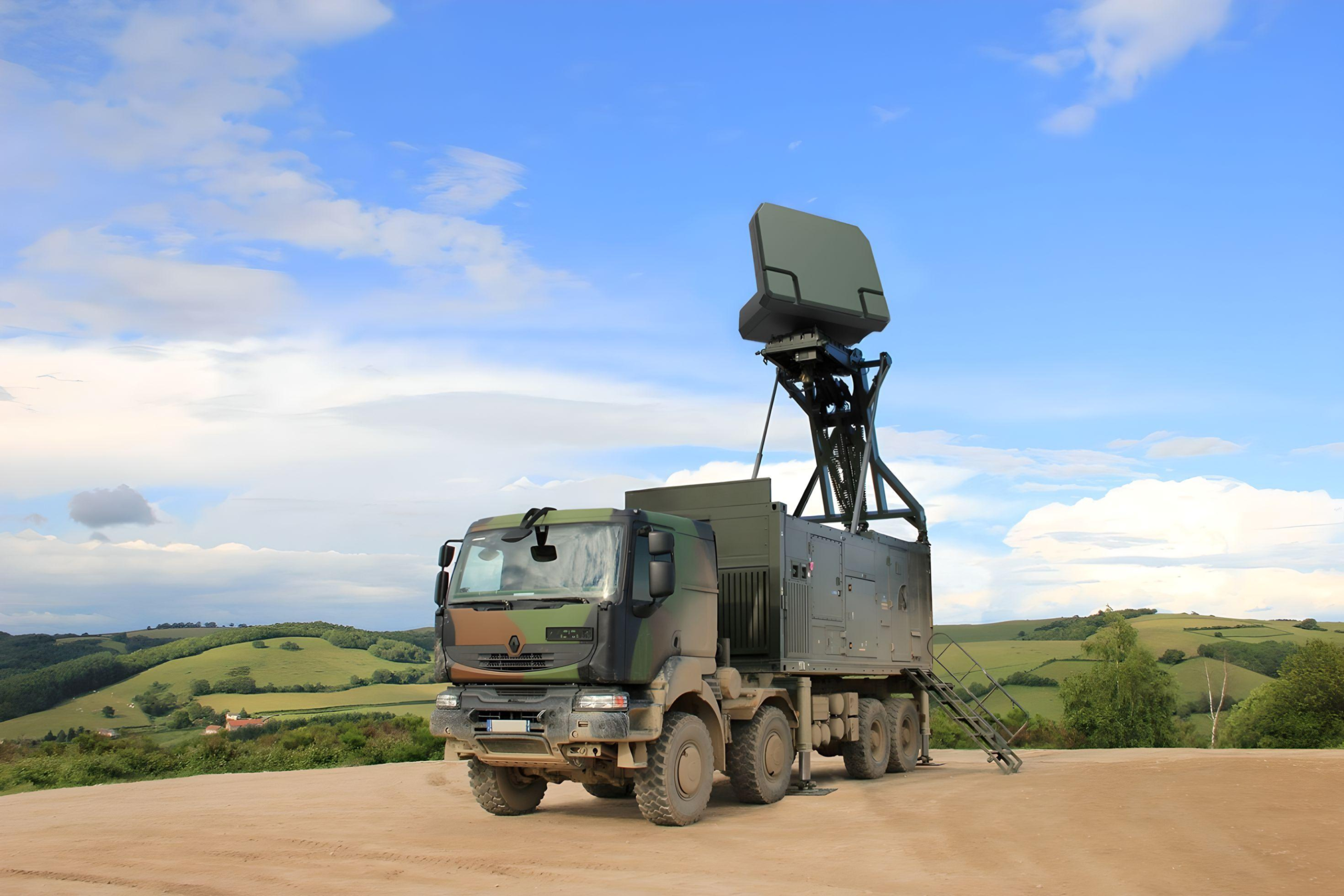
The equipment will be integrated into Piranha 5 armoured wheeled vehicles supplied by General Dynamics European Land Systems. A protected mobile platform allows the system to accompany land formations and relocate as operational requirements change. Integration must account for the jamming equipment, operator interfaces, antennas, electrical demand and other systems already installed on the vehicle.
Electronic equipment can impose substantial requirements on a vehicle’s power distribution and thermal management arrangements. Transmitters, processing equipment and supporting electronics must operate within their specified environmental limits, while antenna installations require appropriate positioning. Equipment added to the vehicle also affects maintenance access, available space and the arrangement of internal workstations.
Compatibility with other onboard systems is another engineering consideration. A vehicle may carry tactical radios, navigation equipment and additional electronic devices that must continue functioning while the jamming system is installed. Integration and qualification must therefore establish that the complete configuration meets the customer’s requirements, including any restrictions placed on simultaneous operation of particular equipment.
Testing, qualification and user training form part of the production order. These activities will determine whether the delivered configuration performs its specified functions and can be operated and supported under the agreed military conditions. The contract includes more than the supply of electronic hardware, with vehicle integration and preparation of personnel forming part of the programme.
The procurement is being led by the Netherlands, with Germany participating as a partner. Both countries entered the programme through the June framework, allowing requirements and acquisition activity to be coordinated. Joint procurement can support common technical arrangements and reduce duplication in development, but national equipment configurations and operating procedures may still differ.
HENSOLDT has also signed an industrial cooperation agreement with the Dutch Ministry of Economic Affairs. That arrangement establishes a framework for involving companies and research institutions in the Knifefish programme, with the aim of building domestic supply chains and maintenance and repair capabilities. The company will select participating organisations and specific projects in a subsequent stage.
The industrial agreement is therefore separate from the confirmed equipment order. It creates the basis for future participation but does not assign a published value or guaranteed production package to individual Dutch suppliers. Specific manufacturing, research or maintenance responsibilities will depend on the commercial and technical agreements eventually established with the selected partners.
HENSOLDT already has a Dutch industrial presence through Nedinsco, the Venlo-based optronics manufacturer acquired in June 2026. Nedinsco develops and manufactures equipment used on armoured platforms including Boxer, CV90 and Leopard 2A8 vehicles. Its existing activities demonstrate local engineering and manufacturing capacity, although the company has not been awarded a publicly identified Knifefish work package.
Establishing maintenance capacity close to military users can support equipment availability by reducing reliance on sending every defective assembly to an overseas facility. Repair activities nevertheless require approved processes, diagnostic equipment, technical documentation and access to replacement components. Where the equipment contains controlled technology, the scope of domestic repair work will depend on the permissions and support arrangements agreed with the manufacturer.
Software management will also be important as the systems enter service. Electromagnetic reconnaissance and jamming equipment depends on processing functions that may require updates as operating conditions and signal characteristics change. Changes must be controlled so that hardware, software and technical documentation remain compatible with the configuration approved for military use.
The November order moves Knifefish into series supply under the existing framework, while Dutch industrial participation arrangements are being developed in parallel. HENSOLDT’s next milestones will include the selection of local partners, completion of vehicle integration, qualification testing and preparation of personnel for service. Delivery quantities, contract value and acceptance dates remain undisclosed.