IN Brief:
- SNC has received a $124 million prototype award under the US Air Force's Counter Air Missile Program.
- Specter Aerospace will contribute propulsion and vehicle engineering, while SNC leads systems integration.
- The programme initially targets a ground-launched supersonic weapon, with future air-launched applications dependent on development results.
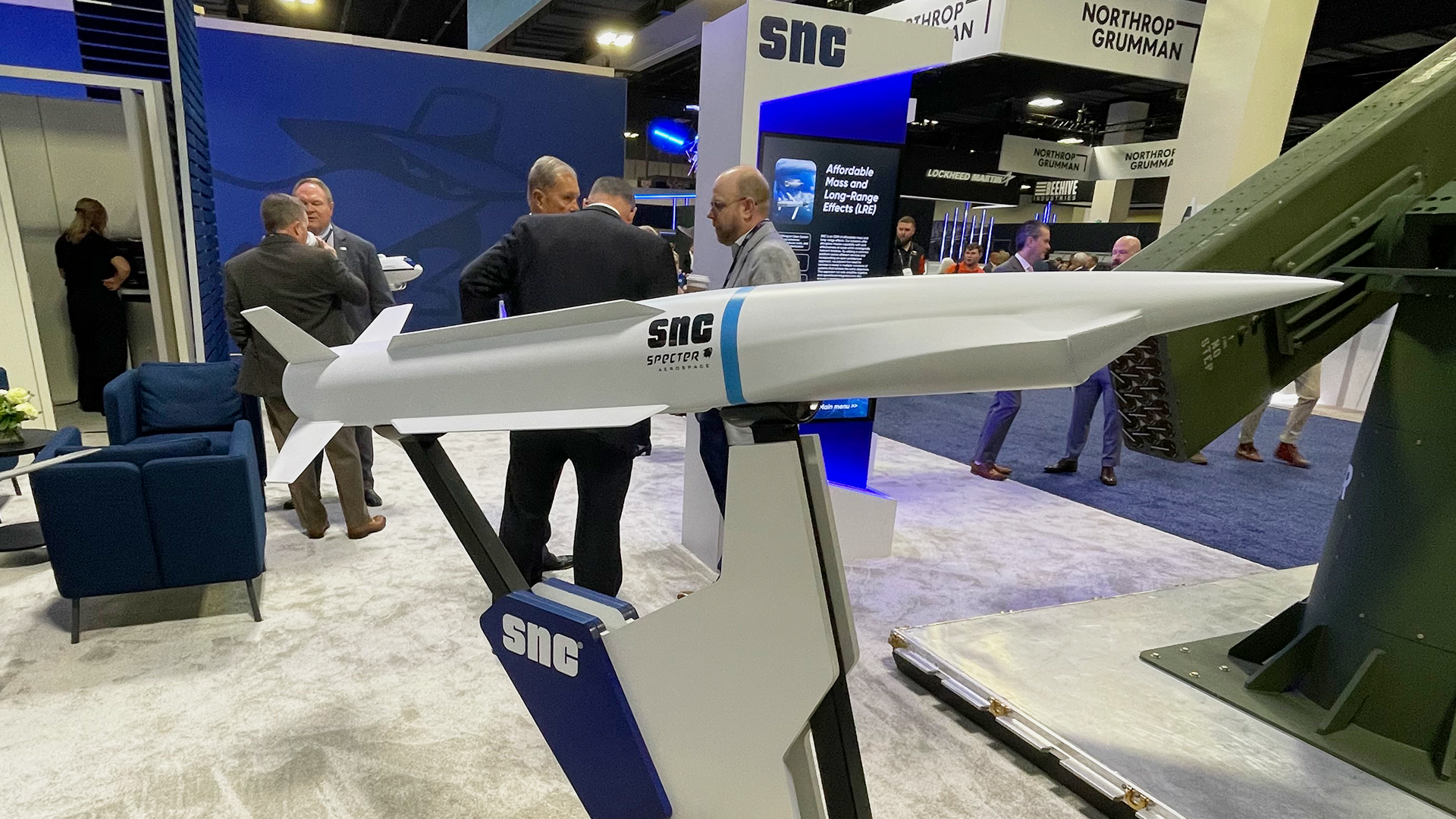
US aerospace and defence company SNC has received a $124 million prototype contract under the US Air Force’s Counter Air Missile Program, working with Specter Aerospace to develop an affordable ground-launched supersonic missile. The programme will combine propulsion and vehicle engineering with modular systems integration, with a potential route towards a future air-to-air configuration.
The award was disclosed on 18 November 2026 and is being managed through the Air Force Life Cycle Management Center’s Armament Directorate. SNC will act as lead systems integrator, while Specter Aerospace will contribute expertise in propulsion and missile vehicle design. The contract covers prototype development rather than a confirmed production order.
The Counter Air Missile Program, known as CAMP, is intended to support the development of weapons that can be produced affordably and at greater scale. Its ground-launched component provides an initial route to evaluating missile technology, with the Air Force also examining how the resulting work might inform future air-to-air capabilities.
Producing lower-cost interceptors requires manufacturers to address the relationship between weapon performance, component complexity, and the production process. A missile may satisfy demanding aerodynamic and guidance requirements but remain expensive to manufacture if it depends on highly specialised components, difficult assembly procedures, or a restricted group of suppliers.
Those constraints become more pronounced when a programme aims to increase production volumes. Manufacturing capacity depends on qualified suppliers, available materials, tooling, testing equipment, and the ability to repeat assembly processes consistently. A prototype programme can therefore influence future production cost through engineering choices made long before a production contract is awarded.
SNC and Specter intend to use a modular architecture to support development of the new weapon. Modular design can allow selected components or functions to be developed and integrated through defined interfaces, provided that changes do not compromise the requirements imposed on the complete system.
Missile development presents demanding integration requirements because propulsion, airframe, control, and onboard electronics operate within a closely coupled physical arrangement. Changes to the propulsion installation can alter mass distribution and thermal conditions, while external aerodynamic changes can affect stability and the forces encountered during flight.
Specter Aerospace has been developing high-speed propulsion technology, including work associated with air-breathing missile concepts. The companies previously announced cooperation on lower-cost supersonic weapons in February 2026. That earlier activity provides technical context for the new award, but the November contract does not disclose a complete propulsion specification for the CAMP prototype.
Air-breathing propulsion systems use oxygen from the surrounding atmosphere rather than carrying all the oxidiser needed for combustion. Their performance depends on airflow conditions, engine geometry, operating speed, and the relationship between propulsion and the vehicle structure. These characteristics can offer design options for high-speed weapons, but the suitability of any particular arrangement depends on the mission requirements and its verified performance.
The specific propulsion architecture, engine performance, and operating envelope selected for the awarded prototype have not been published. It would therefore be premature to identify a particular ramjet configuration as a qualified part of the funded system or to infer its range from technology previously described by the companies.
The initial ground-launched configuration also requires integration of launch equipment and appropriate vehicle interfaces. The missile must transition from its launch condition into controlled flight, with its propulsion and flight-control arrangements operating within the intended envelope. The companies have not disclosed the launch mechanism or whether containerised equipment will form part of the delivered prototype.
Ground-launch testing can provide opportunities to evaluate aspects of a missile’s design without immediately requiring integration aboard a combat aircraft. This does not eliminate the challenges of launch dynamics, flight stability, guidance, or system qualification, but it establishes a different starting point for development.
A future air-launched variant would introduce additional requirements. Aircraft carriage imposes limits on weapon dimensions, weight, aerodynamic behaviour, electrical interfaces, and separation characteristics. The missile must also be compatible with the host aircraft’s systems and the procedures governing safe release.
These considerations help explain why a successful ground-launched prototype would not automatically qualify an air-to-air weapon. Some technologies might be transferable, but changes to launch conditions, guidance functions, or packaging would require additional design work and testing. No customer award or delivery timetable for an air-launched version has been disclosed.
SNC’s proposed open systems approach is intended to support integration and further development through defined architectures. Open interfaces can make it easier to modify individual subsystems or incorporate alternative suppliers, although the actual benefits depend on the technical requirements, access to interface information, and control of the resulting system configuration.
Manufacturing affordability will also be affected by the selection and qualification of components. Electronic assemblies, actuators, structural materials, and propulsion hardware must be available in the quantities needed for a future production programme. Substituting one component for another can require further testing where mechanical, electrical, or software characteristics differ.
Consistent production demands inspection and qualification processes appropriate to the finished missile. High manufacturing throughput does not remove the requirement to establish that each unit conforms to its approved design. The cost of testing, documentation, and supplier quality assurance therefore forms part of the industrial challenge alongside assembly speed.
The companies have not disclosed a target unit price, demonstrated production rate, or independently verified cost reduction against existing systems. Affordable manufacture remains an objective of the development programme rather than an established result. Similarly, no completed flight trial, confirmed engagement range, or operational weapon configuration has been announced under the award.
The US Air Force is pursuing several initiatives intended to expand the availability of lower-cost munitions and support a broader industrial supply base. CAMP concentrates on the counter-air role, with its initial ground-launched configuration providing a potential route towards later applications. The requirements of those future applications will determine which technologies can be carried forward.
SNC’s integration responsibilities will involve coordinating the contributions required to produce a functioning prototype, including the mechanical, propulsion, electronic, and control elements of the weapon. Specter’s role centres on its propulsion and vehicle engineering expertise, while the wider supplier structure has not been disclosed.
The $124 million contract provides a funded basis for that development work, but production procurement and operational introduction remain separate decisions. Prototype design, integration, and testing will establish whether the approach can meet the Air Force’s performance requirements while supporting the manufacturing affordability sought through CAMP.