IN Brief:
- Babcock and Isembard have agreed to explore additional manufacturing capacity across Babcock's UK facilities.
- The proposed assessment will use MasonOS to examine production resources, workforce schedules, and factory utilisation.
- A feasibility study begins in early 2027, with approximately £150 million in potential additional revenue estimated by the partners.
Babcock International Group and British precision manufacturing company Isembard have signed a memorandum of understanding to examine unused production capacity across Babcock’s UK facilities. The partners will assess whether Isembard’s MasonOS manufacturing platform can improve factory resource utilisation, production planning, and access to additional capacity for companies supporting defence programmes.
The agreement, disclosed on 18 November 2026 during the Slush technology event in Helsinki, provides for a feasibility study beginning in early 2027. Babcock and Isembard estimate that better allocation of available manufacturing space and resources could generate approximately £150 million in additional revenue between their organisations. That figure is a prospective commercial opportunity, not contracted business or an independently demonstrated productivity gain.
The assessment will examine how MasonOS could be deployed across Babcock’s operations. Isembard describes the platform as an agentic manufacturing operating system capable of bringing together information about production lines, machinery, workforce schedules, and supply chains. Its purpose is to make manufacturing capacity more visible and support decisions about where and when work can be undertaken.
Factory capacity is determined by more than the number of machines available. A machining centre may have unallocated operating hours but be unsuitable for a component because the necessary fixtures, tooling, materials, or qualified personnel are unavailable. Another production line may have sufficient equipment capacity but remain constrained by inspection resources or delays in preceding manufacturing operations.
Analysing these limitations requires production information to be connected with the technical characteristics of the work being scheduled. Equipment capability, processing time, material availability, operator qualifications, and quality requirements all influence whether a job can be transferred between resources. MasonOS is intended to help establish a clearer view of those relationships rather than relying solely on isolated factory utilisation figures.
The proposed feasibility study will assess the availability and usefulness of that information within Babcock’s facilities. The partners have not identified participating sites, the manufacturing processes to be examined, or the systems that would provide production data. Integration with existing enterprise resource planning, production control, and quality systems would depend on the arrangements already used by each operation.
Babcock’s UK activities cover naval engineering, defence equipment, aviation support, and specialist manufacturing. Those operations involve different production processes and qualification requirements, making capacity allocation more complicated than moving work between equivalent commercial machining facilities. Some components can be manufactured using broadly available equipment, while others depend on specialised processes, approved suppliers, or controlled engineering documentation.
Defence manufacturing also requires detailed configuration management. A component must conform to the applicable design, material specification, manufacturing process, and inspection requirements. Moving production to another machine or factory can introduce additional qualification work, particularly where the customer has approved a specific manufacturing route or supplier.
Consequently, identifying free machine time does not establish that a production resource is ready to accept additional defence work. A meaningful capacity assessment must distinguish between nominal equipment availability and capacity that can satisfy the technical, contractual, and delivery requirements of an individual programme.
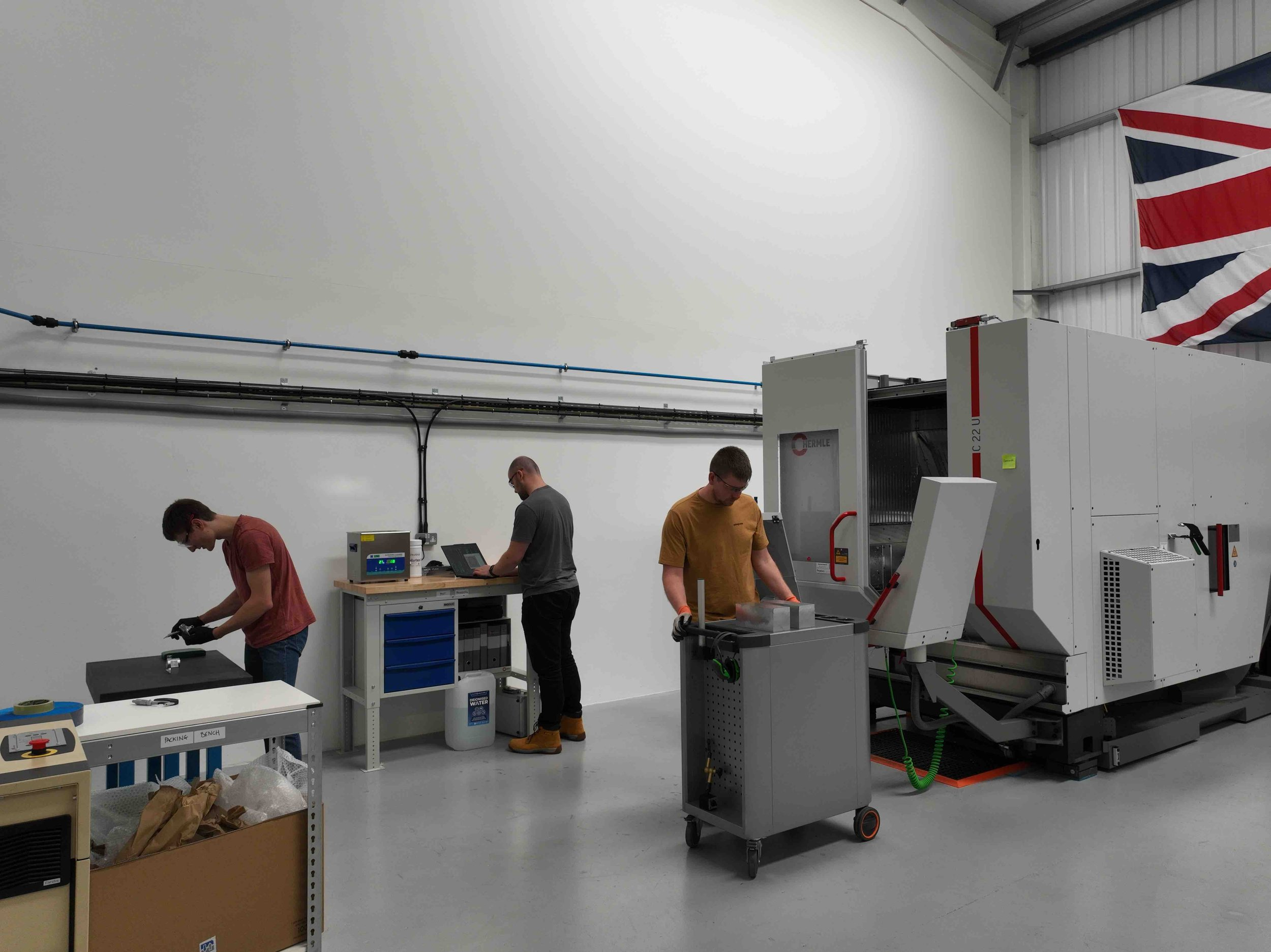
Isembard’s operating model combines precision manufacturing facilities with software used for quotations, scheduling, production management, and quality control. The company operates owned and franchised factories connected through MasonOS, providing a practical manufacturing environment in which the platform is already used. The agreement with Babcock concerns an assessment of its application within a different industrial organisation.
The collaboration could also identify opportunities for Babcock’s existing small and medium-sized suppliers. Capacity that cannot be used efficiently for one internal manufacturing requirement may be suitable for other approved work, provided the equipment, commercial arrangements, and technical controls permit it. The feasibility study will investigate whether additional activity can be accommodated within the available facilities and supplier ecosystem.
Such arrangements would require careful coordination of production priorities. Additional orders cannot be allowed to compromise the delivery requirements of established programmes, while shared equipment may need to accommodate different inspection, documentation, and maintenance procedures. The economic value of available capacity therefore depends on its suitability for work that customers are prepared to place.
Digital production planning can expose scheduling inefficiencies, but it cannot independently resolve shortages of specialised machinery, skilled workers, or qualified materials. Where a production bottleneck is physical, additional investment or process changes may still be required. Software can help identify the constraint and examine possible alternatives without necessarily eliminating it.
The feasibility work will also have to address the handling of commercially and technically sensitive production information. Manufacturing records can include component specifications, customer programme details, delivery schedules, and supplier arrangements. Neither company has disclosed the proposed data hosting architecture or the security arrangements for a potential MasonOS deployment.
Babcock has been developing digital engineering and manufacturing capabilities across its defence operations, while Isembard is expanding its network of precision manufacturing facilities. Their collaboration brings together an established defence contractor and a smaller manufacturing technology business with experience coordinating production across different locations.
The initiative reflects wider pressure to increase the output of Britain’s defence industrial base without relying exclusively on new factory construction. Existing sites may contain production resources that are difficult to identify or allocate efficiently because their utilisation and capabilities are recorded separately. A consistent view of those resources could support better planning, although the degree of improvement remains to be tested.
The partners’ £150 million revenue estimate will depend on identifying suitable capacity and converting that availability into commercial orders. It does not represent a committed investment, guaranteed revenue, or the value of an agreed manufacturing contract. No schedule has been announced for realising the potential opportunity.
The early-2027 feasibility study will provide the first defined milestone. Its findings should establish which manufacturing activities can be assessed through MasonOS, how much capacity is practically available, and whether the partners have identified sufficiently qualified demand to justify further implementation.