IN Brief:
- Babcock recorded £2.698bn revenue and £227.3m underlying operating profit for the six months ended 30 September 2026.
- Nuclear revenue increased 13% at constant currency to £1.115bn, while Marine revenue fell 7% to £768.9m.
- The company expects a successor UK submarine support agreement and further second-half orders, with its contract backlog standing at £8.9bn.
Babcock International Group increased underlying operating profit by 13% to £227.3m in the six months ended 30 September 2026, with stronger nuclear and aviation activity offsetting weaker trading in its marine division. Revenue reached £2.698bn, representing 5% organic growth at constant exchange rates, while the underlying operating margin improved from 7.9% to 8.4%.
The company published its half-year results on 19 November, maintaining expectations for the financial year ending March 2027. Defence revenue grew 8%, with the group benefiting from submarine support, nuclear infrastructure activity and aviation programmes. Marine revenue declined as construction activity under the Royal Navy’s Type 31 frigate programme passed through a different stage of delivery and demand for liquid gas equipment reduced.
Nuclear was the largest contributor to the group’s operating performance. Divisional revenue increased 13% at constant currency to £1.115bn, while underlying operating profit rose 23% to £110.2m. The division’s underlying operating margin improved to 9.9%, against 9.1% during the comparable period.
Much of the nuclear activity involves support for the United Kingdom’s submarine fleet and the infrastructure needed to sustain it. Babcock provides specialist engineering and maintenance services at naval facilities, with work requiring qualified personnel, controlled technical processes and access to docks and supporting equipment suitable for nuclear-powered vessels.
Submarine maintenance involves coordinating inspections, repair activity, component availability and the work undertaken by specialist engineering teams. Certain tasks depend on access to particular parts of a vessel and cannot proceed while other operations occupy the same space. The availability of suitable facilities can therefore influence maintenance schedules alongside the number of technicians assigned to a programme.
Babcock reported increased activity under the Future Maritime Support Programme, which covers submarine and naval base support. The existing arrangements have been extended through a bridging agreement while the company and the Ministry of Defence complete negotiations on a successor contract, known as the Gateway Agreement.
The company expected that new long-term agreement to be signed during November 2026, although it had not been completed when the half-year results were published. The distinction is relevant to the reported order book: contracted work has continued under the existing arrangements while the anticipated replacement agreement remains outside the reported backlog.
Nuclear contract backlog fell to approximately £1.2bn from £1.8bn a year earlier, largely reflecting work completed under existing submarine support arrangements and the absence of the expected successor contract. The reduction does not, by itself, establish a corresponding decline in the underlying technical requirement for submarine maintenance and naval base services.
Infrastructure projects are another substantial element of the division’s workload. Babcock is progressing work associated with Devonport’s 10 Dock and the Contingent Dock Facility at Rosyth, supported by additional scope under the Major Infrastructure Programme. Revenue associated with that programme reached £237m, compared with £215m in the corresponding period.
Specialist dock infrastructure is essential to major submarine engineering operations. Facilities must accommodate the vessels and the equipment required to undertake work safely, while providing suitable services and access arrangements. Improvements to those facilities can support future maintenance capacity, although the contribution to fleet availability will depend on their completion and subsequent operation.
Marine revenue decreased 7% at constant currency to £768.9m, with underlying operating profit falling 9% to £50.2m. The division’s underlying margin declined slightly to 6.5% from 6.7%. The company attributed the weaker results partly to the phasing of construction activity on the Type 31 programme and partly to lower liquid gas equipment volumes after a strong previous period.
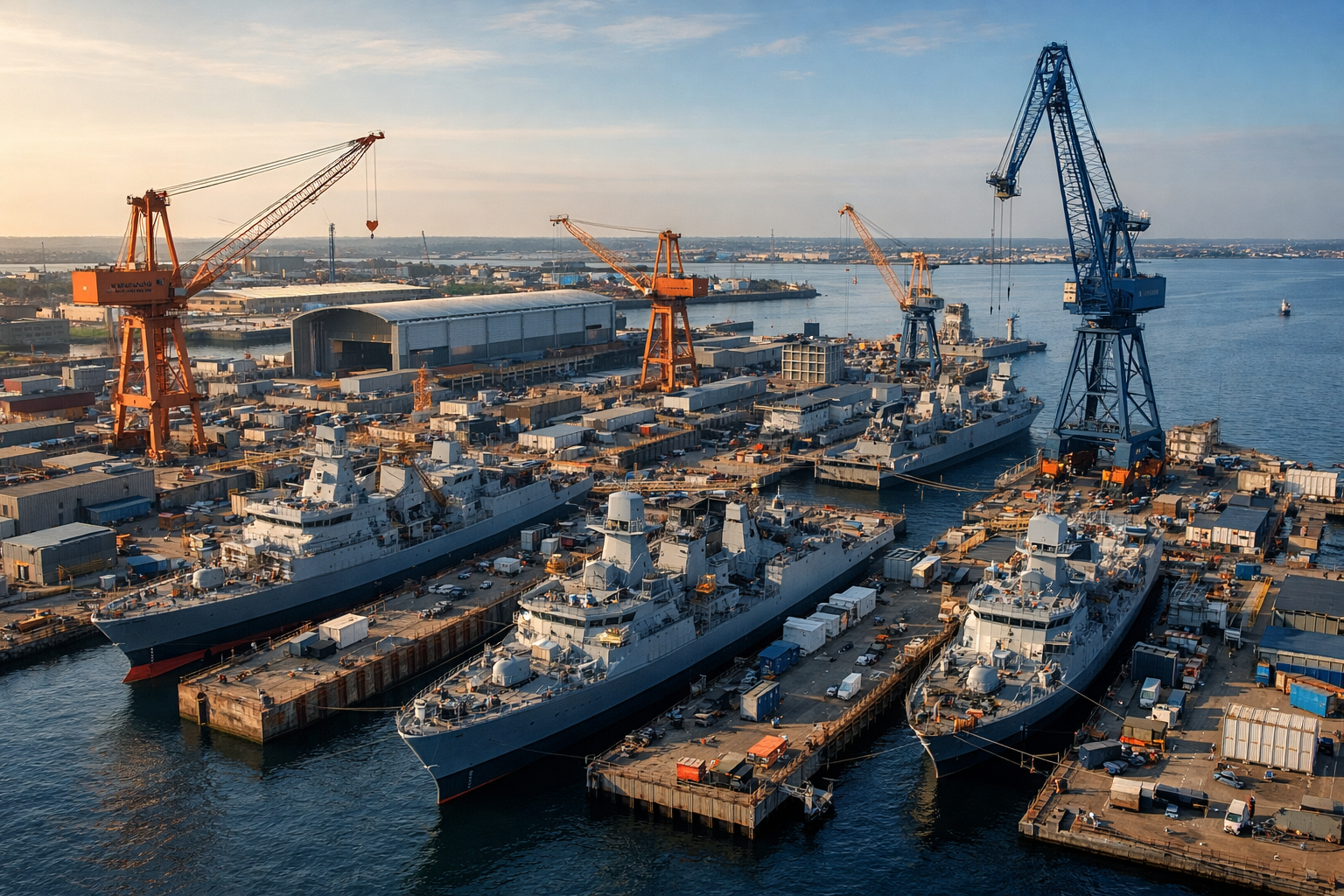
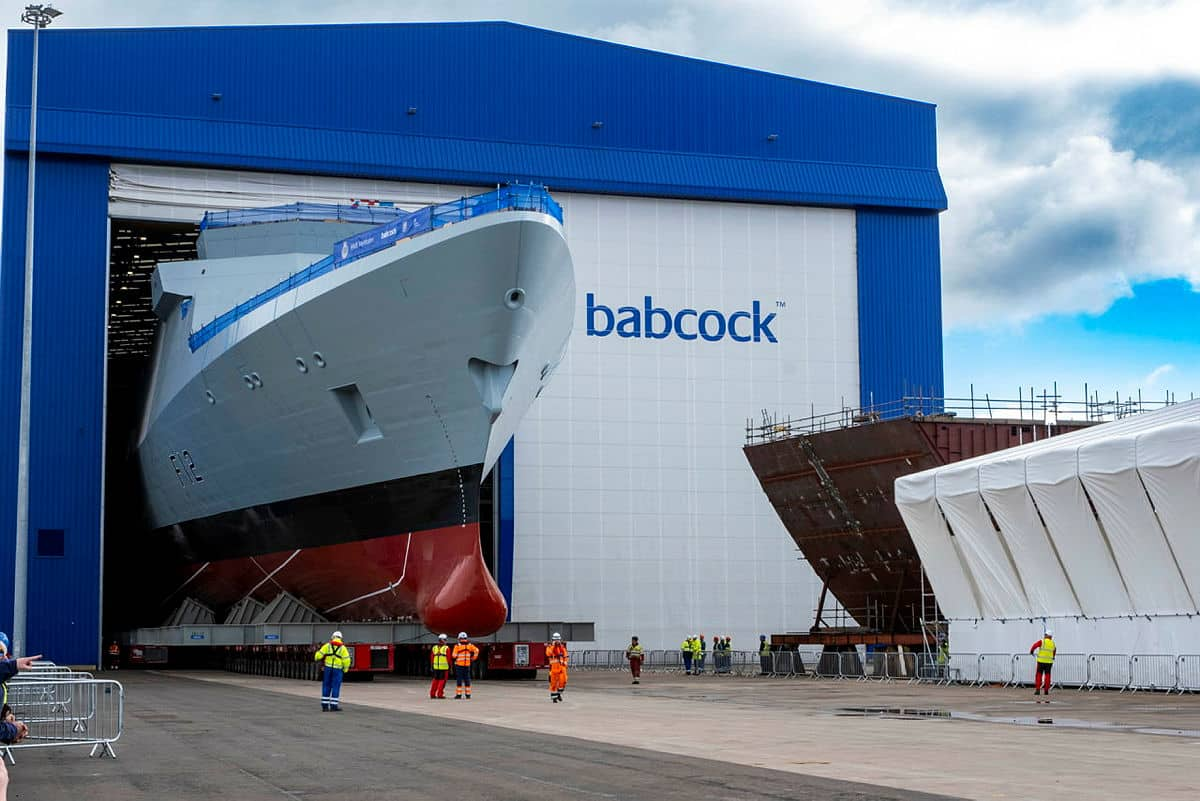
Babcock is building five Type 31 frigates for the Royal Navy at Rosyth. Naval construction moves through successive stages involving structural fabrication, block assembly, machinery installation, electrical outfitting and systems integration. The labour and equipment requirements vary during those stages, affecting the amount of work recognised in different reporting periods.
The reported reduction in Type 31 activity concerns the timing of work under the existing programme. Babcock did not announce a reduction in the contracted five-ship requirement or attribute the marine revenue decline to cancellation of the programme. The next financial periods will reflect how construction activity progresses against the agreed programme arrangements.
Liquid gas equipment also contributed to the division’s year-on-year comparison. Babcock supplies specialist systems for the marine energy sector, and the business experienced lower volumes following a previous period of unusually strong demand. The reduction affected civil marine revenue as well as the division’s overall profitability.
The group’s marine business continues to undertake international support activity. Babcock secured a six-year extension to its contract supporting the Royal Canadian Navy’s Victoria-class submarines, with a total agreement value of approximately CAD$1.2bn. An initial amount of around CAD$200m has been incorporated into the company’s contract backlog.
The Canadian extension supports an established maintenance and engineering relationship rather than a new submarine acquisition. Availability of the existing fleet depends on the inspection, repair and support arrangements needed to maintain vessels that have been in service for many years. Contracted engineering capacity provides continuity for those activities across successive maintenance periods.
Aviation generated £256.8m revenue, increasing 26% at constant currency, while underlying operating profit rose 53% to £22.2m. The improvement reflected increased activity in French defence operations and the mobilisation of the Mentor 2 programme, alongside additional UK defence work. The profit figure also included £2m from the disposal of aircraft.
That disposal contribution is distinct from the recurring earnings generated by delivering aviation services. The division nevertheless reported stronger activity across operational training and support programmes, which require aircraft maintenance, qualified personnel and the management of equipment availability alongside customer flying requirements.
Land revenue increased to £556.8m, with underlying operating profit reaching £44.7m. Growth in military vehicle support and initial UK vehicle deliveries contributed to performance, partly offset by lower activity in civil businesses. The division’s underlying operating margin improved slightly to 8.0%.
Across the group, statutory operating profit fell to £220.7m from £234.3m, despite the increase in underlying operating profit. The difference reflects the treatment of specific adjusting items and the composition of the prior-year comparison. The two measures should not be presented as interchangeable assessments of the company’s performance.
Babcock’s contract backlog stood at approximately £8.9bn, compared with £9.9bn a year earlier. The group expects substantial order intake in the second half, including the anticipated Gateway Agreement. That expectation has not yet become a confirmed contract award, and the reported backlog reflects agreements in place at the accounting date.
The company also reported £185.8m of underlying free cash flow and net funds of £34.7m excluding leases, compared with net debt of £55.8m on the same basis a year earlier. Its improved cash position provides additional financial capacity for the ongoing delivery and investment requirements of its engineering businesses, subject to future operational and capital commitments.
Management has maintained guidance for the financial year ending March 2027, with approximately 90% of expected revenue under contract at 1 October. The company continues to target average organic revenue growth in the mid-single digits and an underlying operating margin of at least 9% over the medium term.
Further progress will depend on execution of the existing naval and nuclear programmes, continuation of aviation activity and completion of major contractual negotiations. The anticipated Gateway Agreement is the most immediate outstanding development in the UK submarine support business, while construction activity at Rosyth and infrastructure work at Devonport will remain important contributors to subsequent reporting periods.