IN Brief:
- German authorities reported successful Hot Strike trials involving STARK's VIRTUS and Helsing's HX-2 loitering munition systems.
- The assessments examined target engagement and warhead effects as part of broader safety and performance qualification programmes.
- Initial equipment deliveries and training are planned ahead of operational introduction, with further testing and acceptance work still required.
Germany’s armed forces have completed live firing assessments of two domestically developed loitering munitions, testing the weapon effects of STARK Defence‘s VIRTUS and Helsing’s HX-2. The successful Hot Strike trials form part of the Bundeswehr’s continuing efforts to qualify the systems for military use, with further safety and operational testing still required.
The Federal Office of Bundeswehr Equipment, Information Technology and In-Service Support confirmed the results on 19 November 2026. Testing included activity at the WTD 91 weapons and ammunition technical centre in Meppen, with the programme examining the performance of the complete systems during controlled target engagements.
Both weapons are being developed under German procurement arrangements established earlier in 2026. Contracts with STARK and Helsing were followed by a separate agreement involving Rheinmetall, creating several development routes for the Army’s planned introduction of loitering munitions. The latest completed assessments concern VIRTUS and HX-2 rather than all systems being pursued through the programme.
A loitering munition combines an uncrewed aircraft with a weapon intended to engage a selected target. Unlike a conventional projectile travelling directly to a predetermined impact point, the aircraft can remain airborne while the operator assesses information from its sensors. The engagement sequence must bring together flight control, navigation, target observation and the functioning of the warhead.
Those functions create several distinct test requirements. A successful flight demonstrates that the aircraft can be launched, controlled and maintained in the air under the trial conditions. It does not establish that the vehicle can acquire the intended target, follow the required engagement sequence or produce the specified weapon effect.
Hot Strike testing addresses the latter part of that process by examining the system through a live engagement. Technical personnel assess whether the weapon reaches the designated target and whether its warhead operates as intended. The results also provide information relevant to the wider qualification of the munition and its associated safety arrangements.
The tests were conducted under controlled conditions intended to allow engineers to examine performance against defined requirements. Instrumented trials can record the sequence of events and provide evidence for technical assessment, although the public account does not provide individual measurements of accuracy, target effects or the number of weapons expended.
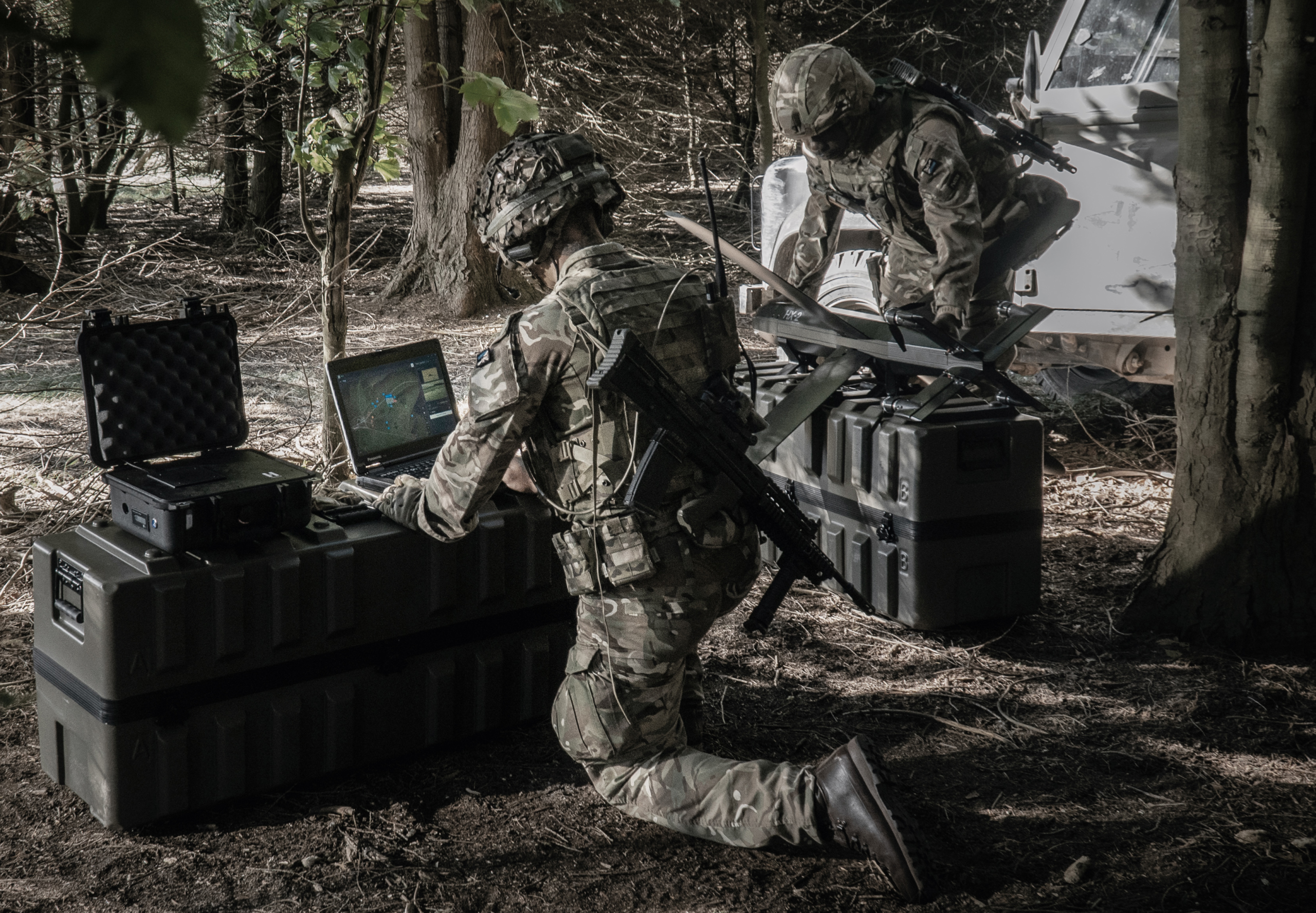
VIRTUS and HX-2 use different airframe and launch arrangements. The STARK system has been developed around vertical take-off before forward flight, while Helsing’s HX-2 employs a distinct aerodynamic design and launch system. These differences affect the equipment needed to prepare the weapons, the space required for launching and the procedures used by personnel operating them.
Both platforms require coordination between their airborne equipment and ground control arrangements. Operators need access to sensor information and must be able to issue the instructions permitted by the system’s operating design. Communications performance can affect the information available during an engagement, although the manufacturers have not disclosed complete operating specifications for the assessed configurations.
Guidance and control software must also function consistently with the weapon’s physical characteristics. Changes to the airframe, payload, sensors or software can influence how a vehicle responds during flight. Where a design is being developed while testing continues, technical records must establish exactly which configuration was used during each assessment.
The Bundeswehr has pursued an acquisition model intended to bring loitering munitions into service more quickly than some conventional equipment programmes. Development, qualification and preparation for delivery can proceed partly in parallel, with defined performance and acceptance requirements established at successive milestones.
Parallel activity creates opportunities to reduce delays between design and manufacture, but it does not remove the need to demonstrate safety and technical performance. Equipment delivered for training may require restrictions or further work before it is cleared for the full range of intended military operations.
Manufacturers must therefore coordinate development changes with production and testing arrangements. Components procured for one design version may need reassessment if the configuration changes, while software updates require suitable verification. Maintaining traceability is important when a production programme begins before every aspect of the equipment has reached its final approved form.
The two systems also have different supporting equipment requirements. Launch mechanisms, batteries, communications equipment and transport arrangements influence how a military unit handles and maintains the munitions. Personnel must be trained to prepare the weapons, inspect their condition and follow the applicable safety procedures before they can be introduced into routine use.
Testing at Meppen provides a controlled environment for examining weapon performance, but operational deployment introduces additional variables. Weather, terrain, electromagnetic conditions and the availability of supporting equipment can affect how uncrewed systems perform. The complete qualification programme must assess relevant operating limits before the customer establishes its approved procedures.
The Bundeswehr expects initial equipment deliveries to support training and further evaluation. Panzerbrigade 45 in Lithuania has been identified as a planned early recipient of the capability from 2027. These arrangements concern the introduction of the systems into military units and remain dependent on completion of the required acceptance activities.
Rheinmetall’s separate FV-014 programme is proceeding through its own development and testing arrangements. Successful Hot Strike assessments for STARK and Helsing do not amount to approval of every system in the procurement portfolio, nor do they establish unrestricted series production of the tested designs.
The November results confirm an important weapon effectiveness milestone for VIRTUS and HX-2. Further work will examine the remaining qualification requirements, support training and establish the configurations that can be accepted for military use. Delivery and operational introduction will depend on those results and the completion of the associated technical documentation.