IN Brief:
- North Sea Boats handed over the first X33 on 25 November.
- The vessel has a carbon fibre composite hull and can accommodate personnel.
- Three follow-on vessels are planned for delivery in 2027.
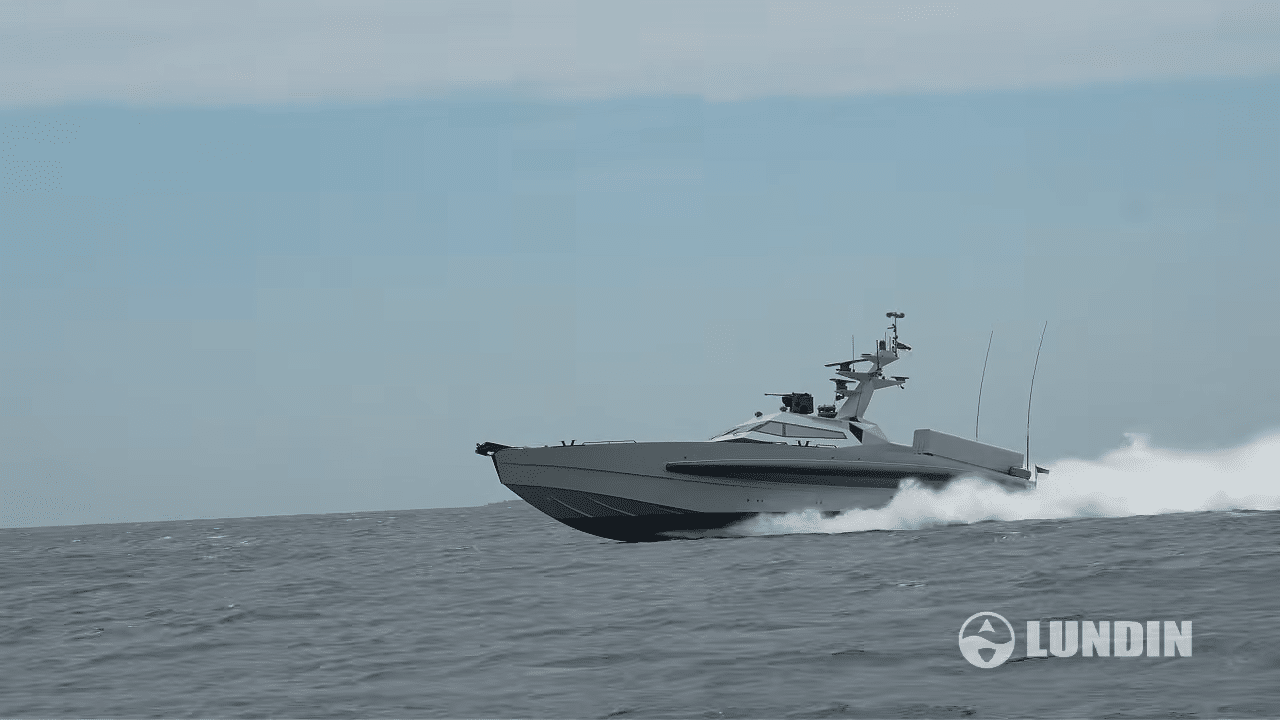
Indonesian shipbuilder North Sea Boats has handed over its first X33 vessel to the Indonesian Navy, adding a domestically manufactured craft capable of operating in crewed and uncrewed configurations. The vessel, named Patkamla Geledek, was formally delivered in Banyuwangi, East Java, on 25 November.
North Sea Boats, which operates locally as PT Lundin Industry Invest, manufactures vessels using composite construction processes. The X33 incorporates a carbon fibre hull, bringing the company’s specialist marine manufacturing capabilities together with equipment supplied by international technology partners. The shipbuilder describes the vessel as the first craft with uncrewed capabilities to receive official naval vessel classification in Indonesia.
The handover represents a production milestone rather than the initial presentation of a concept. Completion of the craft has required the shipyard to deliver a finished marine structure and integrate its propulsion, electrical, navigation, and control equipment into a vessel suitable for customer acceptance. Subsequent maintenance responsibilities will extend across both conventional marine equipment and the electronic systems incorporated during manufacture.
Composite construction differs substantially from conventional ship fabrication. Steel and aluminium vessels are generally assembled from formed and joined metallic structures, whereas a composite hull relies on reinforcing fibres held within a cured resin matrix. Its structural properties depend on the materials selected and the consistency of the manufactured laminate. Inspection and repair consequently require different knowledge from that associated with welded ship structures.
The commercial advantages of such manufacturing depend on the vessel design, production quantity, and lifecycle requirements. Tooling for a composite structure can require considerable initial investment, particularly where a manufacturer is introducing a new hull design. Reusing tooling across successive vessels can distribute that initial expenditure over a production series, although modifications to the structure can create further engineering and manufacturing requirements.
North Sea Boats has established its business around specialist composite marine manufacturing. The company reports that more than 200 key staff have received overseas training or qualifications in composite and fibreglass boatbuilding. Its commercial activities encompass vessels for government, law enforcement, and other specialist marine customers, with production centred on its Indonesian facilities.
Retaining those capabilities within Indonesia gives the country’s marine sector an industrial base for subsequent equipment programmes. Component manufacture, structural inspection, and repair can generate work beyond the initial assembly of a vessel, provided that the shipyard and its suppliers have the required technical documentation, materials, and approved processes.
The incorporation of externally supplied electronic equipment creates a separate set of industrial relationships. Navigation and control systems must be supported alongside the hull and mechanical equipment, with technical records identifying the configuration installed on each vessel. Where equipment comes from international suppliers, access to replacement parts and technical assistance forms part of the longer-term support arrangements.
The X33’s ability to accommodate personnel is also relevant to the scope of those arrangements. The vessel retains conventional marine maintenance requirements while introducing additional electronics and software support obligations. Training and equipment documentation must therefore account for the different systems installed on the platform, rather than treating maritime autonomy as a substitute for established marine engineering disciplines.
North Sea Boats is already preparing three further vessels for the Indonesian Navy, with delivery planned for 2027. The subsequent craft are expected to be larger than the initial vessel, so the programme will involve additional manufacturing and equipment integration work rather than simply repeating an unchanged design. Detailed contractual values and the final allocation of equipment supply responsibilities have not been published.
Follow-on orders require the shipyard to distinguish the original vessel configuration from later design revisions. Engineering records must distinguish common equipment from items specific to a particular vessel, especially where design revisions introduce different components or support requirements. That information also provides a basis for organising spare parts and maintenance documentation after the vessels have been delivered.
The handover also establishes a completed domestic manufacturing project for the Banyuwangi industrial base, extending the shipyard’s portfolio of integrated vessels for Indonesian government customers. Although international suppliers continue to contribute specialist systems, hull manufacture and the coordination of the wider vessel programme have taken place through the Indonesian shipyard.
The first handover establishes a reference point for that company’s subsequent manufacturing work. Completing the three planned follow-on vessels and establishing their support arrangements will determine how the X33 programme develops beyond the initial delivery.