IN Brief:
- The record was publicly announced on 26 November.
- Liebherr contributed battery technology to the experimental research project.
- The demonstrator is separate from Quantum Systems’ commercial production portfolio.
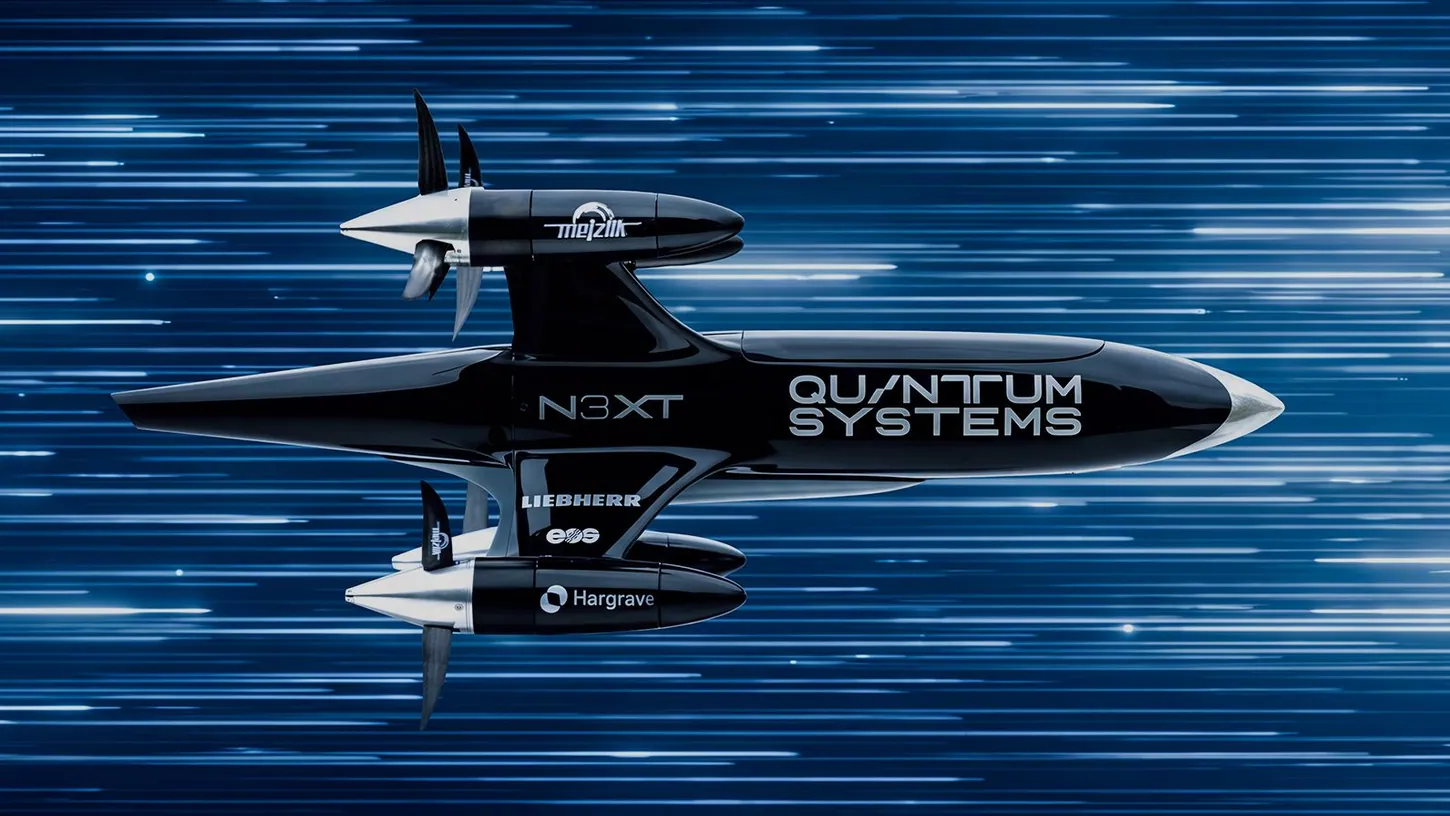
Quantum Systems has announced a world speed record for battery-electric flight through its Apex Recordhunter research project, reporting a verified two-way speed of 727km/h. The German aerospace technology business disclosed the result on 26 November, following experimental flights undertaken during October and November.
The programme brought together Quantum Systems' N3XT research department and several industrial technology suppliers, including Liebherr-Electronics and Drives, EOS, Mejzlik, and Hargrave Technologies. The project is an experimental demonstrator rather than an announced commercial aircraft production programme.
Liebherr has confirmed that the collaboration began in April 2026 and involved its electronics and drives business. The industrial group develops electrical equipment and energy storage technologies for a range of applications outside aerospace, making the record project an example of technical cooperation between manufacturers operating in different industrial markets.
The companies reported three distinct speed measurements associated with the programme. The two-way result announced on 26 November is the relevant headline record; higher peak and single-direction figures reported during the project are different measurements and should not be treated as equivalent to the verified two-way figure.
Experimental aviation records capture a particular performance result under specified conditions. They do not establish the reliability, operating life, or commercial readiness of the equipment concerned. Quantum Systems has not announced orders for the demonstrator, production volumes, or a schedule for introducing it into routine service.
The company's research programme sits alongside a much larger expansion of its commercial activities. In July, Quantum Systems signed a $1.2bn Series D financing round that valued the business at approximately $8bn after the investment. Blackstone, Noteus, Airbus, and Advent co-led the transaction, which is intended to support the company's industrial expansion across its established and emerging product markets.
The July financing is separate from the demonstrator project. Quantum Systems has not disclosed the cost of Apex Recordhunter or the proportion of its investment allocated to its N3XT research activities. The size of the financing round should therefore not be interpreted as the budget for the record programme.
The investment also followed a financing agreement involving the European Investment Bank (EIB), which committed €70m in February. The EIB had previously invested €10m in the business in 2021. This progression from earlier institutional backing to a substantially larger financing round illustrates how the company's capital requirements have changed as its operations have grown.
Quantum Systems has identified the development of industrial capacity as one of the intended uses of its latest financing. Research projects and industrial expansion require different forms of expenditure: the former may involve one-off experimental equipment and specialist engineering services, while the latter requires investment in facilities, personnel, commercial support, and repeatable production processes.
The record programme demonstrates another commercial relationship available to aerospace developers: collaboration with established industrial equipment suppliers. Liebherr's participation brings the resources of a diversified engineering group into a project led by a much younger aerospace business. EOS, another German industrial technology company, operates in additive manufacturing, while the other named participants have specialist aerospace equipment businesses.
The participation of those suppliers does not establish that the equipment used in the demonstrator will enter the company's commercial products. Such a decision would require separate assessment against the requirements of the relevant product and customer. A specialist technology supplier may contribute to an experimental programme without receiving a subsequent production order.
Quantum Systems' N3XT department provides an organisational basis for research outside the immediate delivery requirements of its commercial products. Companies with established production commitments must manage the demands of customer programmes alongside experimental work, with different schedules and measures of progress applying to each activity.
The November announcement establishes a public research milestone for Quantum Systems and the industrial partners involved. It also comes during a period in which the company's financing and corporate expansion have attracted considerable interest from European and international investors. Those commercial developments are more directly associated with its future manufacturing capacity than the experimental speed result itself.
Quantum Systems has not confirmed a successor to the Apex Recordhunter demonstrator or a commercial application for the specific research programme. The record provides evidence of a completed experimental project, while the next measurable industrial developments will arise from the broader manufacturing and commercial expansion planned under the company's July financing agreement.