IN Brief:
- Aerospace Global Forum 2026 will run alongside Farnborough International Airshow from 20 to 24 July.
- Confirmed speakers include leaders from the European Commission, NATO Parliamentary Assembly, NASA, Barclays, Rothschild & Co, IAG, British Business Bank, and the National Wealth Fund.
- The programme strengthens Farnborough’s role as a meeting point for aerospace production, defence investment, space systems, and advanced technology industrial strategy.
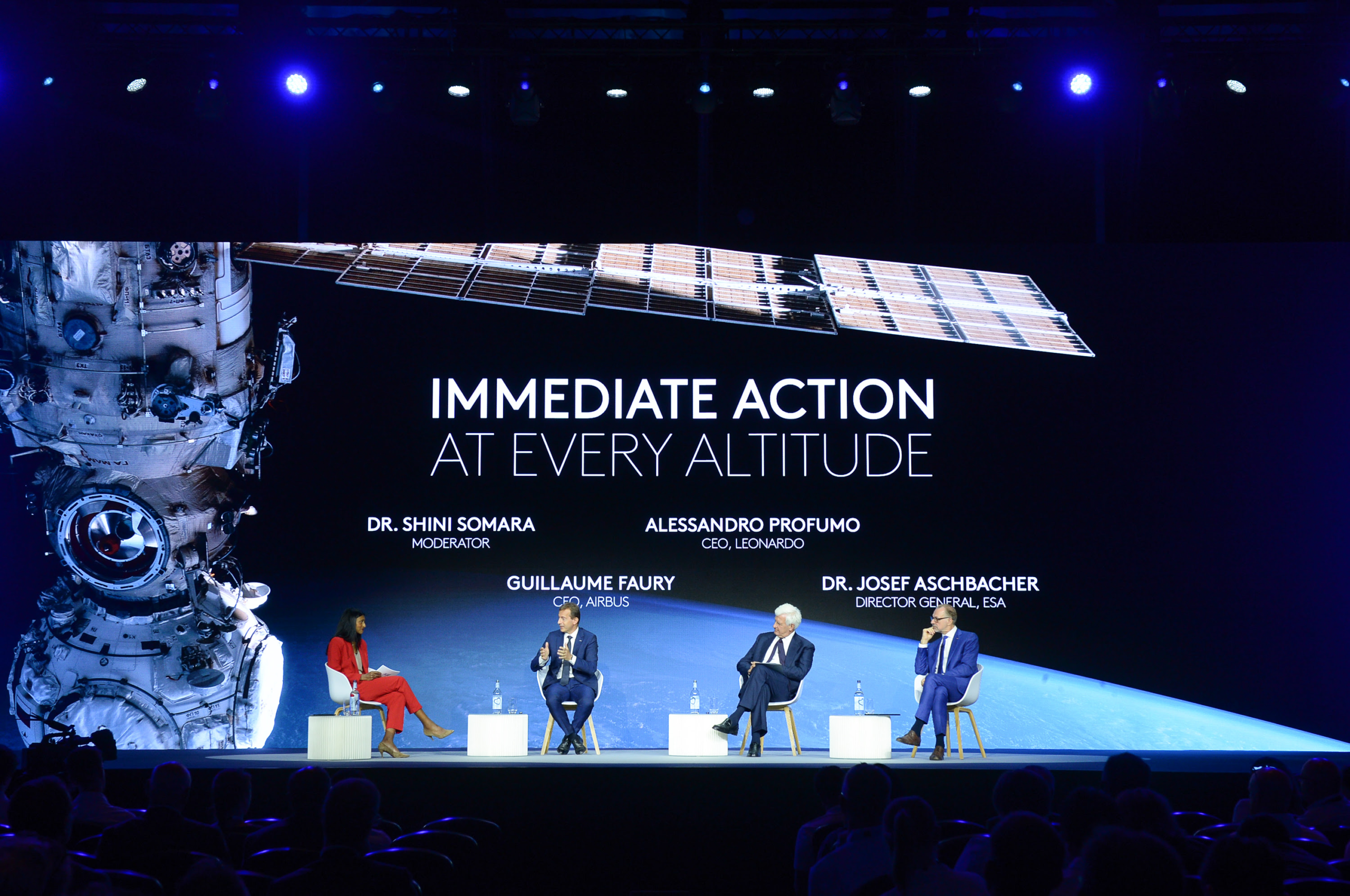
Aerospace Global Forum has announced the first confirmed speakers for its 2026 edition, placing finance, defence, space, aviation, and emerging technology at the centre of Farnborough International Airshow’s conference programme.
The forum will run from 20 to 24 July 2026 at the Farnborough International Exhibition & Conference Centre in Hampshire. Its programme is organised across four summit streams: the Finance Summit, Airline Leaders’ Summit, Defence Summit, and Technology Summit. The structure reflects the changing shape of aerospace and defence, where industrial capacity, investment, government policy, space systems, and digital technology are increasingly inseparable.
Confirmed speakers include Andrius Kubilius, European Commissioner for Defence and Space; Dr Benedetta Berti, Secretary General of the NATO Parliamentary Assembly; Carlos Garcia-Galan, NASA Moon Base Program Executive; Cathal Deasy and Dr Matt Spence of Barclays; Lord Mark Sedwill of Rothschild & Co; Louis Taylor of the British Business Bank; Oliver Holbourn of the National Wealth Fund; and senior leaders from IAG, Malaysia Aviation Group, CGI, Multiverse Computing, Edge Wing, PA Consulting, ADS Group, and UKRSPECSYSTEMS.
The line-up crosses boundaries that usually split aerospace conferences into narrower lanes. Defence is represented through NATO, the European Commission, ADS, London Defence Conference, PA Consulting, and specialist industry voices. Finance is present through Barclays, Rothschild & Co, British Business Bank, and the National Wealth Fund. Space and emerging technology are represented through NASA, CGI, quantum and AI specialists, and secure space systems expertise.
That mix reflects a market in which defence aerospace is shaped as much by investment flows, sovereign capability, supply-chain depth, and software infrastructure as by platform announcements. Combat-air programmes, missile production, space-based ISR, advanced materials, autonomy, and secure communications all require capital, government backing, export alignment, and long-term industrial planning.
GCAP will sit prominently in that conversation. PA Consulting is supporting an AGF Defence Summit session on “GCAP and the Next Era of Air Dominance: Sovereignty, Strategy, Technology, and Global Security.” The funding and workshare pressure already seen in UK funding push keeps GCAP on industrial track and GCAP contract moves Edgewing into first international work package will naturally carry into Farnborough, where industry, government, and finance will be in the same rooms.
The addition of a Finance Summit is especially relevant. Aerospace and defence manufacturers are facing heavy capital requirements: new production lines, digital engineering environments, secure facilities, additive manufacturing, semiconductor resilience, propulsion development, space infrastructure, and skilled workforce pipelines. Private capital and public funds are both being pulled toward the sector, but investors still need confidence around demand, export controls, timelines, and programme risk.
Farnborough has always been a trade show, but its centre of gravity is shifting. Static displays and aircraft orders remain important, yet the more consequential discussions increasingly concern production capacity, workshare, finance, sovereignty, and technology readiness. A future fighter, satellite constellation, or autonomous system is not defined by a single airframe or payload. It is defined by the industrial ecosystem able to fund, build, certify, integrate, and update it.
The presence of NASA and secure space systems specialists reflects the convergence between aerospace, defence, and space. Lunar infrastructure, satellite communications, space-based sensing, and resilient orbital services are now part of strategic technology discussions. Defence manufacturers with experience in sensors, electronics, propulsion, materials, and secure systems are likely to find more crossover opportunities as civil and military space requirements continue to overlap.
There is also a UK industrial-policy dimension. The British Business Bank, National Wealth Fund, Office for Investment, ADS, and Farnborough’s wider partner network give AGF a role in connecting strategic industries with capital. UK aerospace and defence companies face higher defence spending, demand for sovereign production, supply-chain fragility, and the need to retain advanced manufacturing skills. Those pressures are commercial, political, and industrial at the same time.
The sponsor mix reinforces the same direction. RTX’s involvement in the Airline Leaders Summit, PA Consulting’s GCAP-focused Defence Summit support, and IBM’s Technology Summit session on AI-driven readiness point to a programme built around operational capability, digital advantage, and industrial execution rather than ceremonial conference themes.
Manufacturers will judge AGF 2026 by whether the discussions connect strategy to production realities. Aerospace and defence companies need financing routes, procurement confidence, test infrastructure, export clarity, supplier capacity, and a workforce able to convert ambition into qualified output. Farnborough remains one of the few venues where those groups can meet at scale.
The 2026 AGF line-up treats aerospace and defence as a connected industrial system shaped by capital, technology, policy, and manufacturing capacity. That is where the sector’s next competitive advantage is likely to be decided.