IN Brief:
- AeroVironment has received a further $20.2 million government investment for its Huntsville facility.
- The expansion will support production of the Freedom Eagle-1 counter-UAS interceptor.
- The programme reflects growing pressure to scale affordable air-defence missiles against drone threats.
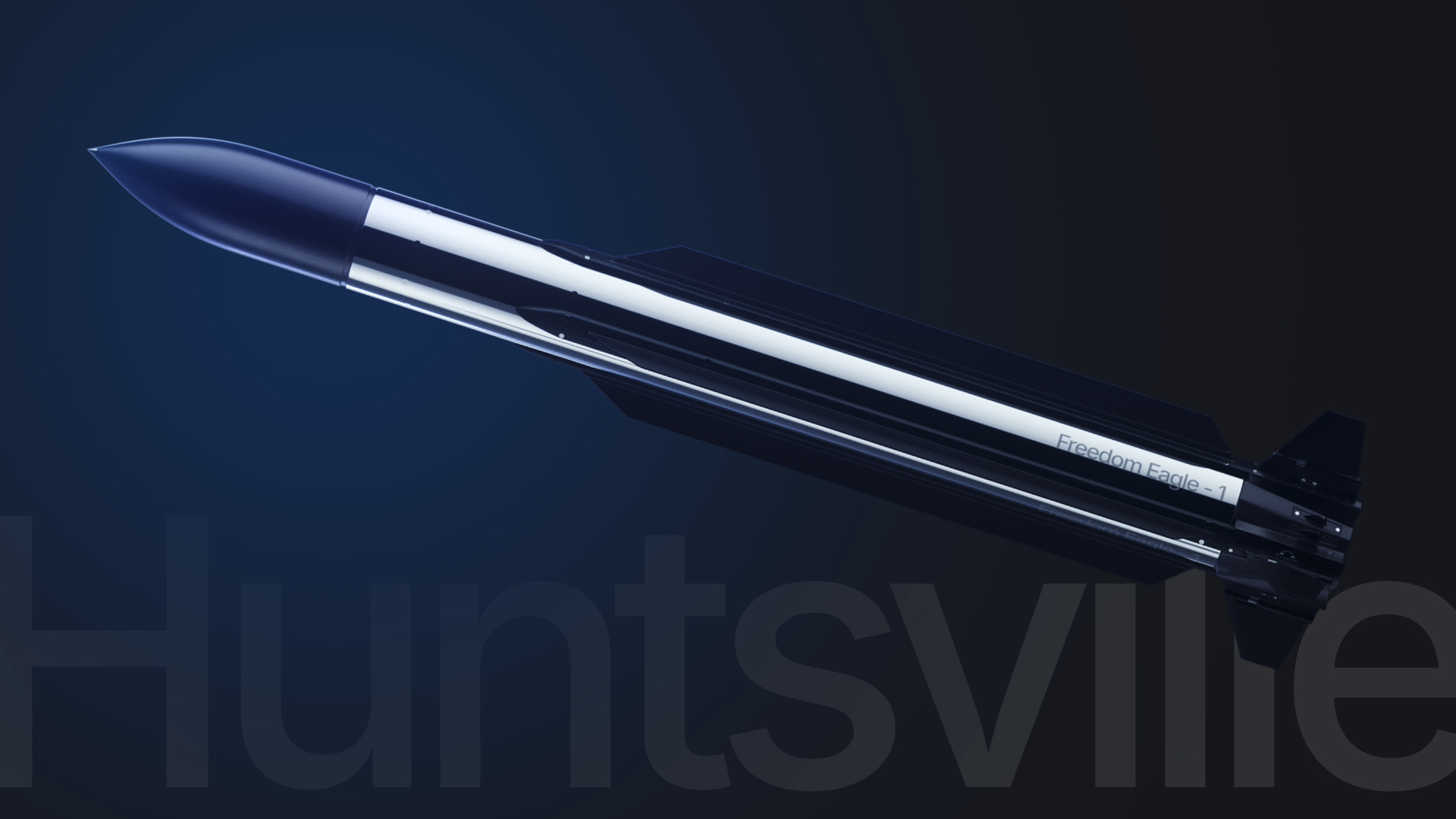
AeroVironment is expanding its Huntsville, Alabama, facility to accelerate production of the Freedom Eagle-1 counter-UAS interceptor, following a further $20.2 million government investment.
The expansion will support increased low-rate initial production quantities and prepare the site for a future move towards full-rate manufacturing. AeroVironment plans to use the Huntsville facility as a system-level integration, manufacturing, and production hub for Freedom Eagle-1, a next-generation counter-uncrewed aircraft system missile developed for US Army interceptor requirements.
The work includes a 24,000 sq ft expansion and is linked to wider US Army efforts to field more affordable kinetic options against drone threats. Freedom Eagle-1 is designed as a low-cost, high-performance interceptor for Group 2 and Group 3 UAS, with residual capability against smaller Group 1 drones and selected fixed-wing and rotary-wing targets.
Recent development work has included solid rocket motor live-fire activity, controlled test vehicle launches, and warhead testing. The Huntsville investment follows a major programme award connected to the US Army’s next-generation counter-UAS missile and long-range kinetic interceptor work, as well as earlier missile-defence sensor testing activity at Redstone Arsenal.
The expansion reflects a central problem in modern air defence: interceptors must be effective enough to defeat drones and loitering munitions, but affordable enough to be used in quantity. High-cost missiles can destroy low-cost drones, but that exchange becomes difficult to sustain when adversaries can produce or procure uncrewed systems at scale.
The US Army’s search for lower-cost air-defence interceptors has already highlighted the pressure on missile economics. AeroVironment’s Huntsville expansion turns that requirement into a manufacturing question. The issue is not only whether a counter-drone missile can work, but whether it can be produced consistently, replenished quickly, and priced for sustained use.
Freedom Eagle-1 sits in a demanding product category. A compact interceptor has to combine propulsion, guidance, control, sensors, warhead effects, launch compatibility, software, and safety systems. It must be precise enough to defeat agile aerial targets, yet simple enough to manufacture in meaningful numbers. Cost control cannot come at the expense of reliability, because failed intercepts carry operational and financial penalties of their own.
The production path will depend on motor supply, electronics availability, warhead manufacturing, test throughput, quality assurance, and final integration capacity. Low-rate initial production can absorb more manual intervention and engineering attention. Full-rate production requires stable processes, qualified suppliers, repeatable inspection, and sufficient test infrastructure to keep pace with output.
Huntsville gives AeroVironment proximity to a deep missile and aviation technology ecosystem. Redstone Arsenal and the surrounding defence industrial base provide access to programme expertise, test knowledge, engineering talent, and supply-chain experience. That local environment is valuable for a counter-UAS interceptor that will need to evolve as drone threats change in speed, autonomy, size, and attack profile.
The expansion also shows how companies associated with uncrewed aircraft are moving into the systems designed to defeat them. AeroVironment’s background in drones, sensors, autonomy, and battlefield electronics gives it a close understanding of the targets Freedom Eagle-1 is intended to counter. Turning that understanding into reliable missile production is a different industrial task, requiring scale, safety discipline, and supply-chain resilience.
Counter-UAS capability is developing across multiple routes. Electronic attack, guns, directed energy, drone-on-drone interceptors, and kinetic missiles all have roles depending on range, target type, rules of engagement, and defended asset. Missile interceptors remain necessary where threats must be destroyed at distance, where electronic attack is insufficient, or where a drone’s payload cannot be allowed to reach its target.
Consumption rates will shape future procurement. Drone warfare has shown that air-defence systems must be replenished quickly, not simply demonstrated in small quantities. That requirement changes production planning, pushing companies towards more robust supplier networks, larger inventory buffers, automated processes, and modular designs that can accommodate upgrades without disrupting output.
AeroVironment’s system-level hub in Huntsville is intended to support that transition. Integration facilities, trained workers, tooling, supplier coordination, acceptance testing, and production management all have to mature before a missile can move from promising development item to reliable stockpile product.
Freedom Eagle-1 will be judged on performance, but the expansion underlines the broader contest now shaping counter-drone defence. Production depth is becoming as decisive as technical sophistication. Armed forces need interceptors that can keep pace with drone proliferation, and industry has to prove that it can build them without recreating the cost structure of legacy missile defence.