IN Brief:
- The Australian Army has tested NASAMS during Exercise Raptor’s Strike at Cultana.
- The trials covered movement, setup, operation, relocation, sensors, and missile employment.
- The work reflects rising demand for integrated short-to-medium-range air defence across APAC land forces.
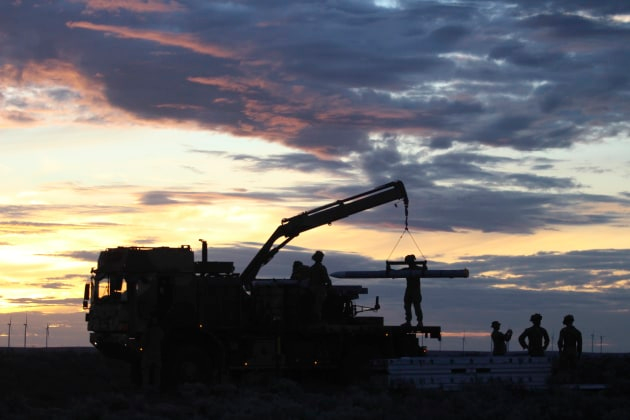
The Australian Army has moved its National Advanced Surface to Air Missile System closer to introduction into service after operational testing during Exercise Raptor’s Strike at Cultana Training Area in South Australia.
Conducted by the 10th Fires Brigade, with 16th Regiment, Royal Australian Artillery, the trials exercised the system in field conditions ahead of full operational capability. The activity covered movement, setup, operation, and relocation, while also proving radar performance, missile employment, and the support routines needed to keep a mobile air-defence battery available during deployed operations.
NASAMS is designed to provide networked air defence against aircraft, helicopters, cruise missiles, and unmanned aerial systems. In Australian service, the system forms part of a wider shift away from isolated point defence and toward layered protection for manoeuvre forces, command nodes, logistics sites, and critical infrastructure.
Behind the trial is a large integration and sustainment task. NASAMS is not a single-platform procurement, but an architecture built around launchers, sensors, fire distribution centres, command-and-control software, missiles, vehicles, communications, power systems, training equipment, and long-term maintenance infrastructure. Each element has its own production chain, qualification burden, and support requirement.
Australia’s emphasis on mobility changes that production requirement further. A static air-defence site can be optimised around prepared locations, fixed power, and established maintenance routes. A land-force NASAMS battery must be transportable, rapidly emplaced, survivable under drone and missile threat, and able to integrate with broader fires and air-command networks. That creates demand for ruggedised electronics, deployable power, hardened communications, field repair packages, and software support that can be updated without lengthy withdrawal from service.
The missile element links the programme to one of the busiest areas of Western weapons production. NASAMS uses AMRAAM-family missiles, drawing land air-defence demand into the same industrial base that supports fighter aircraft and other surface-launched applications. The munitions pressure is visible in Belgium move could reshape AMRAAM production, where supply-chain capacity, European participation, and future missile output sit at the centre of the debate.
Across APAC, mobile air defence is becoming a more urgent procurement category as land forces adapt to drones, cruise missiles, precision fires, and contested airspace. The required capability is no longer a launcher bought in isolation. Customers need sensors that can discriminate small targets, communications that can remain secure under electronic attack, missiles that can be stocked in sufficient numbers, and training systems that can turn specialist air-defence skills into an operationally sustainable force.
That creates opportunities for domestic support work. Australia has already shown a preference for local industrial participation across guided weapons, fires, protected mobility, and sustainment. NASAMS will require spares pipelines, environmental qualification, vehicle integration, launcher maintenance, radar support, test equipment, software management, and operator training. The production centre of gravity remains multinational, but much of the readiness burden will sit inside Australia’s defence industrial base.
The programme also sits alongside the country’s long-range fires expansion. Australia’s selection of HIMARS for a second fires regiment points to a land force built around greater strike reach, while NASAMS gives that force a defensive layer against the aircraft, missiles, and drones likely to target launchers, logistics, and command infrastructure.
Operational acceptance is the immediate milestone, but the larger test is sustainment. A mobile air-defence battery requires regular software updates, radar maintenance, vehicle support, missile stockpile management, launcher availability, trained technicians, and resilient supply chains. In APAC, where distance and coalition interoperability shape procurement, that support system will be as decisive as the initial hardware delivery.