IN Brief:
- The US Marine Corps has ordered 32 full rate production ACV-R recovery vehicles under a $230.1 million modification.
- York, Pennsylvania, will carry the majority of manufacturing work, supported by several additional BAE Systems locations.
- The order follows three production representative vehicles and moves recovery, towing, and repair capability into series manufacture.
BAE Systems has received a $230.1 million US Marine Corps contract modification for 32 Amphibious Combat Vehicle Recovery variants, moving the fourth member of the ACV family into full rate production.
The award covers vehicle manufacture together with fielding, support, and spare parts, with work expected to continue through November 2028. York, Pennsylvania, will carry the majority of the manufacturing workload.
Additional activity will take place across BAE Systems locations in Aiken, San Jose, Sterling Heights, and Stafford, creating a distributed industrial chain around the recovery variant rather than concentrating every production stage at the principal assembly plant.
ACV-R joins personnel, command, and 30mm cannon variants already developed around the same 8×8 Amphibious Combat Vehicle architecture. Common automotive systems and structures allow BAE Systems to add specialist roles without creating a completely separate vehicle family for each requirement.
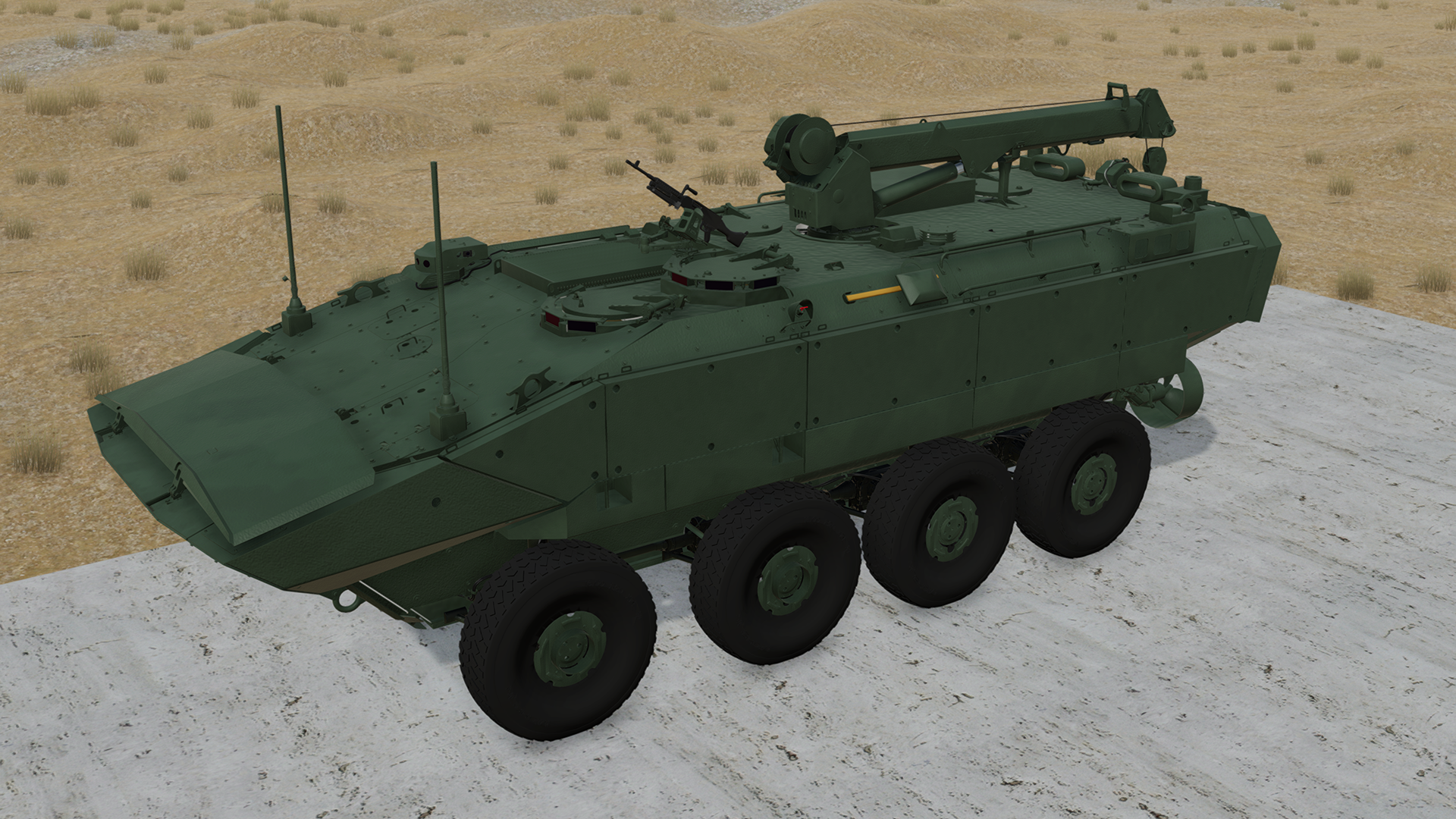
The recovery variant is intended to provide field maintenance, towing, and limited repair support to Marine units operating the wider ACV fleet. That role requires equipment capable of recovering disabled vehicles while retaining amphibious mobility and the survivability characteristics of the base platform.
Integrating recovery hardware creates different engineering demands from the personnel or command configurations. Heavy lifting and towing equipment changes structural loads, hydraulic requirements, vehicle balance, and internal packaging while the platform still has to maintain acceptable land and water performance.
The programme reached the current production stage after three production representative ACV-R vehicles were built for evaluation. Those test vehicles provided hardware through which the recovery configuration, government-furnished equipment, and associated interfaces could be checked before larger quantities were committed.
The US government designed and integrated the recovery crane at Anniston Army Depot. That adds an important interface between contractor and government engineering because the crane, hydraulic systems, structural mounts, controls, and recovery equipment all have to fit within the production vehicle baseline.
Moving from three representative vehicles to an order for 32 changes the character of manufacture. Prototype and test builds can tolerate closer engineering supervision and more manual adjustment, while series production depends on stable drawings, predictable supplier deliveries, controlled work instructions, and repeatable inspection.
Configuration control becomes particularly important across a family of related vehicles. Common parts reduce support costs only if they genuinely remain common as production changes are introduced.
If different variants gradually diverge through separate modifications, the intended logistics advantage can be eroded by a larger inventory of unique components and maintenance procedures. Production engineering therefore has to manage specialist recovery equipment without unnecessarily changing the common vehicle architecture.
BAE Systems and Iveco Defence Vehicles developed ACV around an 8×8 amphibious platform intended to replace the Marine Corps’ ageing Assault Amphibious Vehicle family. The programme has subsequently broadened into several mission variants rather than remaining a single personnel carrier.
That expansion supports a more sustained industrial workload. Common tooling, assembly skills, supplier relationships, and automotive components can remain active while individual variant orders move through different phases.
The recovery order also creates specialist supply requirements. Hydraulic equipment, structural interfaces, towing systems, fittings, and recovery-specific components must be added to the parts already needed for the common ACV build.
Those items tend to be produced in lower quantities than common automotive components, increasing the importance of spares and long-term support. The latest modification includes spare parts rather than leaving support procurement until after vehicles are fielded.
That approach matters because a small fleet of specialist recovery vehicles can become difficult to sustain if unique parts are no longer readily available. Maintaining production data, tooling, and supplier capability is therefore important even after the final vehicle in the current order has been delivered.
The wider ACV programme gives those suppliers a larger industrial context. Although recovery-specific items remain comparatively low volume, common chassis, propulsion, suspension, and other systems continue to move through production for several variants.
York remains the centre of the latest build, but work performed at other BAE Systems locations has to remain synchronised with final assembly. An engineering or component delay elsewhere can affect the principal line if the corresponding equipment does not arrive when vehicles reach that production stage.
Full rate production also places greater pressure on quality systems. A defect discovered across a 32-vehicle batch can create substantially more rework than the same problem identified on one of three test vehicles, making early process control and inspection more important as quantities increase.
The recovery variant is now moving into that repeat-manufacturing phase. The next industrial measure will be how effectively the programme converts test hardware into a stable series build while retaining commonality with the other ACV configurations.
If that transition works as intended, the Marine Corps gains a specialist recovery platform without creating another unrelated vehicle logistics system, while BAE Systems adds another production stream to an established amphibious vehicle manufacturing base through 2028.