IN Brief:
- Detyens Shipyards has secured a $20.45m contract to overhaul and drydock USNS Leroy Grumman.
- Work includes tank cleaning and preservation, hull maintenance, sea valve overhaul, propeller servicing and associated repairs.
- Four unexercised options could increase the contract to $23.21m, with completion expected on 20 June 2027.
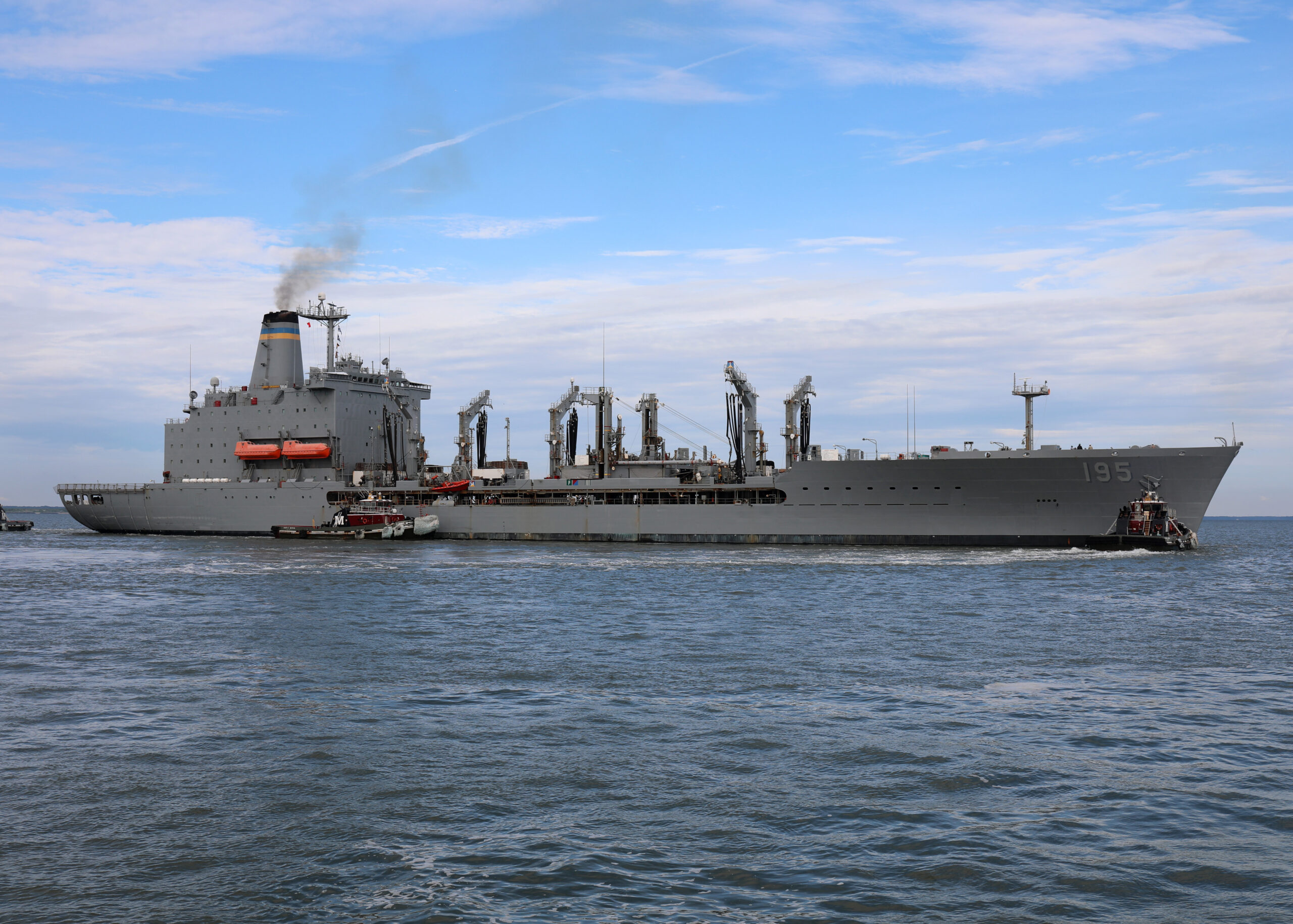
Detyens Shipyards has secured a $20.45 million US Navy contract for the regular overhaul and drydocking of fleet replenishment oiler USNS Leroy Grumman. The vessel will enter a 152-day industrial availability at the company’s North Charleston facility in South Carolina on 20 January 2027, with work scheduled for completion on 20 June.
The $20,454,460 firm-fixed-price contract, N3220527C0012, covers a defined maintenance programme and includes four unexercised options for additional work and time. Exercising every option would increase the total value to $23,210,140. Military Sealift Command awarded the contract after a small-business competition that attracted four offers, with the base amount fully obligated from fiscal 2027 Navy operations and maintenance funding.
USNS Leroy Grumman, designated T-AO 195, is a Henry J. Kaiser-class replenishment oiler operated by Military Sealift Command. Its principal role is to supply fuel and other stores to naval vessels while they remain at sea. The ship’s maintenance programme must therefore address normal hull and machinery condition alongside the tanks, piping and other equipment supporting the handling of fuel cargo.
Preparing the vessel for the availability will involve arranging access to the areas identified for maintenance and coordinating the industrial services required by the shipyard. Some work can proceed while the ship is afloat, whereas inspection and repair of the underwater hull and associated fittings require drydock access. The schedule must bring those activities together within a single maintenance period.
Tank preparation is an early requirement because inspection and preservation cannot begin safely until the relevant spaces have been cleaned and made suitable for entry. The specified work includes cleaning and gas-freeing selected tanks, cofferdams, voids and other enclosed spaces. These operations create access for subsequent examination and maintenance while requiring controlled ventilation, atmospheric testing and appropriate arrangements for managing residues and waste.
The tank work extends to cargo petroleum spaces and the number four port and starboard ballast tanks. Although these compartments serve different purposes, their internal steel surfaces require periodic assessment and suitable corrosion protection. The condition of existing coatings influences the surface preparation needed before preservation work can proceed, with inspection providing the basis for determining whether the specified treatment has been completed correctly.
Tank hatch preservation is included in the same work package, linking maintenance of internal compartments with the fittings that provide access to them. Hatch arrangements must remain compatible with the surrounding structure and the operating requirements of each space. The shipyard will need to coordinate coating and fitting work so that completed areas are protected while equipment and personnel continue moving through nearby compartments.
Once the vessel is in drydock, Detyens will have access to its underwater hull, propellers and sea valves. Hull preservation involves preparing and treating surfaces exposed to seawater, while the propeller and valve work addresses equipment that is difficult to examine fully during normal operation. The sequence must allow inspections and any authorised servicing to be completed before the ship is returned to the water.
Sea valves are particularly suited to a drydock maintenance period because they control connections between shipboard systems and the surrounding water. Their condition and operation can be examined while the relevant hull openings are accessible and isolated. Following servicing, the valves and associated systems must be checked against their approved requirements before the ship resumes ordinary operations.
Propeller maintenance will proceed alongside work on the underwater hull and associated fittings. The published specification identifies the activity without disclosing particular defects or replacement requirements. The shipyard’s tasks will be governed by the authorised maintenance instructions and inspection findings, with the necessary repairs and checks coordinated before undocking.
Structural preservation continues above the waterline, where the programme includes blasting and painting parts of the superstructure, steel repairs and regasketing of windows. These activities require access equipment, controlled surface preparation and protection of adjacent fittings. Their scheduling must also account for the ship’s other maintenance operations, particularly where scaffolding or temporary access arrangements affect movement through working areas.
A cargo potable deck replacement forms another part of the structural work. Fabrication and installation tasks must be coordinated with adjacent shipboard systems and followed by the required inspections. Work on the deck, superstructure and hull can draw on some of the same specialist trades, making labour allocation an important part of the overall production schedule.
Mechanical maintenance is also included. High-pressure air compressor servicing will require access to the installed equipment and the application of the relevant inspection and testing procedures. The programme additionally identifies work on aqueous film-forming foam piping, bringing part of the vessel’s fire protection infrastructure into the same availability.
These activities cannot all be completed independently. Cleaning and gas-freeing must precede some enclosed-space work, drydocking provides the access required for underwater equipment, and protective coatings need suitable preparation and inspection before areas can be returned to service. Mechanical systems may also require testing after neighbouring structural or preservation tasks have been completed.
Materials and subcontracted services must reach the shipyard in time for the relevant stage of maintenance. Replacement parts, coatings, specialist tools and inspection resources have different lead times, while delays to activities affecting dock occupancy can place pressure on the wider schedule. Detyens will need to coordinate those dependencies against the defined 152-day period and the Navy’s acceptance requirements.
Hazardous waste management forms part of that coordination because tank cleaning, surface preparation and equipment servicing can generate materials requiring controlled handling and disposal. The waste arrangements must operate alongside the shipyard’s production activities without obstructing access or delaying the preparation of subsequent work areas.
Detyens operates an established commercial and government ship repair facility at North Charleston, providing drydocking, fabrication, mechanical work and preservation services. The Leroy Grumman contract adds a defined naval support vessel programme to that industrial workload, with the company responsible for the awarded maintenance tasks and any additional work authorised under the available options.
Final inspection and testing will determine whether the specified equipment and spaces meet the requirements for completion. The vessel must also be prepared for undocking and the subsequent closure of its maintenance availability, with acceptance governed by Military Sealift Command’s arrangements.
The committed contract value remains $20.45 million, while the higher $23.21 million figure depends on options that have not been exercised. Detyens is scheduled to complete the overhaul on 20 June 2027, following the coordinated tank, hull, machinery and preservation work required to return the replenishment oiler through its maintenance cycle.