IN Brief:
- Fleet Readiness Center East has begun full TR-3 retrofit work on operational F-35B aircraft.
- The upgrade adds new processing, memory, cockpit display hardware, and the foundation for future Block 4 capabilities.
- Retrofitting fielded aircraft turns F-35 modernisation into a depot-scale production and sustainment challenge.
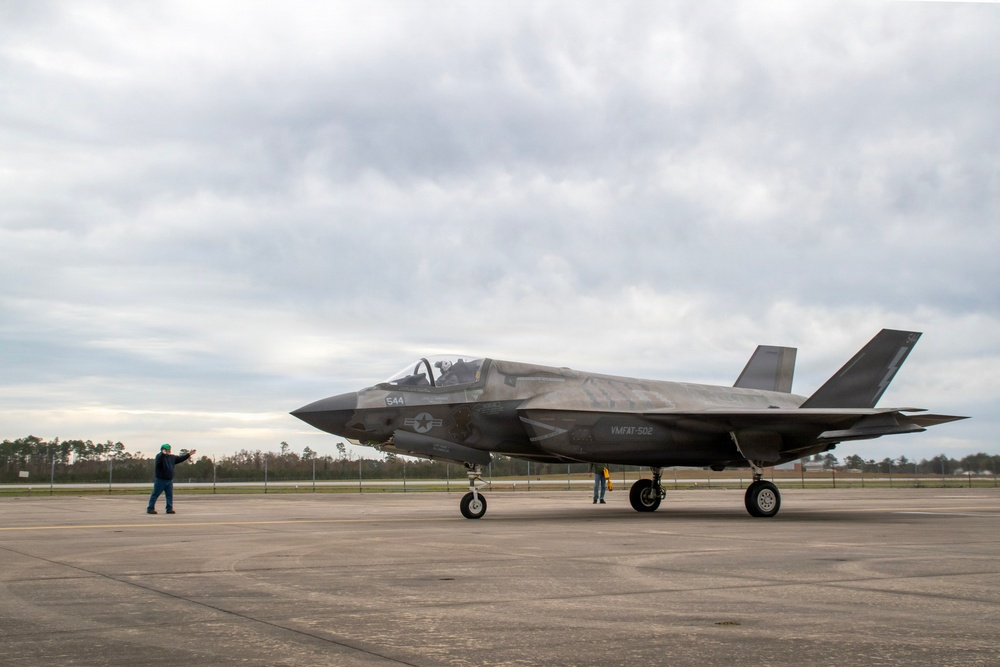
Operational F-35B aircraft have entered Technology Refresh 3 retrofit work at Fleet Readiness Center East, moving a central F-35 hardware upgrade into the fielded fleet.
The first aircraft undergoing conversion include BF-105, BF-81, and BF-88. The work shifts those jets from the previous TR-2 configuration to the TR-3 baseline, adding the processing, memory, display, and mission-system hardware needed to support future Block 4 capability growth.
TR-3 gives the F-35 greater computing capacity and a new panoramic cockpit display, while creating the hardware foundation for advanced electronic warfare, sensor fusion, weapons integration, and future software loads. Without that baseline, many Block 4 capabilities cannot be introduced fully across the fleet.
Retrofitting operational aircraft is a different industrial problem from installing new hardware on the production line. Depot teams must induct aircraft, remove equipment, install wiring and hardware kits, integrate software, run tests, complete quality checks, document every configuration change, and return aircraft to service. Each jet has its own operational history, wear profile, and configuration state, which makes retrofit work more variable than new-build assembly.
Fleet Readiness Center East is one of the key depots supporting F-35B modification and sustainment work. Its role is increasingly close to specialised manufacturing. Depot lines need tools, trained labour, parts kits, test equipment, digital work instructions, inspection gates, and throughput targets. The difference is that the product entering the line is already a military aircraft with service use behind it.
The F-35 programme is moving deeper into a phase where sustainment and production are inseparable. More than 700 delivered aircraft will need upgrade pathways, while new-build production continues. Hardware modernisation must therefore work across both factory and depot environments, with suppliers producing components for aircraft at different stages of life.
The F-35’s future role in crewed-uncrewed operations, including the integration work explored in F-35 and MQ-20 test CCA integration, relies on computing headroom. Fighters expected to coordinate with collaborative combat aircraft, advanced weapons, offboard sensors, and complex electronic-warfare effects need mission hardware able to process and share more data than earlier baselines allowed.
TR-3 also places pressure on suppliers. Mission-computer hardware, displays, circuit cards, connectors, cooling systems, wiring kits, and electronic-warfare components must be produced to strict aerospace and defence standards. Configuration control is unforgiving. A change in one hardware element can affect testing, documentation, software compatibility, and aircraft acceptance.
The B variant adds further complexity. The short-take-off-and-vertical-landing aircraft has a distinctive propulsion and lift-system architecture, creating a dense integration environment around weight, space, thermal management, and maintainability. Any retrofit has to respect those constraints while delivering enough hardware capacity for future software and mission growth.
Modern combat aircraft increasingly age through electronics and software rather than airframe structure alone. The F-35 fleet will need repeated hardware and software refreshes through its life, particularly as electronic warfare, weapons, and autonomy requirements change. That makes depot capacity a strategic asset. A country can own advanced aircraft and still lose practical capability if it cannot upgrade and repair them quickly enough.
For operators, TR-3 promises a route to the capabilities expected from Block 4. For industry, it is a large sustainment-production campaign spread across depots, suppliers, software teams, and test organisations. The first F-35B conversions at Fleet Readiness Center East show how aircraft modernisation is becoming a factory-floor challenge long after initial delivery.