IN Brief:
- Germany's programme of record covers 35 F-35A aircraft.
- The first eight aircraft will initially support German pilot training at Ebbing Air National Guard Base in Arkansas.
- The first F-35As destined to operate from Germany are scheduled to arrive in-country in late 2027.
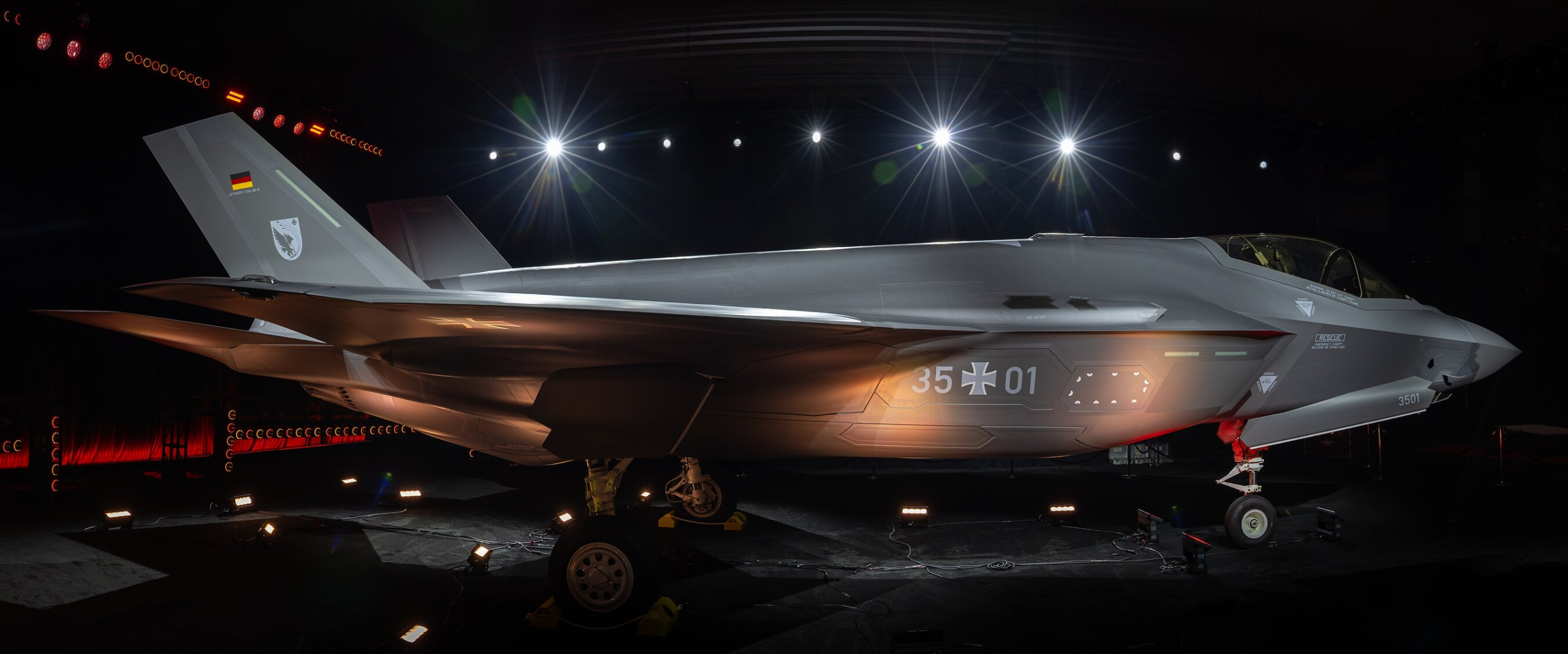
Lockheed Martin has presented Germany’s first F-35A Lightning II to the German government at its Fort Worth production facility, opening the aircraft-delivery phase of a 35-aircraft programme that will initially concentrate training activity in the United States.
The 18 September presentation follows the aircraft’s move into final assembly at Fort Worth in August. Germany’s programme of record calls for 35 F-35As, with the first eight aircraft due to go to Ebbing Air National Guard Base in Arkansas for pilot training beginning this autumn.
The first aircraft destined to operate from Germany are scheduled to arrive in-country in late 2027. That sequence gives the Luftwaffe time to build aircrew, maintainer, and support capacity before aircraft begin arriving at their permanent German operating location, rather than attempting to create an operational squadron around jets delivered directly from the production line.
The German rollout sits inside a production system serving a fleet of more than 1,355 F-35s operating worldwide. Lockheed Martin says the aircraft now operates from 42 bases, with 12 nations flying the type from home territory. Germany joins that expanding support network at a point when aircraft manufacture and sustainment capacity have to progress together.
Fighter introduction programmes extend well beyond final assembly. Each new operating location requires ground-support equipment, mission-planning capability, maintenance tooling, training systems, spares, secure information infrastructure, and personnel qualified to work on the aircraft. Those elements have to arrive in step with the jets if early training and operational flying are to avoid unnecessary bottlenecks.
The first eight German aircraft will remain in the United States initially because Ebbing provides an established route into F-35 training. Concentrating the first training aircraft there allows pilots and maintainers to begin conversion while infrastructure and support arrangements in Germany continue to mature. It also places Germany inside the wider international training system already used by other F-35 customers.
German industry has participated in the programme since 2001, according to Lockheed Martin, and the company continues to examine additional opportunities in manufacturing, sustainment, training, research, and development. Industrial participation is likely to shift increasingly towards through-life activity as the German fleet moves from acquisition into decades of maintenance, upgrades, and support.
The support burden extends across the aircraft’s low-observable structure, propulsion, avionics, mission systems, and software-controlled configuration. F-35 maintenance also depends on tightly managed technical data and logistics processes, while upgrades introduced across the international fleet have to be incorporated without allowing national configurations to fragment beyond what the programme can sustain.
A modern combat-air fleet therefore generates continuing software, training, and sustainment work after each aircraft leaves the factory. New operators need enough local capability to absorb those changes while maintaining aircraft availability, making the build-up of the support organisation inseparable from the delivery schedule.
Germany’s decision to place the first eight aircraft at Ebbing separates early training demand from the initial build-up at Büchel. Flight operations in Germany can begin after a cadre of qualified personnel has already been created, while ground equipment and local maintenance capability are installed against a known aircraft-arrival schedule.
Lockheed Martin’s production system must meanwhile maintain Germany’s delivery sequence alongside orders for other customers. International F-35 demand spans US services, programme partners, and Foreign Military Sales customers, placing pressure not only on final assembly but also on engines, electronic systems, structures, and the supplier network feeding Fort Worth.
The German programme now depends on coordination between those parallel workstreams. Aircraft have to leave production on schedule, Ebbing has to generate trained crews, German infrastructure has to be ready for the 2027 arrivals, and the sustainment chain must be capable of supporting routine squadron activity rather than individual delivery milestones.
The Fort Worth presentation establishes that Germany’s first aircraft has reached the point where production output can start feeding that wider introduction system. The next milestones will be delivery of the remaining US-based training aircraft, growth of the German instructor and maintainer cadre, and the first in-country arrivals from late 2027.
By that stage, the programme will have moved decisively from procurement into force generation. The aircraft remains its most visible element, but Germany’s ability to operate the F-35 will depend on the manufacturing, training, infrastructure, and sustainment systems developing around it.